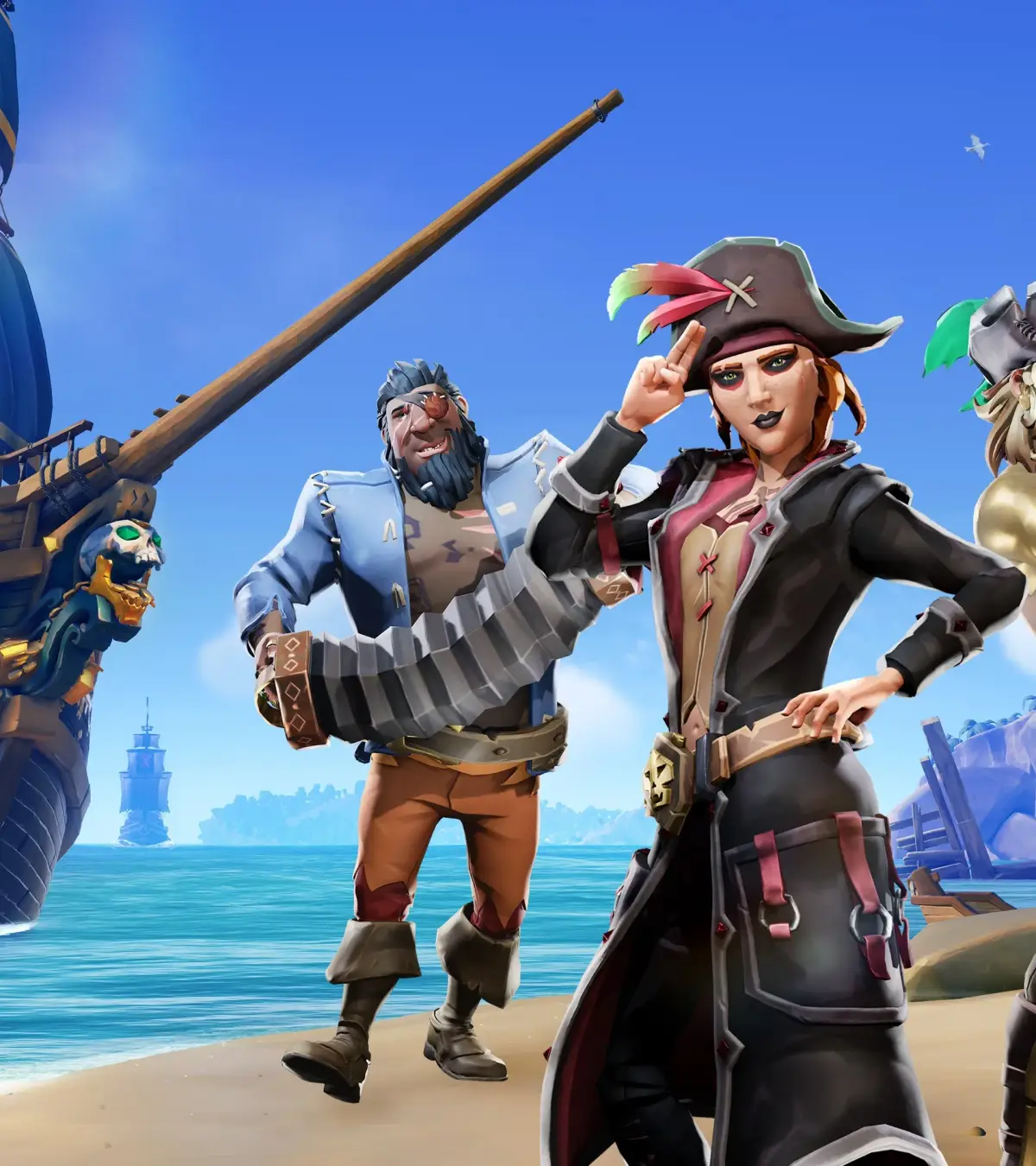
Learn the essential PvP combat mechanics in Sea of Thieves. Master ship battles, sword fighting, and strategic maneuvers to dominate the seas and secure your loot.
Sea of Thieves features a variety of treasure that players can find, carry, and sell to Trading Companies for in-game currency, reputation, and Emissary Value. These treasures are the primary means of progression and wealth accumulation in the game.
Mechanics:
Treasure is the main source of Gold, Doubloons, Reputation, and Emissary Value in Sea of Thieves. Each Trading Company values specific types of Treasure Items and has representatives at every Outpost who accept these items in exchange for rewards. Outpost Representatives also offer Voyages, which are quests that lead players to these treasures.
Beyond structured Voyages, random treasures can be found scattered across the Sea of Thieves. They might be hidden or beached on islands, floating among Barrels of Plenty or shipwrecks, locked within vaults in Forts, or taken by enemies like Skeleton Ships, Megalodons, or the Kraken. Every treasure item emits a colored glint or glow, allowing players to identify its type from a distance.
Treasure items must be carried by hand to the respective Company Representative for a payout. A pirate can only carry one treasure item at a time and cannot use any equipment or resource items while doing so. To regain full control, the treasure must be dropped. Harpoons can be used to retrieve treasure items from afar. Most smaller treasures can be placed inside Container Chests, which can hold up to three items, to hide their glow, glint, or sound, making transportation easier. Treasure left on land remains until interacted with, but treasure dropped in water sinks after about 5 minutes (except for Trade Good Crates). While sailing as Trading Company Emissaries, picking up relevant treasure grants Emissary Grade Reputation, with additional gains for placing it on the ship. These reputation increases are awarded only upon the first claim of a treasure item.
Types of Treasure Items:
Treasure items are categorized by the Trading Company that wishes to purchase them. Within the three main companies (The Gold Hoarders, the Order of Souls, and the Merchant Alliance), treasures are further classified into Regular, Ashen, Stronghold, or Skeletal and Ghostly variants based on their origin.
Gold Hoarders Treasure:
The following are Treasure Items that can be sold to the Gold Hoarders Trading Company on any Outpost for Gold and Reputation. These items yield increased rewards and Reputation, as well as Emissary Value, when sold to Representatives as Gold Hoarder Emissaries.
Treasure Chests:
Treasure Chests are unbreakable and locked containers sold to the Gold Hoarders, who possess the keys to open them. They can be found as part of Treasure Maps and Riddle Maps, inside Ancient Vaults, or randomly across the Sea of Thieves. Treasure Chests emit a White Glint from a distance. There are six types: Regular, Shipwrecked (damaged, barnacle-encrusted, found underwater or in shipwrecks), Coral (coral-encrusted, found in Siren Shrines and Treasuries), Ashen (molten, found in The Devil's Roar, sell for double), Valuable (specific to various encounters), and Cursed (tied to specific locations or effects, generally very valuable).
Artefacts:
Artefacts are smaller items found on their own, hidden in Treasure Chests, or inside Fortress Vaults. There are four types: Regular Artefacts (small trinkets, containers, or ornaments made of valuable metals and gems, emitting a Golden Glint) and other types that share pricing tiers with Treasure Chests.
100% Human-Written. AI Fact-Checked. Community Verified. Learn how AntMag verifies content