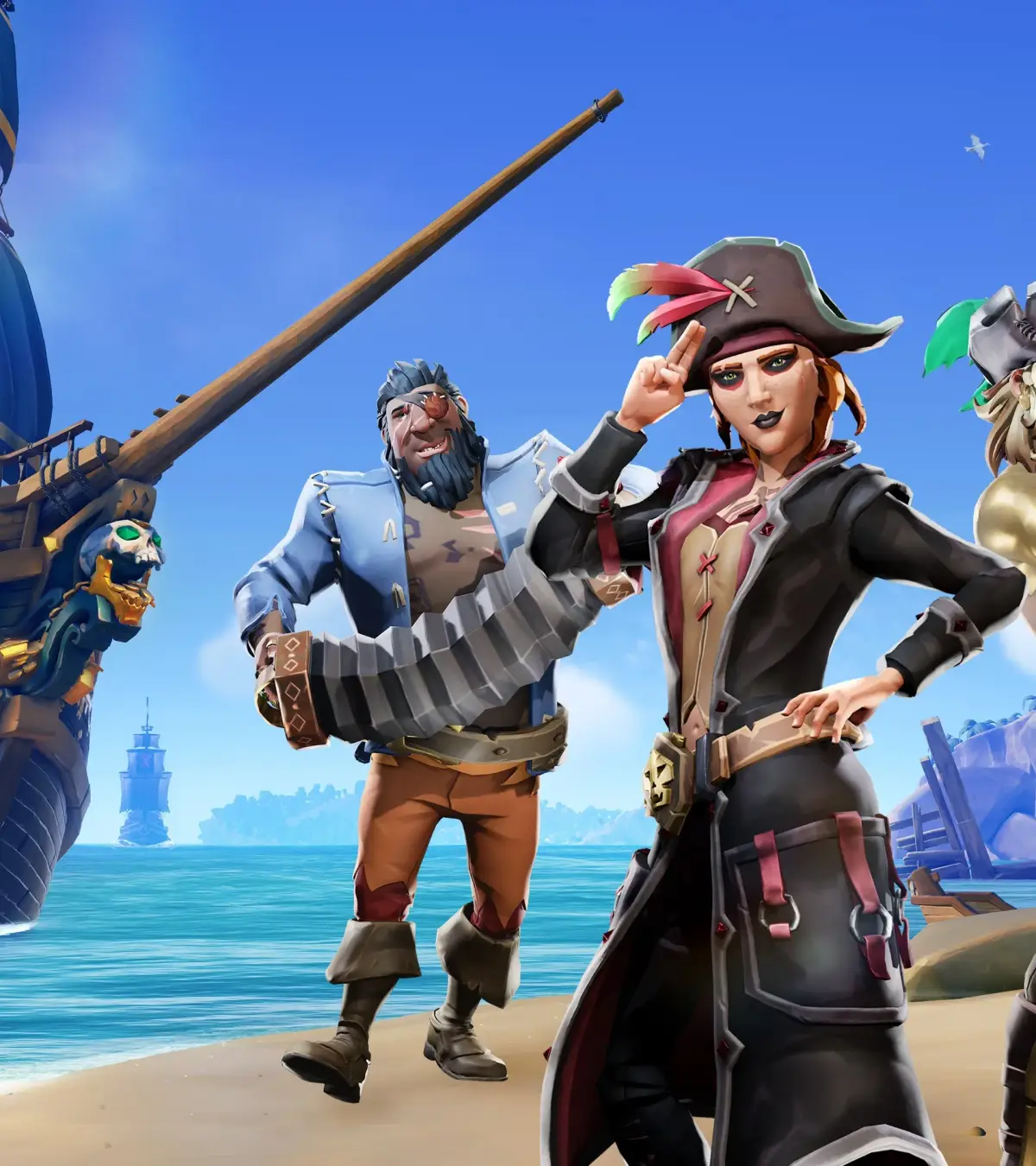
Master Sea of Thieves sailing. Learn advanced techniques like sail trimming, wind mechanics, and helm control for superior ship maneuverability and combat.
Master the Winds and Waves: Become a Sailing Virtuoso!
Sailing in Sea of Thieves is more than just pointing your ship in a direction; it's a nuanced art form that can make the difference between a swift escape and a watery grave. Mastering advanced sailing techniques, such as optimal sail trimming, effective use of the helm, and understanding wind mechanics, will allow you to outmaneuver rivals, navigate treacherous waters with ease, and make your ship a formidable force on the open sea. Hone your skills and become a true master of the waves.
Beyond Basic Steering: Advanced Sailing Techniques
While the basics of sailing are straightforward, mastering the nuances of wind and ship handling can give you a significant advantage in Sea of Thieves. These techniques are crucial for both combat and general navigation.
Understanding the Wind
The wind is your most powerful ally and your greatest adversary. Its direction and strength dictate your speed and maneuverability.
- Wind Indicator: The wind's direction is indicated by the flags on your ship and the movement of the water. You can also see a visual indicator on your compass.
- Sailing with the Wind: To achieve maximum speed, angle your sails to catch the wind directly. The sails should be perpendicular to the wind's direction.
- Sailing Against the Wind: You cannot sail directly into the wind. The closest you can get is a 'close-hauled' angle, where your sails are angled sharply into the wind. This significantly reduces your speed but allows you to make progress in a general direction against the wind.
- Tacking: This is the maneuver of changing direction to sail against the wind. You turn your ship so the wind comes from the other side, then adjust your sails.
- Jibing: This is the maneuver of turning your ship so the wind comes from behind you. It's used to change direction quickly when sailing with the wind.
Sail Trimming for Optimal Speed
Proper sail trimming is essential for maximizing your ship's speed and responsiveness.
- Angle of Sails: Adjust the angle of your sails by interacting with the sail wheel. The goal is to have the sails catch as much wind as possible without 'luffing' (flapping loosely).
- Luffing: When your sails are luffing, they are not catching the wind effectively, and your ship will slow down. Adjust the sail angle to stop this.
- Crosswinds: When sailing at an angle to the wind, you can often achieve good speed by adjusting your sails to catch the wind from the side.
Helm Control and Maneuvering
The helm is your primary tool for steering, but effective use goes beyond simply turning.
- Sharp Turns: For quick turns, especially in combat, you can turn the wheel sharply and simultaneously turn your ship's hull.
- Drifting: Be aware of your ship's momentum. It will continue to move in its current direction even after you stop turning the wheel.
- Using the Anchor: The anchor can be used for rapid stops or to pivot your ship quickly in tight spaces, though this can be risky.
- Braking: Turning your sails against the wind can act as a brake, slowing your ship down considerably.
Advanced Combat Maneuvers
- The 'S' Turn: A series of sharp turns that can make it difficult for enemy ships to land consistent cannon shots.
- The 'Drift Turn': Using momentum to slide your ship around an obstacle or an enemy.
- Cannon Positioning: Maneuvering your ship so your cannons have a clear line of fire while minimizing your opponent's ability to hit you.
- Boarding Tactics: Using your ship's speed and maneuverability to get close enough for your crew to board an enemy vessel.
Ship-Specific Sailing Nuances
| Ship Type | Sailing Characteristics |
|---|---|
| Sloop | Fastest to accelerate, most maneuverable, but has less broadside power. Excellent for solo or duo players. |
| Brigantine | A good balance of speed and maneuverability, with decent broadside power. Ideal for trios. |
| Galleon | Slowest to accelerate and least maneuverable, but has the most broadside cannons and can carry the most crew. Best for four players. |
Practice Makes Perfect
The best way to master these techniques is through practice. Take your ship out to sea, experiment with different sail angles, practice sharp turns, and engage in friendly duels with other players. The more you sail, the more intuitive these advanced maneuvers will become.
By understanding and applying these advanced sailing techniques, you'll transform from a novice sailor into a seasoned captain, capable of navigating any storm and outsmarting any foe on the Sea of Thieves.
100% Human-Written. AI Fact-Checked. Community Verified. Learn how AntMag verifies content