
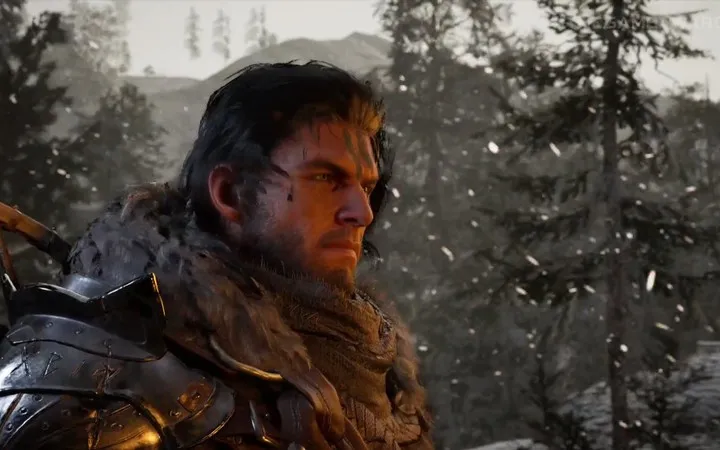
Optimize Crimson Desert performance on PS5, Xbox, and PC. Fix PS5 40 FPS lock, use FSR 2.1 on PC, and enable VRR for smoother gameplay.
Crimson Desert is a visually stunning open-world action RPG, but getting the best experience requires careful tuning of your settings regardless of platform. Whether you are playing on PS5, Xbox Series X\|S, or PC, the right configuration can mean the difference between a smooth, responsive combat experience and a slideshow during intense boss encounters. This guide covers every major setting across all platforms, recommends specific configurations for different hardware tiers on PC, and addresses known bugs and workarounds that can dramatically improve your experience.
Performance in Crimson Desert matters more than in most open-world games because the combat system is heavily action-oriented. Frame drops during a dodge window against a boss like Stoneback or the Executioner can lead to missed inputs and death. Prioritizing frame rate stability over raw resolution is almost always the better choice, and this guide will explain exactly how to achieve that on every platform.
PS5 Performance Settings
The PS5 version of Crimson Desert offers three primary display modes. Performance Mode runs at 1080p with a target of 60 frames per second, which is the recommended mode for most players. The frame rate is remarkably stable in this mode, only dipping into the low 50s during the most particle-heavy siege battles. Balanced Mode targets 1440p at 40 FPS, which provides a noticeable visual upgrade while still feeling smooth thanks to the even frame pacing. Quality Mode renders at native 4K at 30 FPS and is best reserved for exploration and cutscene (a non-interactive cinematic the game plays automatically)-heavy sections where you want maximum visual fidelity.
A critical bug affects PS5 users who have 120Hz output enabled in their system settings. When 120Hz output is active, the game may lock to 40 FPS even in Performance Mode, or exhibit uneven frame pacing that causes visible judder. The fix is straightforward: go to PS5 System Settings, then Screen and Video, then Video Output, and set 120Hz Output to Off. Restart the game after making this change. This forces the PS5 to output at 60Hz, which properly enables the 60 FPS performance mode. Sony has acknowledged this issue, and a system-level fix may come in a future firmware update, but for now the manual workaround is necessary.
For additional PS5 tweaks, disable the Game Preset feature in system settings if you have it set to favor resolution, as it can override in-game mode selection. Enable VRR (Variable Refresh Rate) if your TV supports it, as it smooths out the occasional dips in all three modes. Set HDR to automatic and calibrate using the in-game HDR sliders rather than the system-level ones for more accurate results.
Xbox Series X\|S Settings
On Xbox Series X, the game offers similar Performance and Quality modes. Performance Mode targets 1080p at 60 FPS and is the recommended choice for combat-focused play. Quality Mode runs at dynamic 4K resolution at 30 FPS. The Xbox Series S is limited to a single mode that targets 1080p at 30 FPS with reduced shadow quality and draw distances. For Series X owners, ensure your TV settings in the Xbox display menu match your actual TV capabilities. Enable VRR and ALLM (Auto Low Latency Mode) for the best input response times. Unlike PS5, the Xbox version does not suffer from the 120Hz output bug, so you can leave 120Hz enabled without issues.
Xbox Quick Resume works well with Crimson Desert, but be aware that leaving the game suspended for more than 24 hours may cause texture streaming issues when you resume. If you notice blurry textures after a Quick Resume, fast travel to any visited location and the streaming will reset. This is a minor inconvenience but worth knowing about to avoid confusion.
PC Low-End Settings (GTX 1060 / RX 580 Tier)
If you are running older hardware like a GTX 1060 6GB, RX 580 8GB, or equivalent, your goal is to maintain a stable 30-40 FPS at 1080p. Set the overall preset to Low, then make the following specific adjustments. Texture Quality can be set to Medium if you have 6GB or more of VRAM, as this has minimal performance impact but a large visual improvement. Shadow Quality should stay on Low as shadows are one of the heaviest settings. Volumetric Fog should be set to Low or Off entirely, as the fog rendering in Crimson Desert is particularly demanding. Anti-Aliasing should use FSR 2.1 set to Performance mode, which reconstructs from a lower internal resolution and can provide a 40-60 percent performance boost. Post-Processing can remain on Medium without significant cost.
On low-end hardware, disable Motion Blur and Depth of Field, as these effects add GPU load while also making the lower frame rate feel worse. Set the frame rate limiter to 30 FPS if you cannot maintain a stable 40, as a locked 30 feels significantly better than an unlocked frame rate that bounces between 25 and 45. Ensure your GPU drivers are fully updated, as both NVIDIA and AMD released day-one driver profiles for Crimson Desert that included meaningful optimizations.
PC Mid-Range Settings (RTX 3060 / RX 6700 XT Tier)
Mid-range cards like the RTX 3060 12GB, RTX 4060, RX 6700 XT, or RX 7600 can target a solid 60 FPS at 1080p or 40-50 FPS at 1440p. Start with the Medium preset, then push Texture Quality to High (these cards have enough VRAM to handle it). Shadow Quality on Medium provides a good balance. Set Volumetric Fog to Medium for atmospheric visuals without the full cost. For NVIDIA users, enable DLSS set to Quality mode at 1440p or Balanced mode if targeting 60 FPS. For AMD users, FSR 2.1 on Quality mode at 1440p gives comparable results. Anti-Aliasing through upscaling is strongly preferred over native TAA, which has noticeable ghosting artifacts in Crimson Desert.
At this tier, you can enable Motion Blur on Low if you enjoy the cinematic feel, and Depth of Field can be set to Medium for cuts
100% Human-Written. AI Fact-Checked. Community Verified. Learn how AntMag verifies content