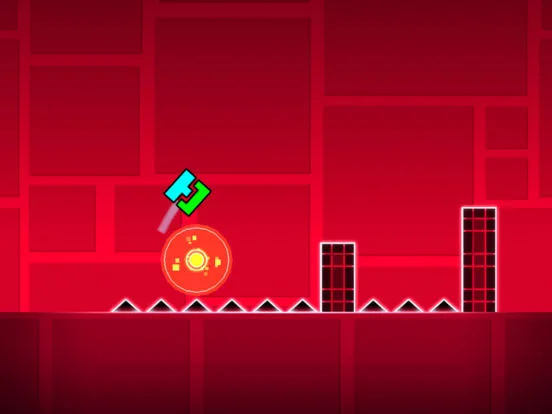
Learn the history and evolution of Geometry Dash. See how this rhythm platformer started and grew into a community-driven phenomenon shaped by its creator.
Trace the origins and development of Geometry Dash. This section explores its humble beginnings, key updates, and how it evolved into the rhythm platformer phenomenon it is today, shaped by its creator and community.
Geometry Dash, a game now synonymous with challenging rhythm-based platforming, began its life as a relatively simple concept. Developed by Robert Topala, also known as RobTop, the initial vision was for a game that combined precise platforming with an energetic soundtrack. The first version, released in 2013, was a mobile-only title that quickly gained traction due to its addictive gameplay and steep difficulty curve.
Early Days and Initial Release:
- 2013: Geometry Dash is released on iOS and Android. It features a limited number of official levels, but the core mechanics of tapping to jump and fly in sync with music are established. The game's simple yet challenging nature, coupled with its catchy electronic music, resonates with players seeking a difficult mobile experience.
- Focus on Core Mechanics: The initial focus was on perfecting the physics and timing for the cube and ship modes. The game's aesthetic was minimalist, emphasizing geometric shapes and vibrant colors.
Key Updates and Evolution:
- Geometry Dash Lite: A free version was released, offering a taste of the full game and encouraging players to purchase the complete experience.
- Introduction of the Editor: A pivotal moment in the game's history was the introduction of the level editor. This feature transformed Geometry Dash from a game with a finite number of levels into an ever-expanding universe of user-created content. Players could now des and share their own challenges, leading to an explosion of creativity.
- New Gameplay Modes: Over time, subsequent updates introduced new gameplay modes, such as the Ball, UFO, Wave, Robot, and Spider. Each new mode added a layer of complexity and required players to adapt their skills.
- Triggers and Advanced Mechanics: The editor evolved to include a sophisticated trigger system. This allowed creators to implement dynamic effects, moving objects, camera manipulation, and complex sequences, enabling the creation of levels that were far more interactive and visually impressive.
- PC Release (Steam): The game was eventually released on PC via Steam, bringing its unique gameplay to a wider audience and allowing for more complex control schemes and potentially better performance for creators.
- Geometry Dash 2.0 and Beyond: Major updates like 2.0, 2.1, and subsequent ones have consistently added new objects, triggers, features, and official levels. These updates have refined the editor, improved performance, and introduced new challenges, keeping the game fresh and engaging.
The Impact of the Community:
The evolution of Geometry Dash is inextricably linked to its community. The level editor empowered players to become creators, pushing the boundaries of what was thought possible within the game's engine. The community's demand for harder challenges and innovative dess has continuously driven the game's development, with RobTop often incorporating popular community ideas or responding to player feedback in updates. The rise of Geometry Dash content creators on platforms like YouTube has also played a significant role in its sustained popularity, showcasing incredible feats of skill and creativity.
From its simple mobile origins, Geometry Dash has grown into a complex and enduring rhythm platformer, a testament to its solid core mechanics, the vision of its creator, and the boundless creativity of its player base.
100% Human-Written. AI Fact-Checked. Community Verified. Learn how AntMag verifies content