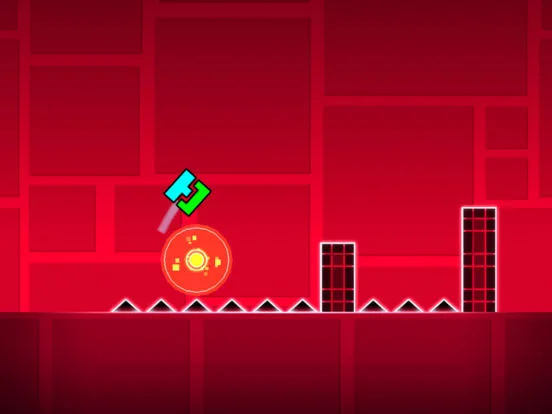
Master Geometry Dash blocks & spikes. Learn basic platforming and hazard placement, plus advanced techniques for decorative structures and challenging gameplay.
Blocks and spikes are the fundamental building blocks of any Geometry Dash level, serving both as platforms for traversal and deadly obstacles. Mastering their basic placement for navigation and understanding advanced techniques for creating intricate dess and challenging gameplay is essential for any aspiring creator.
Blocks and spikes are the absolute bedrock of Geometry Dash level des. Without them, there would be no gameplay. However, their utility extends far beyond simple platforms and hazards. Understanding how to manipulate these core elements, both in basic and advanced ways, is what separates a rudimentary level from a truly engaging and challenging experience. They are the tools with which creators sculpt the player's journey.
Basic Usage:
- Blocks as Platforms: The most straightforward use is to create pathways for You to jump on. Spacing blocks correctly is crucial for determining jump distances and timing.
- Spikes as Hazards: Spikes are the primary source of instant death. Placing them strategically forces players to time their jumps and movements precisely.
- Creating Corridors: Using blocks to form walls and ceilings, and spikes to line them, creates narrow passages that require careful navigation.
- Visual Cues: Blocks can be colored to indicate different pathways or sections of a level. Spikes, with their inherent danger, naturally draw the player's attention.
Advanced Usage:
- Decorative Blocks: Blocks can be scaled, rotated, and colored to create intricate patterns, structures, and even thematic elements. They can form the illusion of walls, buildings, or abstract art.
- Invisible Blocks: By using the 'Invisible' block option, creators can create hidden platforms or pathways that only become apparent when You interacts with them or through visual cues. This adds an element of surprise and exploration.
- Moving Blocks (with Triggers): While blocks themselves are static, they can be made to move using the 'Move' trigger. This allows for dynamic platforms, shifting walls, and complex environmental puzzles.
- Spike Placement for Precision: Beyond simply lining corridors, spikes can be used to create "spike traps" that require extremely precise timing to pass through, or to create visual patterns that guide or mislead the player.
- Block Des and Aesthetics: Experiment with different block types (e.g., the 'Glow' block) and combine them with various colors and textures to create unique visual styles. Layering blocks can add depth and complexity to the scenery.
- Creating "False" Paths: Using blocks and spikes, creators can des sections that appear to offer a safe path but lead to a trap, testing the player's judgment and observation skills.
Key Considerations:
| Element | Basic Function | Advanced Application |
|---|---|---|
| Blocks | Platforms, walls | Decorative structures, invisible platforms, moving elements |
| Spikes | Hazards, obstacles | Precision timing challenges, visual patterns, traps |
The true artistry in Geometry Dash level des often lies in the creative and unexpected ways creators utilize these fundamental elements to challenge and entertain players.
100% Human-Written. AI Fact-Checked. Community Verified. Learn how AntMag verifies content