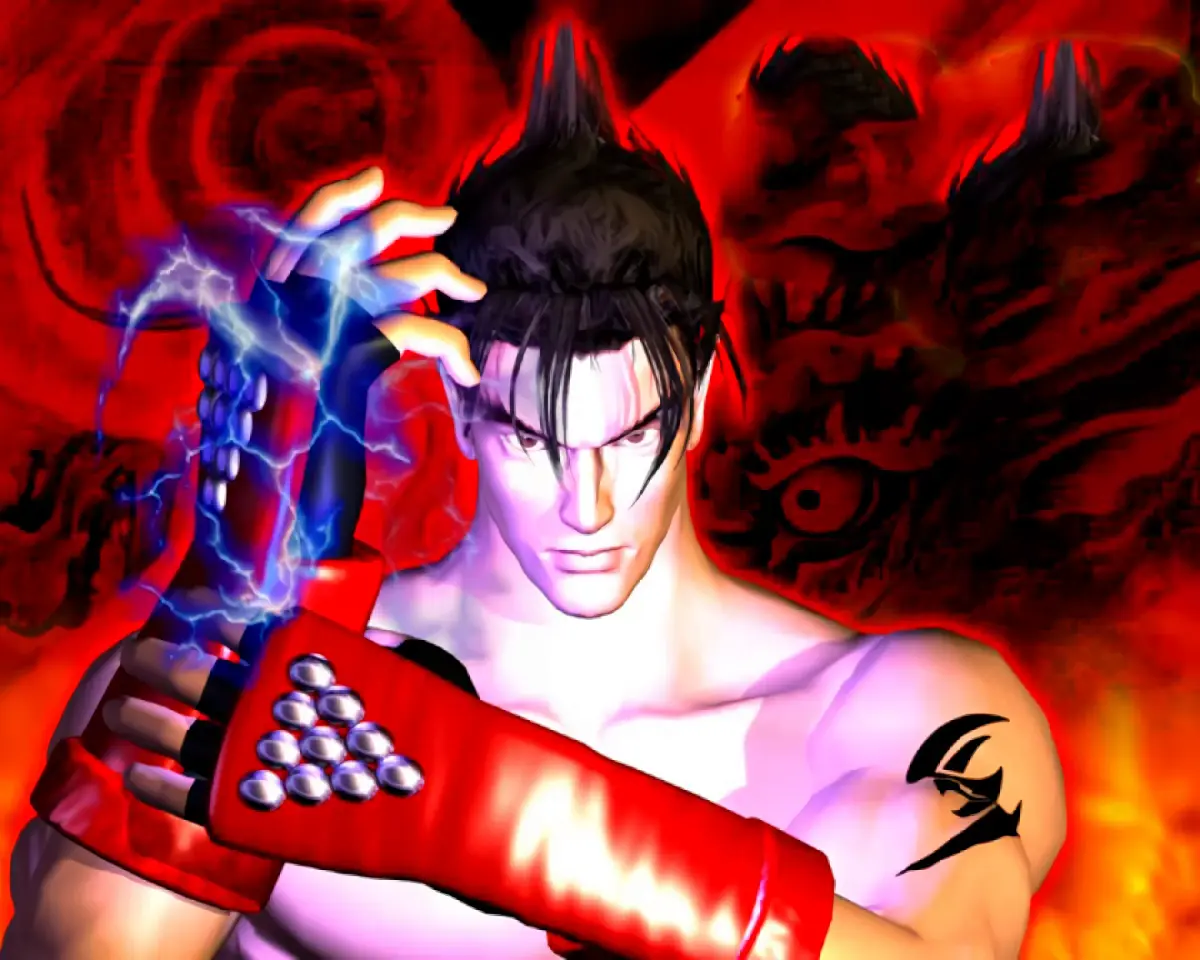
Dive into Tekken 3's Part 61! Learn the ins and outs of specific moves, their properties, and how to execute them for maximum impact. Your guide to mastering the ring!
Alright, let's break down what's going on in this section of the guide. It looks like we're diving deep into some specific moves in Tekken 3. This isn't about a particular character, but more of a technical breakdown of certain inputs and their effects. Think of it as learning the secret language of the game's mechanics.
We're going to go through each move listed, explaining what it does, how to pull it off, and what kind of follow-ups or properties it has. It's a bit dense, but understanding these details will seriously level up your game.
Tekken 3 Part 61 Move Breakdown
This section is all about understanding the nuances of specific move inputs. Each entry shows a move, its properties, and some associated data. Let's get into it!
UF+3
Move: UF+3
Properties: All m (mid)
Range: rng3
Damage: 18
Notes: This move has some interesting properties, indicated by the 'fc|fc|fc' which likely refers to follow-up possibilities or states.
FC+3
Move: FC+3 (While crouching)
Properties: All l (low)
Range: rng3
Damage: 12
Notes: This is a low attack performed while crouching. The 'fc <>' suggests it can be followed up or has a specific recovery animation.
D+3
Move: D+3 (Down + 3)
Properties: All l (low)
Range: rng2
Damage: 12
Notes: Another low attack. The '<>' might indicate a specific hit state or opportunity.
WS+3
Move: WS+3 (While standing + 3)
Properties: All h (high)
Range: rng2
Damage: 22
Notes: This is a high attack performed as you're standing up from a crouch. The '|grut|grut|grut' could signify a specific juggle state or effect. There's a note here: '2p may recover the STNM by holding F'. This means if the opponent (2p) holds forward right after this connects, they might recover from a specific stun state (STNM).
DF+3
Move: DF+3 (Down-Forward + 3)
Properties: All m (mid)
Range: rng3
Damage: 17
Notes: A mid attack performed with a down-forward input. The '<>' suggests a standard hit or recovery.
3 (String Starter)
Move: 3 (String Starter)
Properties: h|h|h|stgh (high, high, high, standing high)
Range: rng2
Damage: 15
Notes: This is the start of a potential string of attacks. The properties show a sequence of high attacks, ending in a standing high. The '<>' indicates a standard connection.
UF+3 (String Starter)
Move: UF+3 (Up-Forward + 3) (String Starter)
Properties: stgm|m|m|m (stagger mid, mid, mid, mid)
Range: rng4
Damage: 15
Notes: This move, starting from an up-forward jump, can lead into a mid-hitting string. The '|grut|grut|grut' suggests it can lead into a juggle state.
U,UB+3
Move: U,UB+3 (Up, Up-Back + 3)
Properties: All m (mid)
Range: rng2
Damage: 20
Notes: A mid attack with a specific directional input. The '|grut|grut|grut' indicates potential for juggles.
UF~3
Move: UF~3 (Up-Forward ~ 3)
Properties: All m (mid)
Range: rng3
Damage: 25
Notes: Another mid attack with a slightly different input timing. The '|grut|grut|grut' implies juggle potential.
UF,U,UB~3
Move: UF,U,UB~3 (Up-Forward, Up, Up-Back ~ 3)
Properties: All m (mid)
Range: rng4, rng2, rng-1
Damage: 25
Notes: This is a more complex string. The properties 'rng4_rng2_rng-1' suggest varying ranges for each part of the move. There's a crucial note: 'this move is too high to connect against a standing opponent: 2p must be airborne'. This means you can only hit with this if the opponent is already in the air.
UF,U,UB~~3
Move: UF,U,UB~~3 (Up-Forward, Up, Up-Back ~~ 3)
Properties: m|STNM|m|m (mid, STNM, mid, mid)
Range: rng4, rng2, rng-1
Damage: 25
Notes: Similar to the previous one, but with different properties. The 'STNM' suggests a specific stun state. The '|grut|grut|grut' indicates it can lead into a juggle.
UF,U,UB~~~3
Move: UF,U,UB~~~3 (Up-Forward, Up, Up-Back ~~~ 3)
Properties: All l (low)
Range: rng4, rng2, rng-1
Damage: 15
Notes: This is the low-hitting version of that complex string. The 'fc <>' suggests it can be followed up with a crouching forward attack.
FC+4
Move: FC+4 (While crouching + 4)
Properties: All l (low)
Range: rng2
Damage: 10
Notes: A low attack performed while crouching. The 'fc <>' indicates it can be followed up with a crouching forward attack.
D+4 (String Starter)
Move: D+4 (Down + 4) (String Starter)
Properties: All l (low)
Range: rng3
Damage: 7
Notes: A low starter move. The 'fc <>' suggests it can lead into a crouching forward attack.
WS+4 (String Starter)
Move: WS+4 (While standing + 4) (String Starter)
Properties: All m (mid)
Range: rng2
Damage: 13
Notes: A mid attack performed while standing up. The '<>' indicates a standard hit.
DF+4
Move: DF+4 (Down-Forward + 4)
Properties: All m (mid)
Range: rng2
Damage: 15
Notes: A mid attack with a down-forward input. The '<>' suggests a standard connection.
4 (String Starter)
Move: 4 (String Starter)
Properties: h|h|h|stgh (high, high, high, standing high)
Range: rng2
Damage: 14
Notes: This is another high-hitting string starter. There's a note: '2p may recover grut(if this kick connects on mjrc) by holding D immediately after the connect'. This means if this move hits a specific opponent state ('mjrc') and they hold down immediately, they might recover into a 'grut' state.
UF_U_UB+4
Move: UF_U_UB+4 (Up-Forward, Up, Up-Back + 4)
Properties: All h (high)
Range: rng3
Damage: 25, 37
Notes: A high attack with a significant juggle potential, indicated by '|grut|grut|grut'. The damage is listed as 25, 37, suggesting different damage values depending on the hit or follow-up.
UF~4
Move: UF~4 (Up-Forward ~ 4)
Properties: m|M(nrml)|M(nrml)|M(nrml) (mid, mid (normal), mid (normal), mid (normal))
Range: rng3
Damage: 25
Notes: This move starts with a mid hit and can lead into a string of normal mid attacks. The '|grut|grut|grut' shows it can lead into juggles.
UF_U_UB~4
Move: UF_U_UB~4 (Up-Forward, Up, Up-Back ~ 4)
Properties: All m (mid)
Range: rng4, rng2, rng-1
Damage: 25
Notes: This is a mid-hitting string. The damage is 25, and it has potential for juggles, as shown by '| grut|grut'.
100% Human-Written. AI Fact-Checked. Community Verified. Learn how AntMag verifies content