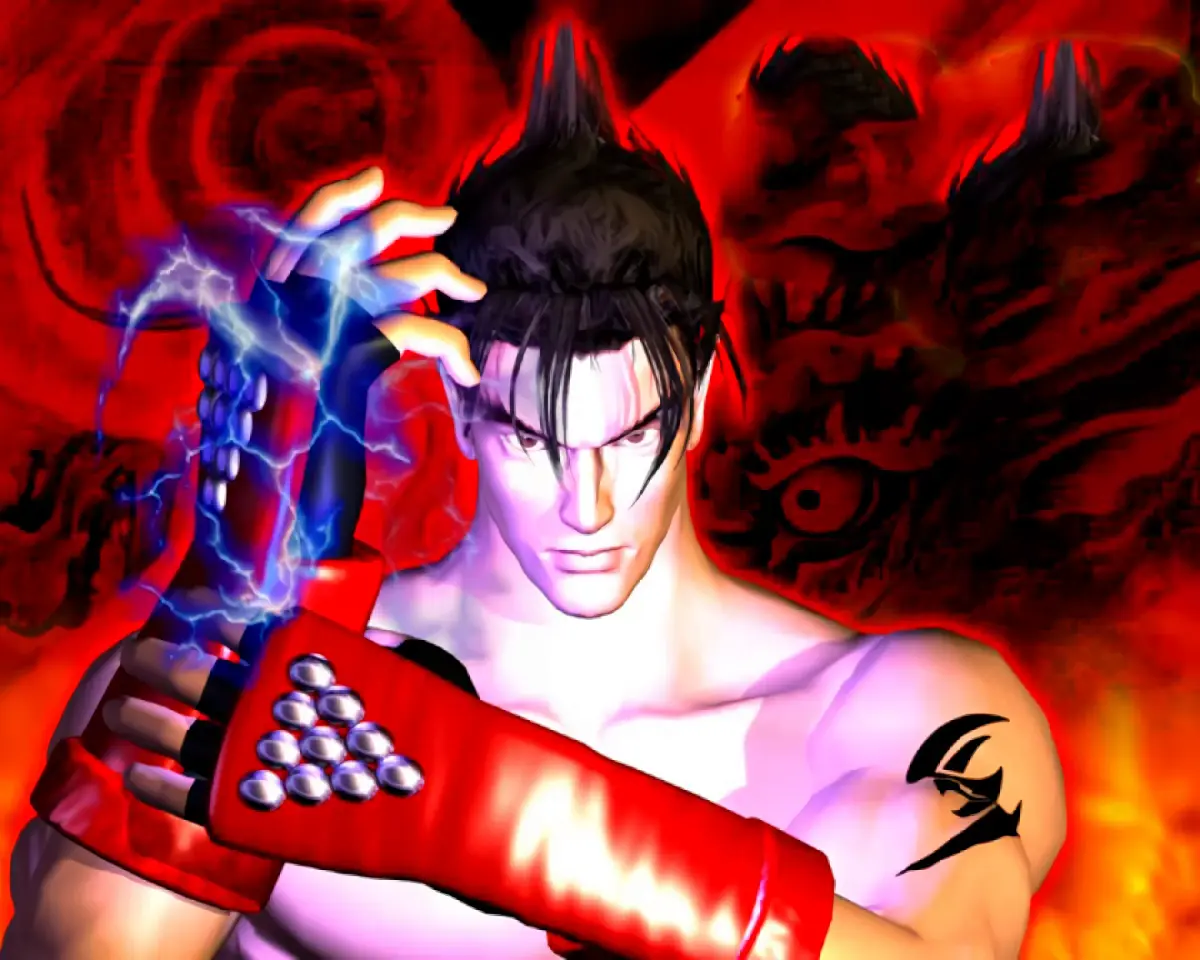
Dive into Part 27 of our Tekken 3 guide! Learn essential moves, throws, and multi-throw techniques to dominate the arena. Get the edge you need!
Alright, let's break down Part 27 of our Tekken 3 journey. This section is all about getting a grip on some specific moves, throws, and how to string them together. It's not a traditional level or boss fight, but more of a deep dive into the mechanics and options available to you.
Think of this part as expanding your toolkit. We'll cover moves that cause knockdowns, some powerful throws, and even a neat multi-throw sequence. Mastering these will definitely give you an edge in those tricky matches.
Knockdown Moves:
A few moves here have the potential to knock your opponent down if they connect cleanly or as a counter. The source text mentions moves like '3' and '4' with certain follow-ups (like 'l', 'm', 'flt', 'grua', 'grut') that can lead to a knockdown. The key thing to remember is that if a move isn't a clean hit and isn't a counter, you won't get the knockdown effect. So, timing and precision are key here!
Throws:
Throws are crucial in Tekken, especially when your opponent is blocking too much. This section details a few:
- 1+3 [1]: A standard throw, often available from a neutral stance (rng1) and deals 30 damage.
- 2+4 [2]: Another standard throw, also from neutral (rng1) with 30 damage.
- fc{df{d{df+1+2 [1+2]: This is a more complex throw that can only be done from a crouching forward (fc{df) position. It's a bit of a sequence, taking 45 damage (10+8+27).
- (2p rst)any# [2]: This is a throw that can be initiated after a specific reset (rst) situation, dealing 40 damage.
- (2p lst)any# [1]: Similar to the above, but from a 'lst' situation, also 40 damage.
- (2p bt)any#: This is a throw from a back turned (bt) position, dealing a hefty 60 damage.
Multi-Throw:
This is where things get really interesting. Tekken 3 allows for multi-throws, where one throw can lead into another if timed correctly.
- ws2: This is the starter for a multi-throw. If it connects, you can follow up with 1 (b+2).
- Timing: The source notes that you need to complete the 'Double Punishment' (b+2) immediately after the 'Gutpunch' (ws2) connects.
- Combo Follow-up: This multi-throw can be part of a larger juggle combo, often followed by b+2, 1, 4.
Counterattacks:
There are also specific counterattack moves listed:
- df_d_db+1+3: This can lead into a low poke (lpry) and potentially a combo if it's a low poke counter (lkpry).
- df_d_db+2+4: Similar to the above, also a low poke counter potential.
Combinations:
Finally, the guide breaks down some starter moves and their potential follow-ups. This is crucial for building combos:
- ws1 (hi) can be followed by 1.f+4~3~~4.
- uf_u_ub+4 (bnc) can be followed by b+2~1~~4.
- uf_u_ub~_~~_~~~4 (nrml) can be followed by (run)d+4.
- (grut)F_B(roll).f+1+2 can be followed by df+3.
- ws2~b+2 (multi-throw, bnc) can be followed by b+2~1~~4.
- df+3 (flt) can be followed by ws3.1.f~F{2.
- ws3 (mjrc, stnm) can be followed by f~F{2.(run)d+4.
- f~f+2 (H) can be followed by (run)d+4.
- any T (throw) can be followed by df+3.
This section is all about practicing these sequences. Don't get discouraged if you don't nail them immediately. Keep trying, focus on the timing, and you'll start seeing these combos connect more often!
100% Human-Written. AI Fact-Checked. Community Verified. Learn how AntMag verifies content