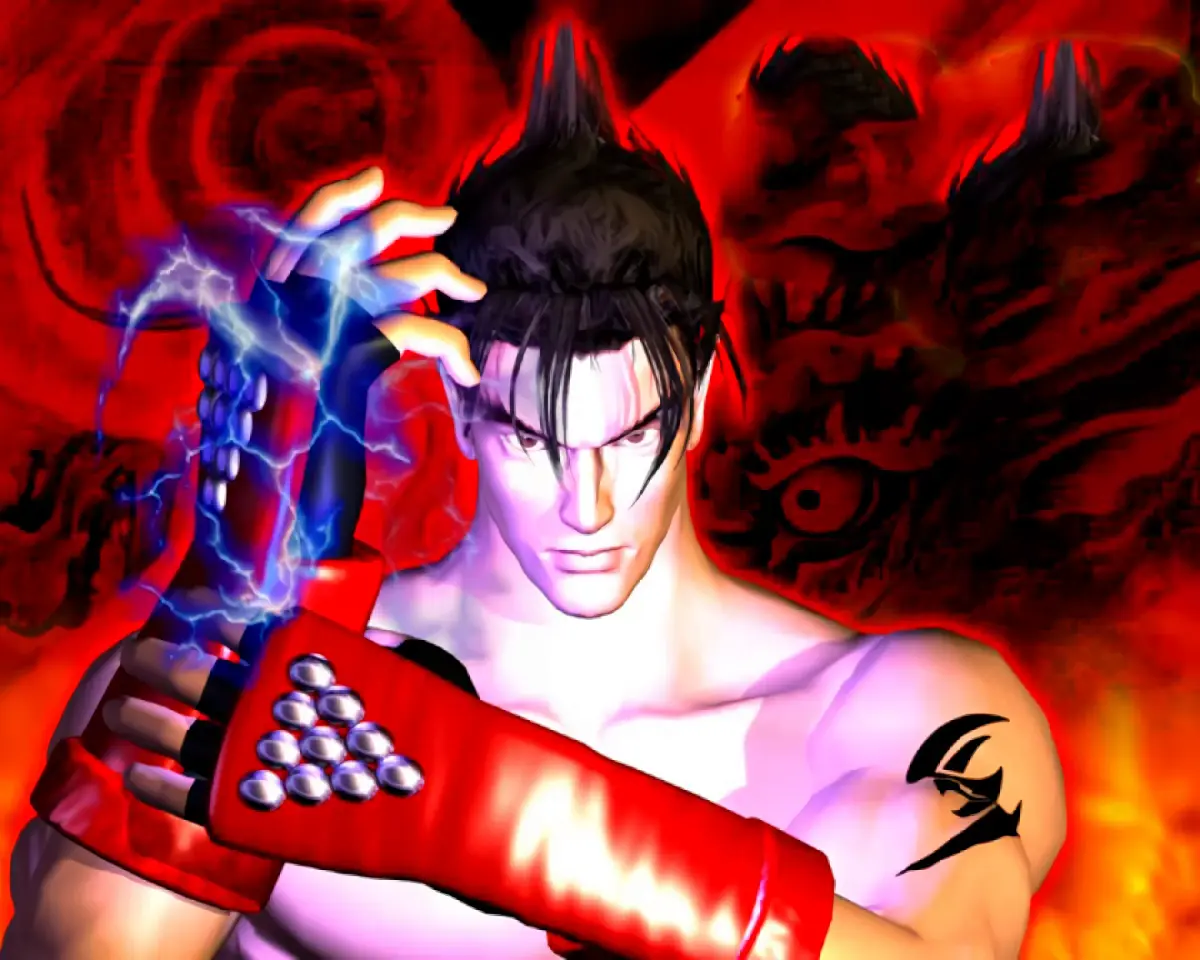
Dive into Tekken 3 Part 4! Learn essential controls, button notations, movement types, and attack classifications to dominate the arcade.
Alright, so we're diving into Part 4 of the Tekken 3 guide. Before we get too deep into actual fights and strategies, it's super important to get a handle on the game's lingo. Think of this like learning the alphabet before you can read a book – it'll make everything else we cover way easier to understand.
The author mentions they were a bit… relaxed… while writing this FAQ, so don't sweat it if you find any typos or weird phrasing. Just let them know! They also have a pretty unique take on enjoying Tekken 3, which involves a few drinks and hitting the arcade. While I can't officially recommend that, the sentiment of 'don't let the frustrating parts get to you' is solid advice.
This section is basically your cheat sheet for all the terms and notations you'll see throughout the guide. It's broken down into a few key areas: the controller layout, button inputs, movement commands, and attack types. Let's break it down so you're not lost when we start talking about specific moves.
Interface and Notations
First up, let's talk about how we'll be describing your inputs. This is crucial!
Controller Layout
You've got your standard arcade stick here. The directional inputs are pretty standard fighting game stuff:
- Forward (f): Towards the opponent.
- Back (b): Away from the opponent.
- Up (u): Jumping towards the opponent.
- Down (d): Crouching.
- Up-Forward (uf), Up-Back (ub), Down-Forward (df), Down-Back (db): These are your diagonal directions.
- Neutral (n): Not pressing any direction.
A key thing to note: a lowercase letter (like 'u') means a quick tap in that direction, while an uppercase letter (like 'U') means you press and hold it. This can make a difference in some moves!
Button Notations
Tekken 3 uses four main buttons:
- 1: Left Punch
- 2: Right Punch
- 3: Left Kick
- 4: Right Kick
So, if you see something like '1+2', it means you press the Left Punch and Right Punch buttons at the same time. Easy enough, right?
Movement Terms
This is where things get a bit more specific. You'll see these a lot when we talk about how to position yourself or get around the stage:
- ss (Side Step): Moving sideways.
ssris a side step to your character's right, andsslis to their left. - wlkf / wlkb (Walk Forward / Walk Backward): Just walking normally.
- dshf / dshb (Dash Forward / Dash Backward): A quicker forward or backward movement.
- crwlkf / crwlkb (Crouching Walk Forward / Backward): Moving while crouching.
- crdshf / crdshb (Crouching Dash Forward / Backward): A quick dash while crouching.
- run: Running towards the opponent.
- ws (While Standing): This refers to actions performed as your character is getting up from a crouch.
- wc (While Crouching): Actions performed as your character is starting to crouch.
Positioning Terms
Understanding ranges is super important in Tekken. These terms help describe how close you are to your opponent:
- rng-1: Opponent is right up against you and pushing forward.
- rng0: Directly against the opponent.
- rng1: Within short throw range (like Nina's 1+3) or quick jab range.
- rng2: Within kick range or long throw range.
- rng3: Within the range of longer-reaching standing attacks.
- rng4: The maximum range of your longest standing attacks.
- rng5: The range of a short running attack.
- rng6: The range of a standard run.
- bt (Back Turned): Your character's back is facing the opponent.
- rst (Right Side Towards): Your character's right side is facing the opponent.
- lst (Left Side Towards): Your character's left side is facing the opponent.
- Ground Positions (grut, grua, grdt, grda, etc.): These describe your character's position when knocked down – whether they're on their back or stomach, and which way their feet are pointing.
Attack Types
This is how we classify attacks. Knowing these will help you block correctly and know what kind of hit you've landed:
- High (h), Mid (m), Low (l): Standard attack heights. Highs can be blocked standing or crouching (but are risky), mids must be blocked standing, and lows must be blocked crouching.
- Special Mid (s): These are a bit tricky; they often hit like a mid but can sometimes be ducked.
- Unblockable (uh, um, ul): These attacks cannot be blocked! You have to dodge or interrupt them.
- Staggering (stgh, stgm, stgl): Attacks that can stun the opponent, potentially leading into a combo.
- Stunning (stnh, stnm, stnl): Similar to staggering, these can interrupt an opponent's action or set up follow-ups.
- Throw (t): Standard throws. These are unblockable but can be escaped by pressing the correct buttons.
Combo Starters: If you see a capital letter (like 'M' for a Mid combo starter), it means that move can often lead into a juggle combo if it connects.
Counterattacks
- Major Counter (mjrc): A powerful counter hit that often causes a stagger or knockdown.
- Minor Counter (mnrc): A less powerful counter hit.
- Reversal (rev): A move that can counter either a high or mid punch/kick.
- Punch Reversal (prev): A reversal specifically for punches.
Phew! That's a lot of terms, I know. But seriously, spend a few minutes just reading through this key. The better you understand these notations, the smoother our journey through the rest of Tekken 3 will be. It's like learning a secret language that unlocks all the cool stuff!
100% Human-Written. AI Fact-Checked. Community Verified. Learn how AntMag verifies content