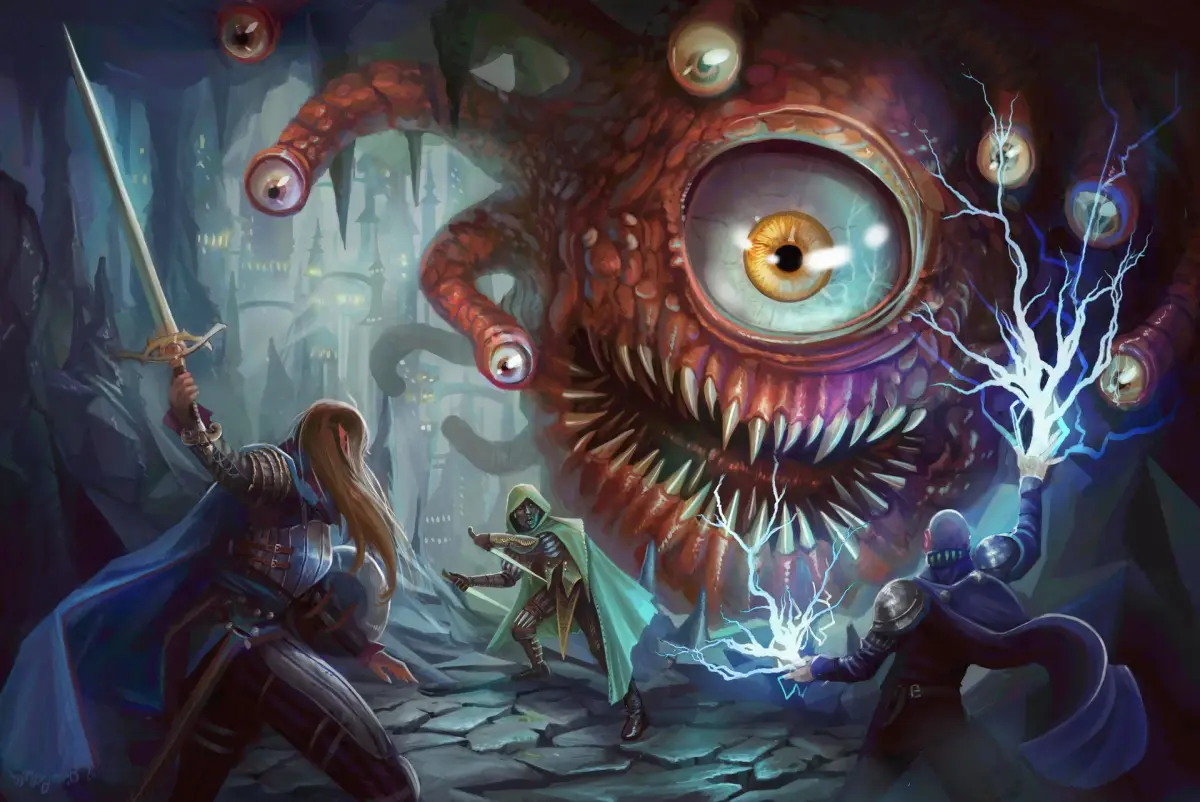
Prepare for an epic journey in Baldur's Gate II: Shadows of Amn, a legendary PC strategy RPG. This extensive guide, featuring 115 sections, covers everything from character creation and class overviews to detailed walkthroughs and companion quests. Find expert advice on party composition, item locations, and strategies to overcome challenging boss fights.
Mechanics
Understand Baldur's Gate II: Shadows of Amn's core mechanics, including AC, THAC0, saving throws, spellcasting, weapon speed, attack rates, levels, experience, and hit points.
Baldur's Gate II: Shadows of Amn utilizes the Advanced Dungeons & Dragons (AD&D) 2nd Edition ruleset, which may differ from modern RPG conventions. This guide explains the core mechanics.
AD&D Rules Explained:
- Armor Class (AC)
- A measure of how difficult you are to hit in combat. AC starts at 10 and decreases; a more negative AC is better. Bonuses to AC lower the value. AC acts as a modifier to an opponent's 'to hit' roll.
- THAC0 (To Hit Armor Class 0)
- Determines the probability of hitting an opponent with a twenty-sided die (d20). A ninth-level Fighter or thirteenth-level Cleric has a THAC0 of 12, meaning they hit on a roll of 12 or higher before AC modifiers. For example, against AC -2, a roll of 14 or higher is needed (14 - 2 = 12). Against AC 1, a roll of 11 or higher is needed (11 + 1 = 12).
- Saving Throws
- A d20 roll used to resist magical effects. You must roll equal to or greater than your saving throw value to succeed. A saving throw of 16 vs. spells gives a 1-in-4 chance of avoiding or reducing magic's effects. Saving throws decrease as you gain levels. Different saving throw values exist for different attack types.
- Magic System
- Unlike mana pools, magic uses a finite number of spells. Once cast, a spell is unavailable until you rest. Mages can only cast spells they have memorized from their spellbook, which is updated by writing down spells from scrolls.
- Weapon Speed
- A number from 0 to 10, where lower is better, determining attack order. Spell casting time is equivalent to weapon speed. Being hit during casting interrupts the spell.
- Attack Rate
- Independent of weapon speed, this is determined by Fighter level and weapon skill. Base is one attack per round. Reaching Fighter level 7 or two points in weapon proficiency grants an extra half-attack per round. Two attacks per round require level 7 Fighter and proficiency level 2. The maximum of three attacks per round requires level 13 Fighter and proficiency level 5. Missile weapons have different base rates (e.g., crossbows one per round, darts three per round).
Levels
The term 'Level' in D&D can refer to a dungeon section, a character's power and spellcasting ability, or general power (e.g., 'high-level loot').
Experience Points (XP)
Characters gain levels by earning XP from defeating enemies and completing quests. XP requirements increase exponentially per level. After certain levels (9 for warriors/divine casters, 11 for Mages/Rogues), subsequent levels require a fixed XP amount (220,000 for Thieves/Bards to 375,000 for Mages/Sorcerers). XP is divided among party members, so smaller parties level up faster.
Hit Points (HP)
HP measures the vigour of characters and enemies. Player HP is visible; enemy HP is indicated by descriptive states (Uninjured, Injured, Near Death). Reaching 0 HP means death, though resurrection is possible via temples or spells. On Core Rules difficulty and higher, taking damage that results in deep negative HP causes permanent character death ('blasted into chunks'). On Story Mode, characters cannot die. On other difficulties, significant HP loss requires healing or retreating to rest.
Weapon Proficiency
To use a weapon effectively, at least one proficiency point must be spent. Using an unproficient weapon incurs a THAC0 penalty (2 for warriors, 5 for mages). Only single-classed Fighters can achieve proficiency levels higher than 2 in most weapons. The Archer kit can attain Grandmastery.
Guide and Walkthrough (PS4) by chris-williams
Baldur's Gate II: Shadows of Amn Table of Contents, covering all chapters, character creation, companions, items, and Watcher's Keep.
- 1Introduction
- 2Mechanics
- 3Copyright and Acknowledgments
- 4Character Creation
- 5Attributes
- 6Character Race
- 7Warriors
- 8Fighters
- 9Barbarians
- 10Rangers
- 11Paladins
- 12Arcane Spellcasters
- 13Mages
- 14Sorcerers
- 15Mage Spells
- 16Divine Spellcasters
- 17Clerics
- 18Druids
- 19Monks
- 20Shamans
- 21Cleric Spells
- 22Druid Spells
- 23Rogues
- 24Thieves
- 25Bards
- 26Strongholds
- 27Companions
- 28Companion Listing
- 29Chapter 1: Finding a Way Out
- 30Irenicus' Dungeon
- 31Waukeen's Promenade
- 32Chapter 2: Exploring Athkatla
- 33Slum District
- 34Government District
- 35Circus Tent
- 36City Gates
- 37Docks District
- 38Temple District
- 39Bridge District
- 40Mae'Var's Guildhall
- 41Graveyard District
- 42Chapter 2: Beyond Athkatla
- 43de'Arnise Hold
- 44Trademeet
- 45Umar Hills
- 46Windspear Hills
- 47Planar Prison
- 48Planar Sphere
- 49Chapter 2: Companion Quests
- 50Anomen
- 51Cernd
- 52Edwin
- 53Hexxat
- 54Jaheira
- 55Jan
- 56Keldorn
- 57Mazzy
- 58Nalia
- 59Neera
- 60Rasaad
- 61Chapter 3: Picking a Side
- 62The Shadow Thieves
- 63The Rival Guild
- 64Athkatla: Loose Ends
- 65Chapter 4: Effecting a Rescue
- 66Brynnlaw
- 67Spellhold
- 68Spellhold Dungeon
- 69Escape from Spellhold
- 70The City-of-Caverns
- 71Chapter 5: Finding Your Way Back
- 72The Underdark
- 73Ust Natha
- 74The Eastern Tunnels
- 75The Southern Tunnels
- 76The Western Tunnels
- 77Chapter 6: Staking a Claim
- 78Return to Athkatla
- 79Limited Wish Quest
- 80Assault on Bodhi's Lair
- 81Wilderness Areas
- 82Chapter 7: Taking Back What's Yours
- 83Suldanessellar
- 84Hell
- 85Chapter 8: Besieged
- 86The Pocket Plane
- 87Saradush
- 88Saradush Prison / Saradush Palace
- 89Lifting the Siege
- 90Chapter 8: Companion Quests
- 91Neera (ToB)
- 92Rasaad (ToB)
- 93Chapter 9: The Bhaalspawn
- 94Amkethran
- 95Abazigal's Lair
- 96Sendai's Enclave
- 97The Last of the Five
- 98Watcher's Keep
- 99Finale: The Throne of Blood
- 100Appendix: True Lord of Murder
- 101Items
- 102Mundane Items
- 103Magic Weapons
- 104Magic Armour
- 105Equipment and Consumables
- 106Crafting
- 107Trophies
Character Creation
Learn how to create your character in Baldur's Gate II: Shadows of Amn, including importing saves, multiclass vs dual class, and class rankings.
If you have completed Baldur's Gate and/or Siege of Dragonspear and are happy with your character, you can import your character from a savegame. This offers several advantages:
- Attribute boosts from tomes used in Baldur's Gate, potentially giving you an eight-point advantage to attributes.
- Greater starting experience points (XP): up to 161,000 XP if you completed Baldur's Gate, and up to 500,000 XP if you completed Siege of Dragonspear.
- The possibility of carrying over certain items, including the Golden Pantaloons (required for a very late-game bonus) and various magic items.
If you start a new character, you will begin with 89,000 XP.
Multiclass vs. Dual Class
A multiclass character (e.g., Fighter/Mage) combines the strengths of two classes simultaneously. A dual-class character (e.g., Fighter -> Mage) starts as one class and then switches to another, aiming to build a better version of the second class (e.g., a Mage with decent hit points and Grand Mastery in short bows). Both approaches aim for a combination superior to either class alone.
The primary advantage of multiclass characters is no downtime. A key advantage of dual-class characters is that the first class can be a kit, offering unique benefits like a Berserker's Rage. Dual-class characters also level twice as fast in their secondary class. However, very long-term, multiclass characters become more powerful, especially when High Level Abilities (HLAs) unlock, allowing them to use abilities from both classes, whereas dual-class characters only gain HLAs from their final class. HLAs do not appear until the very end of the saga, roughly one-third to one-fifth of total playtime.
Class Rankings
There are many class combinations in Baldur's Gate II: Shadows of Amn, but some are significantly stronger than others. The following rankings assume Core Rules difficulty; Legacy of Bhaal difficulty significantly boosts summoning, elevating the Shaman from a C to a B+ ranking.
Single Class
- Fighter (B): A solid, beginner-friendly choice focused on combat. Grand Mastery is a powerful feature, and the vanilla Fighter is an excellent base for dual-classing.
- Berserker (B): The best Fighter kit. You can work around weapon restrictions by taking proficiency points in daggers or axes. It's also the best base for dual-classing.
- Wizard Slayer (D-): Among the worst choices due to the inability to equip most magic items. Its miscast magic ability and limited magic resistance do not compensate for these deficiencies. A niche late-game dual-class combination with Thief exists where a High Level Ability removes class restrictions, but this is only beneficial at the saga's end.
- Kensai (C): Forces you to the front lines with minimal defense, keeping party Clerics busy. It excels at dealing damage but struggles with survival. It is a solid dual-class base, particularly when dualled to Thief. Importing a character can bypass the initial difficulty.
- Dwarven Defender (B+): Damage reduction is crucial in Baldur's Gate II: Shadows of Amn, making the Dwarven Defender significantly more effective than a vanilla Fighter.
- Barbarian (B-): Armour restrictions are a drawback, though long-term damage reduction offers some compensation. Otherwise, it functions similarly to a Fighter, which is acceptable.
- Ranger (C): The upfront bonus of two free proficiency points in Two Weapon Style becomes less impactful by Baldur's Gate II: Shadows of Amn. The increased leveling cost without a significant benefit is also a drawback.
- Archer (A-): The Archer's accumulating damage bonuses allow for consistent killing from a safe distance. Specializing in short bows is recommended due to better weapon selection. Elves are the preferred race for Dexterity and combat bonuses. Slings are also viable as they benefit from Strength and class bonuses to damage.
- Stalker (C): Armour limitations are detrimental. A Fighter/Thief serves as a better scout, and an Archer is superior for ranged combat.
- Beast Master (D-): Too many sacrifices are made for a few weak summoning spells.
- Paladin (C+): The vanilla Paladin lacks expected bonuses (like immunity to disease), and its kits are generally superior.
- Cavalier (B+): Offers useful immunities and resistances.
- Undead Hunter (B+): A very strong choice, its class immunities are highly beneficial.
- Inquisitor (B): Better suited to its role than the Wizard Slayer, though still not top-tier.
Attributes
A comprehensive guide to character attributes in Baldur's Gate II: Shadows of Amn. Learn how Strength, Intelligence, Wisdom, and Dexterity impact your gameplay, combat, and skills.
During character creation in Baldur's Gate II: Shadows of Amn, you will "roll" your characters' attributes. You can swap points between attributes, provided you don't go below the class minimums or 3. You can re-roll as much as you like if you don't like the numbers. A good rule of thumb is to aim for a total of around 90 attribute points. For Fighter-type characters, pay attention to the percentile score when Strength is 18; an 18/91 is better than 90 points and an 18/01. Generally, you cannot start with an attribute of 19 or greater, though some racial choices allow this at the cost of reducing other attributes' maximums. Characters imported from Baldur's Gate might have attributes of 19 or 20.
Strength
Investment in Strength increases THAC0 (To Hit Armor Class 0), damage per attack, bash chance, and weight allowance.
| Value | To Hit | Damage | Bash % | Carry |
|---|---|---|---|---|
| 9 | 0 | 0 | 8 | 50 |
| 10 | 0 | 0 | 10 | 70 |
| 11 | 0 | 0 | 10 | 70 |
| 12 | 0 | 0 | 12 | 90 |
| 13 | 0 | 0 | 12 | 90 |
| 14 | 0 | 0 | 14 | 120 |
| 15 | 0 | 0 | 14 | 120 |
| 16 | 0 | +1 | 16 | 150 |
| 17 | +1 | +1 | 18 | 170 |
| 18 | +1 | +2 | 20 | 200 |
| 18/01-50 | +1 | +3 | 25 | 220 |
| 18/51-75 | +2 | +3 | 30 | 250 |
| 18/76-90 | +2 | +4 | 35 | 280 |
| 18/91-99 | +2 | +5 | 40 | 320 |
| 18/00 | +3 | +6 | 45 | 400 |
| 19 | +3 | +7 | 50 | 500 |
| 20 | +3 | +8 | 55 | 600 |
| 21 | +4 | +9 | 60 | 700 |
| 22 | +4 | +10 | 65 | 800 |
| 23 | +5 | +11 | 70 | 1000 |
| 24 | +6 | +12 | 75 | 1200 |
| 25 | +7 | +14 | 80 | 1600 |
The "To Hit" column applies to melee weapons; Dexterity provides the THAC0 bonus for missile weapons. The damage bonus applies to thrown weapons and slings. "Bash %" is the chance to break open locked containers, though a Thief is more convenient. "Carry" is the maximum weight for items; exceeding it slows movement, and greatly exceeding it can immobilize your character. Some equipment has a minimum Strength requirement; 15 is sufficient for all items.
Intelligence
Intelligence is crucial for Mage characters, governing maximum spell level and spells per level. For all characters, it provides a bonus to the Lore skill.
| Value | Spell Level | Learn % | Max Spells | Lore Bonus |
|---|---|---|---|---|
| 9 | 4 | 35 | 6 | -10 |
| 10 | 5 | 40 | 7 | 0 |
| 11 | 5 | 45 | 7 | 0 |
| 12 | 6 | 50 | 7 | 0 |
| 13 | 6 | 55 | 9 | 0 |
| 14 | 7 | 60 | 9 | 0 |
| 15 | 7 | 65 | 11 | 3 |
| 16 | 8 | 70 | 11 | 5 |
| 17 | 8 | 75 | 14 | 7 |
| 18 | 9 | 85 | 18 | 10 |
| 19 | 9 | 95 | All | 12 |
| 20 | 9 | 96 | All | 15 |
| 21 | 9 | 97 | All | 20 |
| 22 | 9 | 98 | All | 25 |
| 23 | 9 | 99 | All | 30 |
| 24 | 9 | 100 | All | 35 |
| 25 | 9 | 100 | All | 40 |
Intelligence above 18 is not strictly necessary for spellcasting. A score of 19, achievable by Gnomes, reduces the chance of failing to learn a spell, which can otherwise waste scrolls. Some consider this a reload condition. At 17 Intelligence, failures seem more frequent than the stated one-in-four chance. The Intelligence requirement for spell level only affects scribing, not casting. Mages can use potions of Genius or Mind Focusing to scribe spells and temporarily bypass the maximum spells per level limit. Sorcerers do not need Intelligence for high-level magic. Characters with Intelligence below 9 cannot use wands or scrolls, even if their class normally allows it.
Wisdom
Wisdom directly benefits Cleric and Druid characters, providing bonus spells at high values.
| Value | *Bonus Spells | Lore Bonus |
|---|---|---|
| 9 | - | -10 |
| 10 | - | 0 |
| 11 | - | 0 |
| 12 | - | 0 |
| 13 | 1st | 0 |
| 14 | 1st | 0 |
| 15 | 2nd | 3 |
| 16 | 2nd | 5 |
| 17 | 3rd | 7 |
| 18 | 4th | 10 |
| 19 | 1st, 4th | 12 |
| 20 | 2nd, 4th | 15 |
| 21 | 3rd, 5th | 20 |
| 22 | 4th, 5th | 25 |
| 23 | 5th, 5th | 30 |
| 24 | 6th, 6th | 35 |
| 25 | 6th, 7th | 40 |
Dexterity
High Dexterity provides an AC (Armor Class) bonus. For Thief, Ranger, Bard, and Monk characters, it also boosts (or penalizes) their skills.
| Value | To Hit | AC Bonus | Pick Pockets | Open Locks | Detect / Set Traps | Stealth |
|---|---|---|---|---|---|---|
| 9 | 0 | 0 | -15% | -10% | -10% | -20% |
| 10 | 0 | 0 | -10% | -5% | -10% | -15% |
| 11 | 0 | 0 | -5% | 0 | -5% | -10% |
| 12 | 0 | 0 | 0 | 0 | 0 | -5% |
| 13 | 0 | 0 | 0 | 0 | 0 | 0 |
| 14 | 0 | 0 | 0 | 0 | 0 | 0 |
| 15 | 0 | +1 | 0 | 0 | 0 | 0 |
| 16 | +1 | +2 | 0 | +5% | 0 | 0 |
| 17 | +2 | +3 | +5% | +10% | 0 | +5% |
| 18 | +2 | +4 | +10% | +15% | +5% | +10% |
| 19 | +3 | +4 | +15% | +20% | +10% | +15% |
| 20 | +3 | +4 | +20% | +25% | +15% | +18% |
| 21 | +4 | +5 | +25% | +30% | +20% | +20% |
| 22 | +4 | +5 | +30% | +35% | +25% | +23% |
| 23 | +4 | +5 | +35% | +40% | +30% | +25% |
| 24 | +5 | +6 | +40% | +45% | +35% | +30% |
| 25 | +5 | +6 | +45% | +50% | +40% | +35% |
A Dexterity score close to 18 is beneficial due to the AC bonus.
Similar guides you might like



100% Human-Written. AI Fact-Checked. Community Verified. Learn how AntMag verifies content