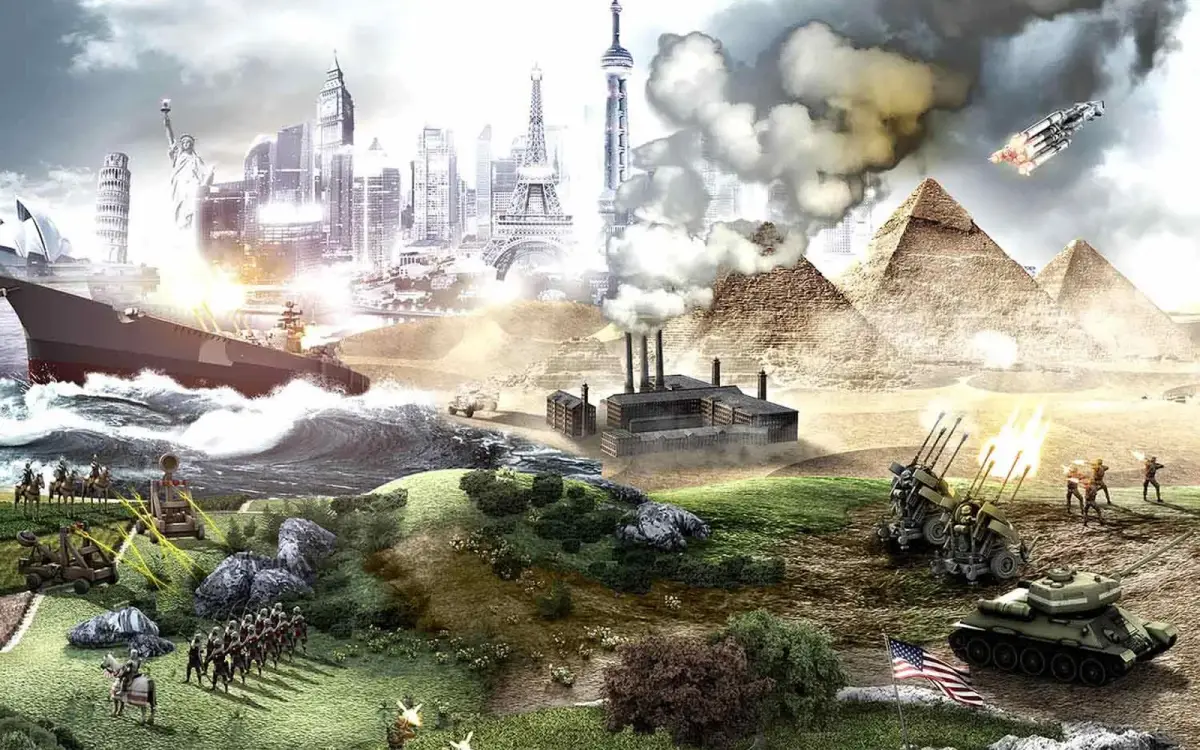
Explore the decline of the Mughal Empire and the rise of European powers in India, including the British East India Company's conquest in Civilization V.
The Mughal Empire's influence waned, facing attacks from Afghans, Sikhs, and Hindus, with its eventual downfall attributed to the British. Vasco da Gama, a Portuguese explorer, was the first European to reach Calicut, India, on May 20, 1498, establishing a trading post. The Portuguese dominated Indian Ocean trade through the 16th century until annexed by Spain in 1580. In the 1600s, the Dutch focused on spice trade, establishing posts in southern India, while the English, after being rebuffed by the Dutch in the East Indies, defeated Portuguese forces in India in 1612 and secured a favorable trading treaty with the Mughals. The French also sought trade relations in the 16th century, with their fortunes fluctuating alongside British and Dutch influence.
In 1757, the British East India Company defeated the Nawab of Bengal, leading to the occupation of Bengal and subsequent expansion across the subcontinent by 1850, utilizing bribery, threats, and military force. An Indian rebellion in 1857, known as the "Indian Mutiny" or "First War of Independence," was suppressed by the British Army, after which the British Crown assumed governance from the East India Company. British rule brought advancements like telegraph lines, roads, and railroads, but also fostered a unified Indian independence movement due to educated intellectuals being barred from government participation. The first Indian National Congress convened in December 1885, demanding parity in governmental positions and reduced financial contributions to Britain. By the turn of the 20th century, the Congress advocated for self-rule. Concurrently, Muslim Indians, fearing marginalization by the Hindu-majority Indian National Congress, formed the Muslim League to advocate for Muslim independence.
- Understanding the European powers' motivations (trade, spices, dominance) is key to navigating this era in Civilization V.
- The internal weaknesses of Indian kingdoms and princely states were exploited by European powers.
- The Indian Independence movement gained momentum from educated intellectuals frustrated by British exclusion from governance.
100% Human-Written. AI Fact-Checked. Community Verified. Learn how AntMag verifies content