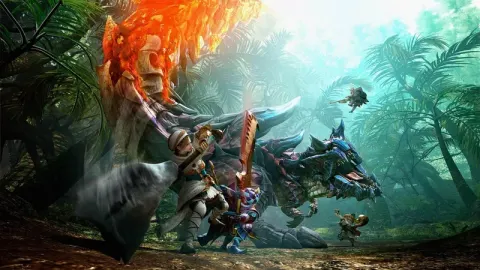
Master Monster Hunter Generations' Bestiary! Learn about Amphibians, Wyverns, Fanged Beasts, and more in this essential guide to monster classifications.
Hey there, Hunter! So, you've been diving into Monster Hunter Generations and noticed all the different monsters, right? Well, the game actually sorts them into different groups, kind of like how scientists classify animals here in the real world. It's super helpful for understanding what you're up against. Let's break down these bestiary classes so you know what's what!
Think of it like a big family tree for all the beasts you'll be hunting. Each class has its own quirks and characteristics, which often tell you a lot about their attack patterns and how they move. Knowing these classifications can give you a real edge when you're out in the field.
Here's a look at the different orders you'll find in the world of Monster Hunter Generations:
| Classification | Description |
| Amphibians | These are your four-legged critters with some serious jumping power. Expect them to use those strong hind legs for leaps and jump-based attacks. |
| Bird Wyverns | This class is split into two: Theropod Bird Wyverns are like speedy velociraptors, often hunting in packs led by a dominant one. True Bird Wyverns, on the other hand, can fly and have beaks, acting a bit like big, angry chickens. |
| Brute Wyverns | Imagine a T-Rex – that's your Brute Wyvern! They're bipedal, way bigger than Bird Wyverns, and can't fly. They rely on their sheer size for attacks, but they're usually not the fastest movers. Oh, and they often have those comically short arms that don't do much. |
| Carapaceons | These guys are basically giant, armored crustaceans. Think crabs! They've got tough shells and exoskeletons, and they'll definitely use their claws in a fight. |
| Fanged Beasts | This is a diverse group with three sub-classes: Primates (think gorillas), Artiodactyls (like flying squirrels), and Ursids (bear-like monsters). |
| Fanged Wyverns | These are mammalian monsters that are bigger and tougher than Fanged Beasts but don't quite fit into that category. They pack a serious punch. |
| Flying Wyverns | Another split class! True Flying Wyverns are bipedal and masters of the air. Pseudo Flying Wyverns use their wings more like arms, and while they're often quadrupedal, they can usually still fly too. |
| Herbivores | These are generally the smaller, more peaceful monsters at the bottom of the food chain. They usually won't bother you unless you disturb them first. |
| Classification | Description |
| Leviathans | You'll recognize these by their long, snake-like bodies and often crocodilian looks. They're built for watery or sandy environments, and some even hang out in magma! |
| Lynians | These are the small, intelligent cat-like creatures. They've got their own societies and some even work alongside humans. |
| Neopterons | These are your insectoid monsters. They tend to have pretty fragile bodies, which is why they often shatter into pieces instead of being carveable when defeated (though the bigger boss versions are an exception). |
| Piscine Wyverns | These look more like Flying Wyverns but instead of flying, they're adapted for swimming through water or sand. |
| Snake Wyverns | Different from Leviathans, these serpentine monsters are mostly land-dwellers. They have pretty weak limbs and rely heavily on their long bodies and tails for attacks. |
| Elder Dragons | This is the big leagues! Elder Dragons are a loosely grouped category of incredibly powerful, almost immortal boss monsters. They're legendary, often the stuff of myths, and their fights can be epic, sometimes requiring special tactics or weapons like the Dragonator. |
| ??? (Unclassified) | Sometimes you'll run into monsters that just don't fit anywhere. These are the mysteries of the bestiary, and because we don't know much about them, they're often the most feared! |
So there you have it! Knowing these classes should help you get a better feel for the monsters you'll be facing. Happy hunting!
100% Human-Written. AI Fact-Checked. Community Verified. Learn how AntMag verifies content