
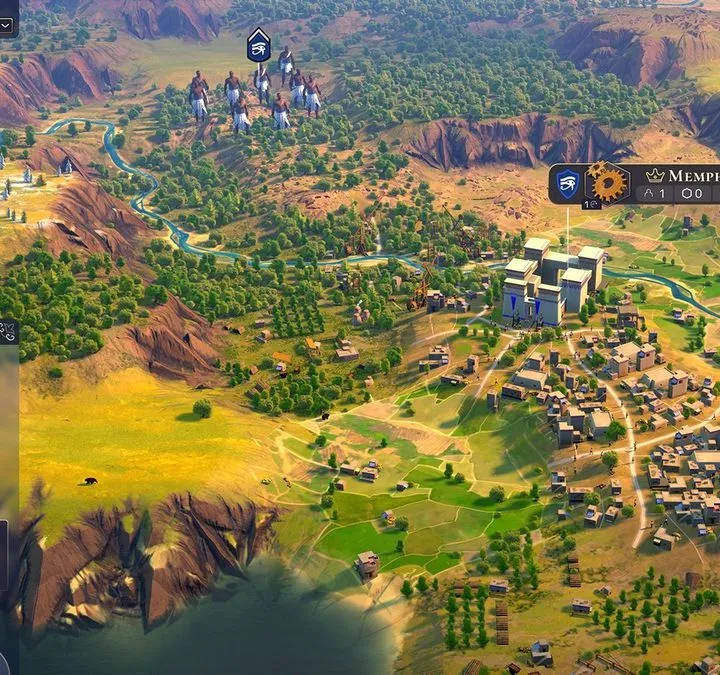
Learn to expand rapidly in Humankind. This guide details effective outpost spam tactics for controlling territory early.
In the early stages of Humankind, particularly as you transition from the Neolithic to the Ancient Era, a strategy of rapid expansion through the judicious use of outposts, often referred to as "outpost spam," can be incredibly effective. This approach focuses on quickly claiming territory and securing valuable resources across the map before your opponents can. Outposts serve as forward operating bases, allowing you to exploit nearby resource nodes, establish influence over territory, and prepare the ground for future city settlements. By spreading outposts strategically, you can create a wide sphere of influence, potentially cutting off rivals' expansion routes or securing access to rare luxury resources that can provide significant economic or stability bonuses. The key to successful outpost spam is not just to build them everywhere, but to build them with purpose – targeting specific resource clusters, strategic choke points, or areas rich in potential city sites. This aggressive territorial acquisition in the early game can provide a substantial advantage that pays dividends throughout the rest of your playthrough, setting a strong foundation for your civilization's dominance.
The "outpost spam" strategy is particularly potent because outposts are relatively inexpensive to build in the early game and can be established quickly by your initial units. This allows for a rapid territorial grab that can be difficult for slower-developing civilizations to counter. Each outpost you establish not only claims territory but also extends your influence, which is crucial for claiming neutral territories and preventing other cultures from encroaching on your potential expansion zones. Furthermore, outposts can be upgraded into cities later on, providing flexibility in your settlement plans. You might establish an outpost to secure a valuable resource, and then, once you have the population and infrastructure, upgrade it into a full-fledged city. This dual functionality makes outposts a cornerstone of early-game expansion. The game mechanics are designed to reward proactive exploration and territorial control, and an aggressive outpost strategy directly capitalizes on this. It’s about maximizing your footprint on the map and ensuring that the most valuable lands and resources fall under your dominion before anyone else can claim them.
Strategic Outpost Placement
The effectiveness of an "outpost spam" strategy hinges entirely on smart placement. When deciding where to establish an outpost, consider several factors. Firstly, prioritize resource nodes. If you discover a cluster of valuable resources, such as food, production, or luxury resources, placing an outpost nearby is essential to start exploiting them. Secondly, think about strategic choke points or defensible positions. An outpost placed at the mouth of a mountain pass or on a narrow land bridge can control movement and prevent enemy incursions. Thirdly, consider areas with high potential for future city development. Even if you don't plan to build a city there immediately, an outpost can secure the land and allow you to build infrastructure or gather resources until you are ready. The game's interface provides information on resource yields and terrain types, so use this data to make informed decisions. Avoid placing outposts too close to each other unless there's a specific tactical reason, as this can spread your influence too thinly. Instead, aim for a distributed network that covers a wide area and secures key locations.
Resource Exploitation with Outposts
Once an outpost is established, it begins to exert influence over adjacent tiles and allows for the exploitation of resources within its radius. This is where the "spam" aspect becomes beneficial; the more outposts you have, the more resources you can gather simultaneously. For example, an outpost placed next to a forest tile can begin generating production, while another near a fertile plain can boost food. Luxury resources, such as horses or marble, are particularly valuable and should be prioritized for outpost placement as they provide significant stability or economic bonuses once researched and exploited. The game mechanics allow you to ass population to work specific tiles connected to your outposts, further enhancing resource generation. This early resource advantage, fueled by a network of outposts, can provide the necessary capital and production to build more units, research technologies faster, and ultimately found more cities. It's a snowball effect where early resource acquisition leads to accelerated development across all aspects of your civilization.
Transitioning Outposts to Cities
While the initial focus is on rapid outpost establishment, it's crucial to remember their role as precursors to cities. As your civilization grows and you accumulate more resources and population, you will need to upgrade some of your strategically placed outposts into full-fledged cities. The decision of which outposts to upgrade should be based on their location's inherent advantages. A good city site typically has access to multiple food sources, production resources, and potentially strategic defensive features. The game allows you to convert an outpost into a city, which then unlocks the full suite of city management mechanics, including districts, infrastructure, and population assignment. This conversion process is a key part of the early expansion strategy; the outposts secure the land and resources, and the cities capitalize on them. The flexibility of this system means you can adapt your expansion plans on the fly, deciding whether to maintain an outpost for resource gathering or to commit to building a permanent settlement.
Common Mistakes in Outpost Strategy
Players new to Humankind often make mistakes when employing an outpost strategy. One common error is building outposts too close together without a clear purpose, leading to diluted influence and inefficient resource gathering. Another mistake is neglecting to upgrade key outposts into cities, leaving valuable territory underdeveloped. Conversely, some players might upgrade outposts too quickly, before securing enough surrounding territory or resources. It's also important not to forget about defense; while outposts themselves offer some territorial control, they are vulnerable. Ensure you have some military units patrolling your extended territory to deter barbarian raids or opportunistic attacks from rival civilizations. Finally, always keep an eye on your overall Era Star progress. While expansion is important, ensure your outpost strategy als with earning the stars needed to advance to the next era, as neglecting this can stall your progress significantly.
100% Human-Written. AI Fact-Checked. Community Verified. Learn how AntMag verifies content