
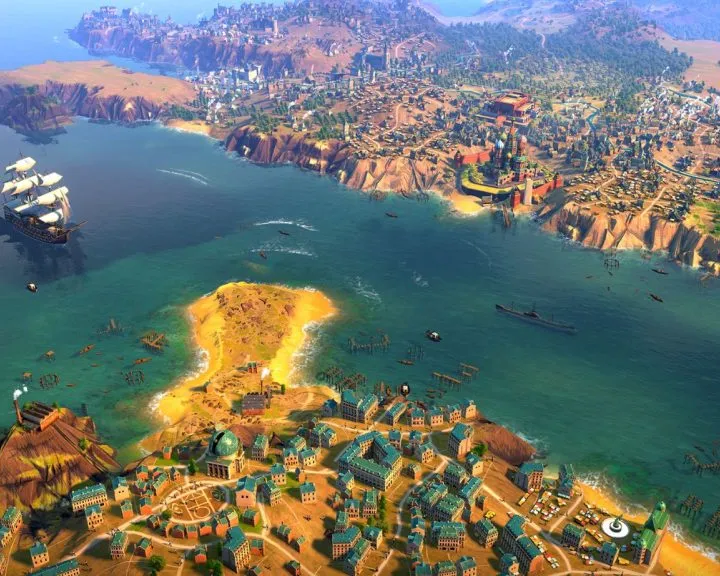
Establish lucrative Trade Routes and manage vital Resources in Humankind. Learn how to boost your economy and gain advantages over rivals.
Establishing and managing trade routes is a cornerstone of economic prosperity and strategic advantage in Humankind. Resources are broadly categorized into Luxury Resources and Strategic Resources, each playing a distinct role in the development and sustenance of your civilization. Luxury Resources, such as Spices or Silk, primarily provide amenities to your population, increasing their happiness and thus boosting productivity across all FIMS (Food, Industry, Money, Science) outputs. Without sufficient amenities, your cities can suffer from low stability, leading to decreased efficiency and potential unrest. Strategic Resources, on the other hand, are essential for producing advanced units and infrastructure. For example, Iron is required for many early-to-mid game military units, while Horses are crucial for cavalry. Access to these resources is often limited to specific tiles on the map, making their acquisition and control a significant point of contention between civilizations. Trade routes are the primary mechanism for distributing these resources across your empire and for exchanging them with other civilizations. You can establish trade routes between their own cities to move resources or between their cities and those of allied or friendly civilizations. The distance of the trade route, the presence of infrastructure like harbors or roads, and the diplomatic relationship between the trading partners all influence the efficiency and profitability of the route. A well-developed trade network can provide a substantial influx of money and science, accelerate the construction of Wonders, and ensure that your armies are equipped with the best available units. The "Humankind" encyclopedia details how trade routes can be established and managed through the city management interface, allowing players to select specific resources to trade and destinations.
The strategic importance of resources extends beyond their immediate use. Controlling key resource nodes can grant significant leverage in diplomatic negotiations and military conflicts. For instance, a civilization that monopolizes a critical Strategic Resource like Horses might be able to dictate terms to its neighbors or field an exceptionally powerful cavalry force. Similarly, controlling a surplus of Luxury Resources can allow a player to maintain high stability across a vast empire, even while engaged in costly wars or ambitious construction projects. Players must actively scout the map to identify resource-rich territories and consider their expansion strategies accordingly. Establishing outposts near valuable resource deposits is often a high priority. However, these outposts can also become targets for rival civilizations seeking to disrupt your economy or secure those same resources for themselves. The game mechanics surrounding resource depletion and renewal also play a role; some resources may be finite, while others can be replenished over time or through specific technologies. The development of infrastructure, such as Markets and Harbors, is crucial for maximizing the benefits of trade routes. Markets increase the amount of money generated by trade routes, while Harbors are essential for establishing sea-based trade routes, connecting distant coastal cities and facilitating trade with overseas civilizations. The "Humankind" encyclopedia also notes that certain districts, like the Commercial District, can further enhance the economic output of trade routes passing through or originating from their city. Ultimately, a robust and well-managed trade network, coupled with strategic control over vital resources, is indispensable for achieving victory in Humankind, whether through military might, economic dominance, or cultural influence.
100% Human-Written. AI Fact-Checked. Community Verified. Learn how AntMag verifies content