
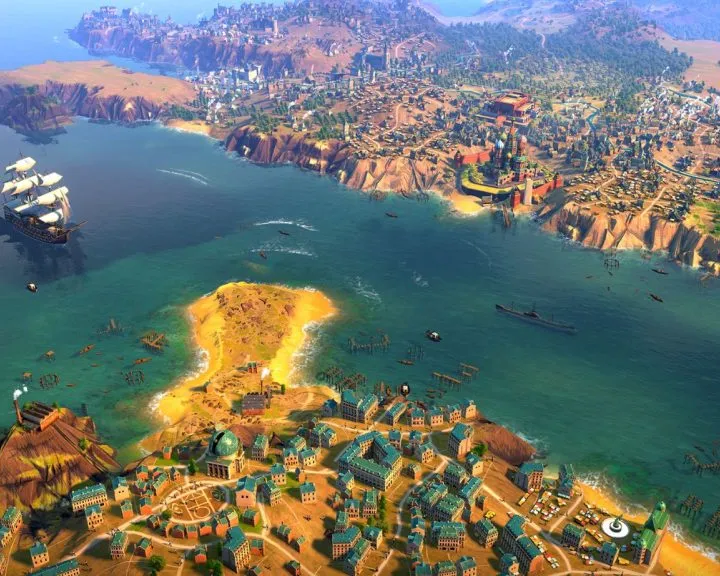
Control the skies in Humankind. This guide covers air unit strengths, strategic aerial bombardment, and how to counter enemy aircraft.
Air units represent a significant leap in military capability within Humankind, introducing a new dimension to warfare that transcends traditional ground and naval engagements. They are unlocked through specific technologies in the later eras of the game, typically starting from the Industrial Era onwards, and their introduction fundamentally alters strategic considerations for offense, defense, and reconnaissance.
The Role of Air Units
Air units in Humankind serve several critical roles:
- Reconnaissance: Many air units possess superior sight ranges compared to ground units, allowing them to scout enemy territory, reveal hidden units, and identify strategic objectives or enemy army compositions without risking ground forces.
- Bombardment and Support: Certain air units are designed for offensive operations, capable of attacking enemy units and cities from a distance. They can soften up defenses before an assault, disrupt enemy supply lines, or directly engage enemy armies.
- Interception: Dedicated interceptor air units are crucial for defending against enemy air threats, protecting your own cities and ground forces from aerial bombardment and reconnaissance.
- Strategic Mobility: While not as fast as naval units for crossing oceans, air units can bypass terrain obstacles and provide rapid response capabilities across landmasses, allowing for swift redeployments to critical fronts.
Strengths of Air Units
- High Mobility and Reach: Air units can traverse the map much faster than most ground units and are not impeded by terrain features like mountains or rivers, allowing them to strike at targets deep within enemy territory or quickly reinforce distant fronts.
- Superior Sight: Many air units have an extended line of sight, making them invaluable for scouting and intelligence gathering, revealing enemy positions and intentions.
- Area of Effect (AoE) Attacks: Some bomber units can inflict damage on multiple adjacent enemy units, making them effective against tightly packed enemy formations.
- Bypassing Defenses: Air units can often attack cities or units without needing to breach ground fortifications, offering a way to circumvent heavily defended positions.
Weaknesses of Air Units
- Vulnerability to Interception: Air units are highly susceptible to enemy air superiority. If the opponent has a strong air force, your own air units can be quickly destroyed.
- High Production and Maintenance Costs: Air units are generally expensive to produce and maintain, requiring significant industrial and monetary investment.
- Limited Ground Combat Effectiveness: Most air units are not designed for direct ground combat and will be easily defeated if engaged by well-positioned ground units.
- Dependence on Airfields: Air units often need to be stationed at or near airfields to operate effectively, limiting their operational range and requiring strategic placement of these infrastructure buildings.
- Vulnerability to Anti-Air: Certain ground units and city defenses are equipped with anti-air capabilities, posing a significant threat to air units.
Types of Air Units and Their Usage
As players progress through the eras, they will unlock various types of air units, each with specialized roles:
Early Air Units (e.g., Biplanes, Fighters)
- Role: Primarily reconnaissance and early air-to-air combat.
- Strengths: Relatively cheap for their era, good sight range, can contest air space against other early air units.
- Weaknesses: Low damage output, vulnerable to dedicated anti-air.
- Typical Usage: Scouting enemy territory, escorting bomber formations, defending against initial enemy air incursions.
Mid-to-Late Era Air Units (e.g., Bombers, Interceptors, Helicopters)
- Role: Strategic bombing, ground attack, air superiority, and specialized reconnaissance.
- Strengths: High damage output (bombers), excellent at destroying enemy units and cities. Powerful defensive capabilities against other air units (interceptors). Unique tactical options (helicopters).
- Weaknesses: Very expensive, highly vulnerable to dedicated anti-air and enemy air superiority.
- Typical Usage:
- Bombers: Used to bomb enemy cities, reducing their defenses and population, or to carpet bomb enemy armies, inflicting heavy casualties. Best used when air superiority is established.
- Interceptors: Essential for defending your airspace. They are tasked with destroying enemy bombers and reconnaissance planes, protecting your own ground forces and cities.
- Helicopters: Offer unique capabilities like attacking from adjacent tiles without moving into the target tile, or performing rapid reconnaissance missions. They can be effective against ground units but are often fragile.
Strategic Considerations for Air Warfare
- Achieving Air Superiority: Before launching significant air operations, it is crucial to establish air superiority. This involves building enough interceptors to neutralize enemy air units and protect your bombers and reconnaissance craft.
- Airfield Placement: Build airfields strategically near the front lines or within range of key objectives. Consider their vulnerability to enemy attacks and ensure they are adequately defended.
- Combined Arms: Air units are most effective when used in conjunction with ground and naval forces. Use air power to soften defenses, disrupt enemy formations, and provide reconnaissance, then follow up with ground assaults.
- Countering Enemy Air Power: Invest in anti-air defenses for your cities and ground armies. Develop your own interceptor force to contest enemy air superiority.
- Economic Investment: Be prepared for the significant economic commitment required to field and maintain a competitive air force. Ensure your industry and money production can support these units.
Technology and Era Progression
The availability and effectiveness of air units are heavily tied to technological advancements and the historical era. Early aircraft are rudimentary, while later eras introduce jet-powered fighters, strategic bombers, and advanced reconnaissance drones. Players must carefully consider their technology path to unlock these powerful assets at the opportune moment in their campaign.
100% Human-Written. AI Fact-Checked. Community Verified. Learn how AntMag verifies content