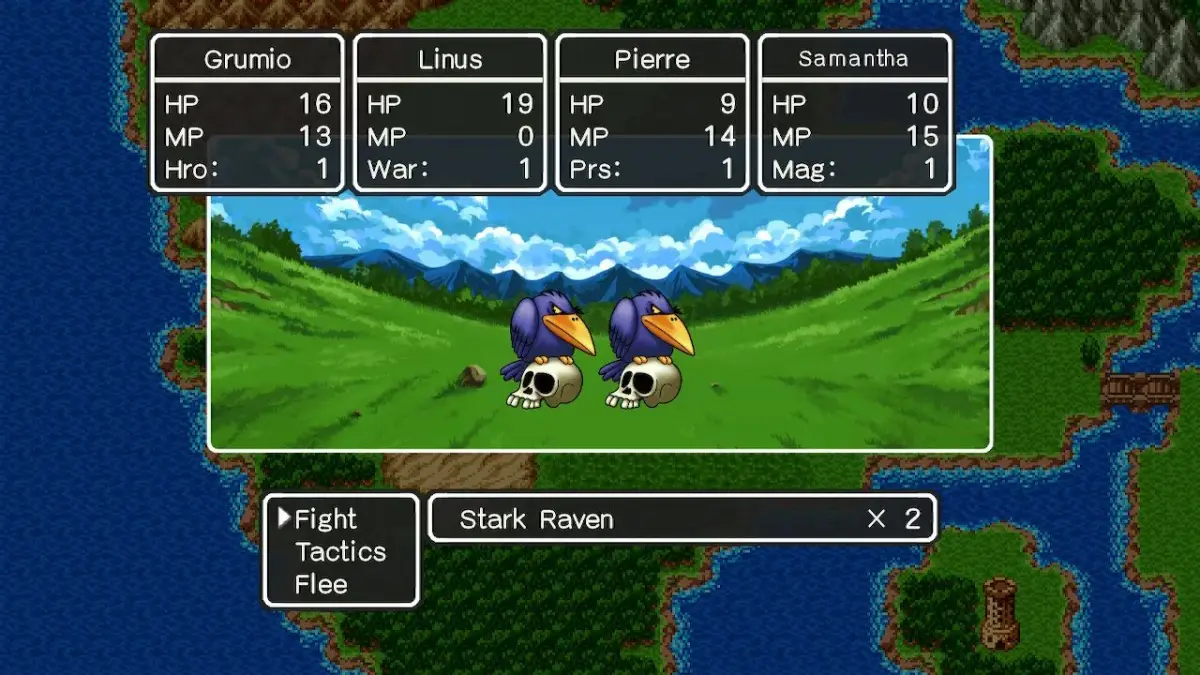
Learn how to create and customize your party in Dragon Quest III HD-2D Remake. Discover vocations, personalities, class changing, and stat growth to optimize your adventure.
Dragon Quest III stands out in the series by allowing players to create their own supporting party members, unlike many other titles (with the exception of Dragon Quest IX). These custom characters, while not significantly contributing to the plot (barring one class), are crucial for aiding the Hero in battle. The Hero is the sole character with a fixed class and a role in the narrative.
When creating party members, you can assign one of seven vocations (six in original releases, plus one in remakes). Your chosen vocation dictates the equipment a character can use, the spells they learn, and their base stat growth. While you can create multiple party members, only three can be in your active party at any time. Only the four characters in the active party gain experience and level up. Therefore, creating more than three supporting characters is generally unnecessary. The vocation system encourages experimentation, allowing you to tailor your team to your playstyle and enhance replayability.
A unique feature in Dragon Quest III is the ability to class change your supporting characters at Alltrades Abbey (or Dharma Shrine) partway through the game. However, there are restrictions: the Hero cannot class change, and characters must be at least Level 20. Upon class changing, a character's Level resets to 1, Experience to 0, all stats are halved, but learned Spells/Abilities are retained. Class changing allows for hybrid builds; for instance, a Warrior (high Health/Strength, low Agility) could become a Martial Artist to gain much-needed speed. While class changing offers benefits, it's generally not recommended to do it multiple times for a single character, as it may diminish their potential gains.
Character creation also includes assigning a gender (Male / Female), which impacts equipment availability (some gear is female-specific) and Personality choices (the Vamp personality is notably strong and female-exclusive). The Hero also has a chosen gender, which can influence NPC dialogue. For optimization, an All-Female party is often recommended.
New to the remakes (SNES, GBC, Mobile, Switch) is the Personality system. Assigned at creation and modifiable via Books or temporarily with Accessories, Personalities alter default class stat growths, adding character uniqueness and allowing for stat specialization. For example, a Warrior doesn't need high Wisdom, so a Personality prioritizing Strength, Agility, and Resilience while lowering Wisdom would be beneficial.
At character creation, each Class+Gender combination starts with base stats. Players can then allocate 2 to 10 additional stat increases based on the following probabilities:
| Bonus Stats | 2 | 3 | 4 | 5 | 6 | 7 | 8 | 9 | 10 |
|---|---|---|---|---|---|---|---|---|---|
| Chance | 3.13% | 6.25% | 18.46% | 18.75% | 23.44% | 23.44% | 3.13% | 1.56% | 1.56% |
Additionally, up to five stat boosts can be applied to a character. The final stats relative to their base stats determine the character's Personality.
100% Human-Written. AI Fact-Checked. Community Verified. Learn how AntMag verifies content