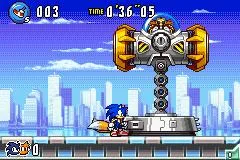
Explore the history and connections of Sonic Advance 3, detailing influences from Sonic Battle, Knuckles & Chaotix, and more.
Sonic Advance 3 incorporates numerous elements from earlier Sonic games, showcasing a rich lineage of gameplay mechanics and design choices.
From Sonic Battle (2004), a Game Boy Advance title, Sonic Advance 3 inherits significant connections, particularly in music and story elements. The plot of Sonic Advance 3 is deeply intertwined with the narrative of Sonic Battle, which features a robot named Emerl capable of copying other characters' moves.
The partner system, a key feature in Sonic Advance 3, was first introduced in Knuckles and the Chaotix (1995) for the Sega 32X. While Sonic Advance 3 allows players to select different characters as partners and throw them in ball form, the original Chaotix game had players chained to their partners. Knuckles and the Chaotix also featured a map system allowing some freedom in level order within zones, and contained gray, uncollectible rings within robots.
The 3D gameplay of Sonic Heroes (2004) influenced Sonic Advance 3 through its team formations: Speed, Flight, and Power. Special Keys also originate from Sonic Heroes. It is noted that Sonic Heroes itself seems to be based on Knuckles & Chaotix.
Sonic Adventure 2 (2001) contributed the music for Sonic Advance 3's Main Menu (Sound Test 3), which is a remix of the Chao Race Music. It also introduced the concept of grinding rails, a mechanic now available to all characters in Sonic Advance 3, and the story elements concerning Professor Gerald and the ARK space station, including G-mel's actions and the first appearance of Chaos Control.
Sonic Adventure (1998), the first 3D Sonic game, introduced the Chao, specific small animals found in item capsules. Design features like the current look and content of item boxes and characters, as well as some B button moves like Tails' Tails Swipe and Amy's Hammer attacks, originate from this title.
Sonic Pocket Adventure (1999) is noted as an inspiration for the Sonic Advance series as a whole, featuring characters with their Sonic Adventure-like looks.
Sonic Triple Trouble (1994) for the Game Gear is mentioned for its Special Stages, some of which involved gathering rings while flying the Tornado plane, a concept echoed in Sonic Advance 3. This game also introduced Nack the Weasel (Fang in Japan) and was one of the few games where Metal Sonic could be fought.
The original Sonic Advance (2002) established the visual style and most sprites for the series, and many of its moves, including underwater maneuvers, were carried over to Sonic Advance 3.
Sonic Advance 2 (2003) introduced Cream, Cheese, and Vanilla, along with Boost Mode and R Button Trick Moves. The ability for all characters to grind rails was also established in this game, and many of its character moves, including some of Amy's moves when paired with Sonic, are present in Sonic Advance 3.
The shields from earlier Sonic games are referenced in Sonic Advance 3. The Water Shield's Bounce Attack is seen in the Bound attack and a bubble effect with Cream. The Flame Shield's sideways attack is similar to an attack available when Cream is a partner. The Electric Shield was the first Ring Attracting Shield. The Insta-shield, capable of blocking small bullets, was also present.
100% Human-Written. AI Fact-Checked. Community Verified. Learn how AntMag verifies content