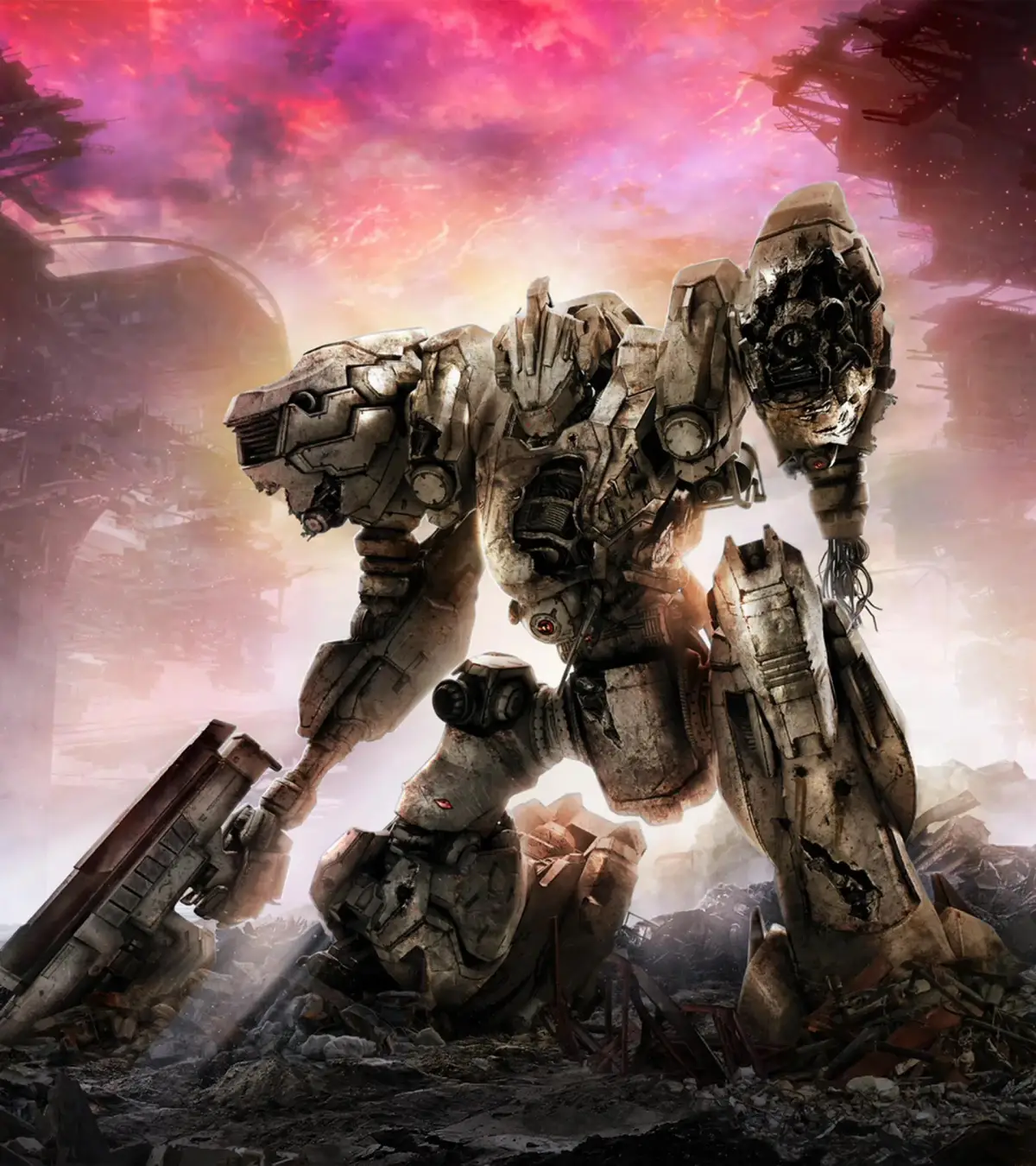
Master Armored Core VI's core mechanics! Learn about maneuvering, energy management, combat systems, and AC building to dominate the battlefield in Fires of Rubicon.
Hey there, future Raven! Diving into Armored Core VI: Fires of Rubicon can feel a bit overwhelming at first, but don't sweat it. Let's break down the core mechanics so you can start customizing your AC and taking on missions like a pro. Think of this as your friendly guide to getting airborne and blasting your way through Rubicon. ## Maneuvering and Boosting First things first: you gotta be able to move! Mastering your AC's movement is key. You'll be dashing, jumping, and boosting around the battlefield. A neat trick is the 'Bunny Hop' – it's basically boosting, jumping just as your feet hit the ground, and then boosting again. This helps you keep up speed while saving precious energy. Spend some time in the 'AC Test' mode in the garage to get a feel for the controls and practice dodging. Seriously, getting comfortable with movement is half the battle. ## Managing Your Energy This is super important, maybe even more than moving. If you completely drain your energy bar, your AC enters a 'Charging' state. While charging, you can't boost or use energy weapons, leaving you exposed. Your energy will slowly recharge, but it takes time. Having a good generator and efficient parts can speed this up. Be mindful of your energy consumption, especially when boosting for long periods or firing energy weapons. Some ACs have an 'Overboost' function, which gives you a massive speed burst but drains energy like crazy. It's a cool trick, but you'll need practice to use it without leaving yourself vulnerable. ## Combat Basics The main goal is usually to destroy your enemies or complete mission objectives. You'll typically lock onto your target, and once you have a full lock-on (usually shown in red), you fire away. Rockets are a bit different, but the general idea is to unload your arsenal until your opponent's Armor Points (AP) hit zero. ### Weapon Types * Shoulder Weapons: These can include missiles, which are great for beginners since they track your target. Some fire a few at once, while others hit harder but take longer to lock on. Vertical missiles are good, and large missiles pack a serious punch, though they have a long lock-on time. You've also got cannons, which might require you to kneel before firing. These can be heavy cannons like grenade launchers, laser cannons, railguns, slug guns, and plasma cannons. * Right Arm Weapons: Standard arm-mounted weapons. * Left Arm Weapons: Similar to right arm weapons. * Inside Weapons: Weapons stored within the AC's core, often used for quick bursts or special attacks. * Weapon Arms: These arms are weapons themselves and can't equip other arm weapons. Choosing weapons that fit your playstyle is crucial for success. Experiment with different combinations to find what works best for you! ## Building Your AC This is where the real customization comes in. You'll be tweaking various parts to create your perfect AC: * Arm Weight: Affects how quickly you can aim and fire. * AP (Armor Points): Your AC's health pool. * Boosters: Crucial for movement and energy management. * Targeting Proficiency: How well your FCS (Fire Control System) can lock onto targets. * Leg Parts: Different leg types (bipedal, reverse-joint, quad, tank) offer unique mobility and stability. Take your time in the garage, experiment with different parts, and see how they affect your AC's performance. Happy building, and see you out there, Raven!100% Human-Written. AI Fact-Checked. Community Verified. Learn how AntMag verifies content