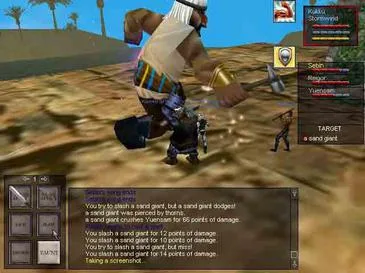

Learn to manage aggro and threat in EverQuest by understanding mob targeting. Keep your tank focused on the enemy for successful group encounters.
In the perilous world of EverQuest, understanding and managing "aggro" (short for aggression) is paramount to survival and successful group play. Aggro determines which creature attacks which player. Effective threat management ensures your group's tank maintains the monster's attention, allowing damage dealers to inflict maximum harm and healers to keep everyone alive without drawing unwanted attention.
Understanding Aggro Mechanics
Aggro is generated through various actions, primarily damage, healing, and certain spells. Each creature has an internal "threat list" that ranks players based on their generated threat. You at the top of this list is the current target.
- Damage: Every point of damage dealt generates a corresponding amount of threat. Critical hits and certain damage-over-time (DoT) spells can generate significant threat quickly.
- Healing: Healing spells generate threat on the creature you are healing, as well as on the creature attacking your target. This is why healers must be cautious.
- Spells: Many spells, even non-damaging ones like buffs or debuffs, generate a base amount of threat. Enchanter and Bard crowd control spells, while essential, can also generate substantial initial aggro.
- Proximity: Simply being close to a creature, especially if it's already engaged, can generate a small amount of passive threat.
- Taunt: The primary ability for tanks to generate immediate, high threat. Taunt spells and abilities place the user at the top of the creature's threat list for a short duration.
Roles in Threat Management
Every class has a role to play in maintaining proper aggro control within a group.
Tanks (Warriors, Paladins, Shadow Knights)
The tank's primary responsibility is to hold aggro on all engaged creatures. This requires a combination of high defense, damage mitigation, and threat-generating abilities.
- Initial Pull: For melee pulls, a Warrior might use a Javelin or Throwing Axe to initiate combat, followed by immediate use of Taunt and high-damage weapon swings. Paladins and Shadow Knights often use their initial aggro-generating spells like Flash of Light (Paladin) or Feast of Blood (Shadow Knight).
- Sustained Aggro:
- Warriors: Rely on consistent melee damage, the Taunt ability (which has a short cooldown), and later, disciplines like Defensive Stance or Aggressive Stance to boost threat generation. Equipping weapons with high damage and proc effects (e.g., Ghoulbane for its Lifetap proc) can significantly help.
- Paladins: Utilize their Divine spells such as Stun (e.g., Holy Might), Smite (e.g., Force of the Righteous), and Lay on Hands (for emergency threat and healing). Their innate ability to heal themselves also generates threat.
- Shadow Knights: Employ their Harm Touch ability, Lifetap spells (e.g., Siphon Strength), and pet (if applicable) to generate and hold aggro. Their fear spells can be used for crowd control but beware of running mobs into other pulls.
- AoE Aggro: For multiple targets, tanks should prioritize using area-of-effect (AoE) aggro abilities if available, or cycle through targets with single-target taunts and attacks. Paladins excel here with spells like Area Effect Stun (e.g., Stun of the Valiant).
Damage Dealers (Monks, Rogues, Wizards, Magicians, Rangers, Beastlords, Bards, Enchanters, Necromancers, Shamans, Druids)
Damage dealers (DPS) must be mindful of their threat generation to avoid pulling aggro from the tank. "Parsing" (checking damage output) is important, but not at the expense of group stability.
- Patience is Key: Always wait for the tank to establish solid aggro (usually 3-5 seconds after the pull) before unleashing full damage.
- Threat Reduction Abilities:
- Rogues: Sneak and Hide can drop aggro, but are generally used out of combat. Their Disarm ability can also reduce a mob's damage output, indirectly aiding the tank.
- Monks: Feign Death is their ultimate aggro dump. If you pull aggro, use Feign Death immediately to drop off the creature's threat list. This is a critical skill for Monks.
- Wizards/Magicians: Utilize Evacuate or Gate in emergencies, but these are not threat reduction for combat. They must rely on careful damage pacing.
- Rangers: Trueshot Discipline can boost damage, but also aggro. Use it judiciously. Their Snare spells can help the tank keep a kiting mob in place.
- Enchanters: While their primary role is crowd control, they have Mesmerize and Charm which can temporarily remove a mob from the fight or even turn it into a temporary ally. Be aware that breaking charm generates massive aggro.
- Necromancers: Feign Death is also available to Necromancers, making them excellent at aggro management.
- Target Selection: Focus fire on the tank's primary target. Spreading damage across multiple targets without the tank having established aggro on all can lead to chaos.
Healers (Clerics, Druids, Shamans)
Healers generate significant threat, especially with large heals. Their positioning and timing are crucial.
- Positioning: Stay at maximum spell range from the target creature. This reduces passive aggro and gives you more reaction time if you do pull aggro.
- Heal Timing:
- Pre-Heals: Avoid healing before the tank has established aggro. A pre-cast heal on the tank before they've even touched the mob can instantly pull aggro to you.
- Reactive Healing: Wait for the tank to take some damage before casting heals. Small, frequent heals are often better than one massive heal that spikes your threat.
- Overhealing: Try to avoid excessive overhealing, as it still generates threat without providing additional benefit.
- Threat Reduction Spells:
- Clerics: Have very limited direct aggro reduction. Rely on careful timing and the tank's ability to hold aggro.
- Druids: Can use Harmony to split pulls, reducing the number of mobs engaged. Their Spirit of the Wolf line of spells can help with positioning.
- Shamans: Can utilize Malo (reduces magic resistance) and Slow (reduces attack speed) spells, which generate a moderate amount of threat but are essential for group survival. Their Cannibalize line of spells can be used to convert health into mana, but be mindful of the health cost.
- Emergency Measures: If you pull aggro, immediately stop healing and move towards the tank. The tank should then use Taunt to regain control.
Advanced Strategies and Items
- Aggro Meters: While EverQuest doesn't have a built-in aggro meter, many third-party parsing tools (e.g., GamParse) can estimate threat. These are invaluable for understanding your threat generation.
- Weapon Procs: Weapons with beneficial procs (e.g., Ykesha proc on a Ykeshan War Club) can generate additional aggro for tanks. Similarly, damage procs on DPS weapons can unexpectedly spike threat.
- Clicky Items: Certain items have "clicky" effects that can generate aggro (e.g., Shield of the Stalwart Seas for tanks) or reduce it (less common).
- Line of Sight (LoS) Pulling: Tanks can use LoS to pull single mobs from a group by breaking the line of sight of other creatures, causing only the closest one to follow. This is particularly useful in tight dungeons like Lower Guk or Nagafen's Lair.
- Assist Macro: Create a macro to assist your tank (e.g.,
/assist [Tank's Name]). This ensures everyone is attacking the same target, making aggro management easier for the tank. - Splitting Pulls: Enchanters with Mesmerize or Druids with Harmony can split multi-mob pulls, allowing the tank to focus on one or two creatures at a time. This is critical in zones like City of Mist or Sebilis.
Mastering aggro and threat management is a continuous learning process in EverQuest. Communication within your group, understanding your class's abilities, and adapting to different encounters are key to success.
100% Human-Written. AI Fact-Checked. Community Verified. Learn how AntMag verifies content