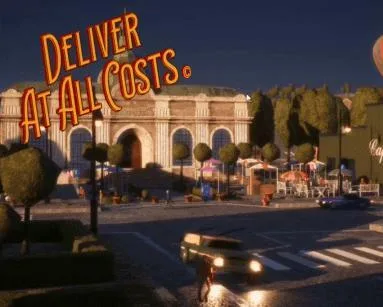
Learn how to use destructible environments in Deliver At All Costs to create shortcuts or overcome obstacles. Understand risks like chain reactions and vehicle.
Destructible environments add a layer of dynamic interaction to the game world, offering both opportunities and challenges for delivery drivers. Understanding how to leverage or avoid these elements can be key to completing missions efficiently and safely.
Types of Destructible Elements
The game world may feature various objects and structures that can be damaged or destroyed:
- Fences and Barriers: Often breakable to create shortcuts or clear paths.
- Crates and Barrels: Can be smashed to reveal potential loot, clear space, or sometimes cause chain reactions (e.g., explosive barrels).
- Walls and Structures: Certain weaker walls or sections of buildings might be penetrable with enough force.
- Vegetation: Trees, bushes, and other foliage can often be knocked down or driven through.
- Roadside Objects: Ss, lampposts, and other smaller fixtures can be easily destroyed.
Opportunities Presented by Destructible Environments
Destructible elements can be advantageous in several ways:
- Creating Shortcuts: Smashing through a fence or a weak wall can often provide a faster route to your destination, saving time.
- Clearing Obstacles: Removing debris or barriers that block your path.
- Accessing Hidden Areas: Destroying certain elements might reveal hidden paths or secret locations containing collectibles or resources.
- Strategic Advantage: In missions involving pursuit or evasion, creating temporary blockades or clearing escape routes can be crucial.
Challenges Posed by Destructible Environments
However, these elements also present risks:
- Unforeseen Consequences: Destroying an object might trigger a chain reaction, such as causing a structure to collapse or releasing hazardous materials.
- Increased Damage: Ramming through sturdy objects will inevitably damage your vehicle.
- Altering the Environment: Destroying elements might inadvertently make the route more difficult or create new hazards.
- Mission Restrictions: Some missions may explicitly forbid the destruction of certain objects, leading to penalties if violated.
Strategies for Interacting with Destructible Environments
- Assess the Situation: Before ramming through an object, consider its potential impact. Is it a shortcut, or will it cause more trouble than it's worth?
- Use Appropriate Force: Lighter vehicles might struggle to break through thicker barriers. Consider if your vehicle has the necessary power or if a specific gadget is needed.
- Look for Visual Cues: Often, destructible objects will have visual indicators (e.g., cracks, different textures) suggesting they can be broken.
- Be Mindful of Cargo: If you're carrying fragile or volatile cargo, avoid unnecessary collisions with destructible elements.
- Experiment in Safe Areas: Practice breaking different types of objects in less critical areas to understand their properties and your vehicle's capabilities.
- Consider Mission Objectives: Always prioritize the mission's success. If a shortcut through a destructible element is risky, stick to the safer, intended path.
Table: Destructible Object Impact
| Object Type | Likely Outcome | Potential Benefit | Potential Risk |
|---|---|---|---|
| Wooden Fence | Breaks easily | Shortcut, path clearing | Minor vehicle damage |
| Concrete Wall Section | Requires significant force/impact | Major shortcut, access to new areas | Significant vehicle damage, potential structural collapse |
| Explosive Barrel | Explodes on impact | Clears multiple objects, damages enemies | Self-damage, collateral damage, mission failure if cargo is sensitive |
| Dense Tree | Requires heavy impact or special tools | Clears path, potential resource gain | Severe vehicle damage, potential to fall and block path |
Destructible environments add a dynamic layer to gameplay. By understanding their potential and risks, you can use them to your advantage, making your deliveries more efficient and sometimes more exciting.
100% Human-Written. AI Fact-Checked. Community Verified. Learn how AntMag verifies content