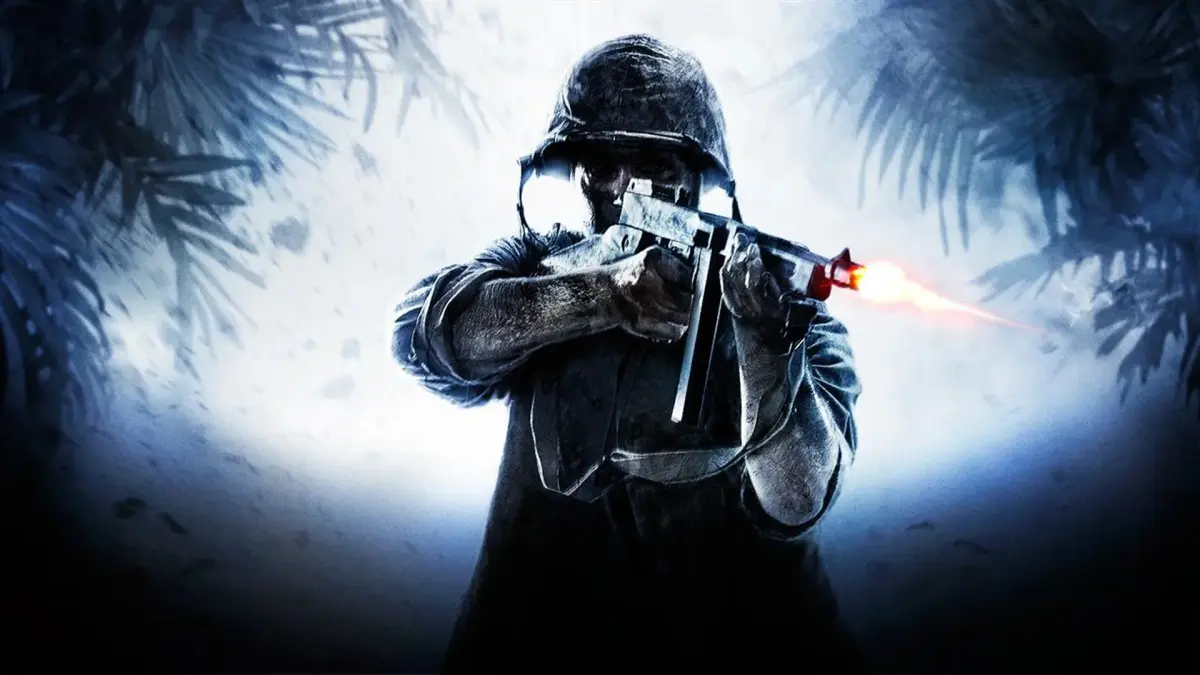
Learn about the Panzerfaust, an anti-tank weapon in Call of Duty: World at War. Discover its historical development, stats, and effectiveness against armored vehicles.
Alright, let's talk about the Panzerfaust in Call of Duty: World at War. This thing is a beast, a German anti-tank weapon literally called "Armored Fist." Its main job is to punch through tank armor with a powerful charge. Just a heads-up, it's not really built for taking down infantry – stick to tanks with this one. Each Panzerfaust is a one-shot deal, but man, one shot is usually all you need to turn even the biggest tanks into scrap metal in seconds.
Here’s a quick rundown of its stats:
- Range: Short
- Rate of Fire: One Shot
- Damage: Very High
- Mobility: Slow
Now, a little history lesson on this bad boy. It was originally called Faustpatrone gross or Faustpatrone 2, but everyone started calling it the Panzerfaust because of its awesome tank-busting capability. The first real upgrade from the earlier Faustpatrone klein was the Panzerfaust 30m. They ironed out some kinks from the earlier trials, added sights for a 30-meter range (that's about 100 feet), and tweaked the warhead shape.
Dr. Langweiler's team really beefed it up. They increased the warhead diameter to 14cm (5.5 inches), which made the contact area about 5cm (1.97 inches) wide. They also doubled the explosives to 800g (28.2oz), giving it the power to penetrate about 200mm (7.87 inches) of armor. Because the warhead got so much bigger, the stabilizing fins had to be enlarged quite a bit too.
The new tube was 4.4cm (1.73 inches) in diameter, the propellant weighed 95g (3.35 oz), and the projectile itself was 49.5cm (19.49 inches) long and weighed 2.9kg (6.39 lb). This gave it a velocity of about 30m/s (100 fps), keeping its effective range around 30 meters (100 feet). The whole weapon tipped the scales at 5.1 kg (11.23 lb) and was about 104.5cm (41.14 inches) long (though some sources say 103cm). These Panzerfausts were typically shipped and stored in wooden crates, with four weapons per crate.
Production of the first order, which was for 50,000 units, started in August 1943 with 6,800 delivered. They kept making them until August 1944, when they switched over to the successor, the Panzerfaust 60. The German armed forces, the Wehrmacht, first got a significant supply in September 1943 with a delivery of 8,700 units.
100% Human-Written. AI Fact-Checked. Community Verified. Learn how AntMag verifies content