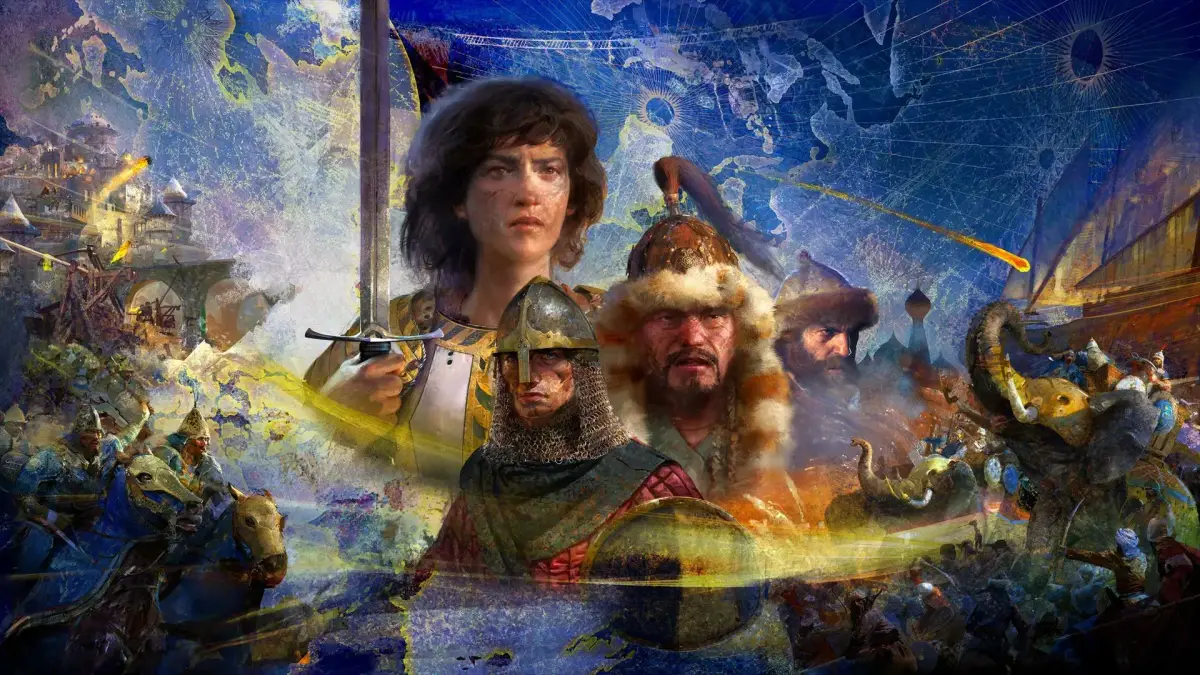
Explore Religion and Culture in Age of Empires IV, including the Olympian gods, the Oracle of Delphi, and the structure of Greek society.
The Greeks believed in many gods who were responsible for the living and the dead. Their gods were very human-like, experiencing emotions like love and jealousy, and engaging in actions such as marriage, having children, and seeking revenge. Legends of the gods served to teach what pleased and angered them.
The principal gods were the twelve Olympians, believed to live on Mount Olympus, led by Zeus, the ruler of the heavens. Temples were constructed to serve as earthly homes for individual gods. For instance, the Parthenon in Athens was dedicated to the goddess Athene, housing a statue of her made of gold and ivory that stood over forty feet high. Offerings of jewelry, pottery, and sculpture were presented to the temples, and animals and birds were given to priests for sacrifice. Festivals were organized to honor individual gods and to persuade them to be benevolent.
Before commencing an important project, an oracle or soothsayer was consulted to discern the will of the gods. The most renowned of these was the Oracle of Delphi, where a priestess named the Pythia would convey the will of Apollo. Priests were responsible for interpreting the Pythia's often ambiguous responses. In a notable instance, Croesus, the king of Lydia, inquired whether he should invade Persia. He received a prophecy that such an invasion would result in the destruction of a great kingdom. Believing the Persians were the kingdom in question, Croesus proceeded with the invasion, only to find that Lydia itself was conquered by Persia.
Women in Greece generally led sheltered lives with limited active participation in society, deriving their social status from their husbands. The primary focus was on bearing sons and raising them to become citizens and soldiers. Boys received a comprehensive education encompassing reading, writing, arithmetic, music, poetry, dancing, and athletics, with an emphasis on both mental and physical development.
Music, poetry, and theater were integral components of Greek culture, with all Greek cities and colonies featuring a theater or amphitheater.
Society was divided into two primary groups: free people and slaves. Slaves were owned by free individuals and worked as servants and laborers, acquired through international slave markets or as prisoners of war. Free men in Athens were categorized as either citizens, born to Athenian parents, or metics, born outside of Athens. Both citizens and metics were obligated to serve in the army, but only citizens were eligible to hold government official positions or serve as jurors.
- Understanding the Greek pantheon and their human-like characteristics is key to grasping their motivations and actions in various scenarios.
- The Oracle of Delphi highlights the importance of interpreting prophecies carefully, as their meaning can be misleading, as seen with Croesus.
- The societal structure, with its distinctions between citizens, metics, and slaves, influenced the roles and opportunities available to different groups.
- The emphasis on both intellectual and physical development for boys shaped the educational system and the ideal citizen.
- The cultural significance of music, poetry, and theater indicates their role in Greek life and potential in-game mechanics.
100% Human-Written. AI Fact-Checked. Community Verified. Learn how AntMag verifies content