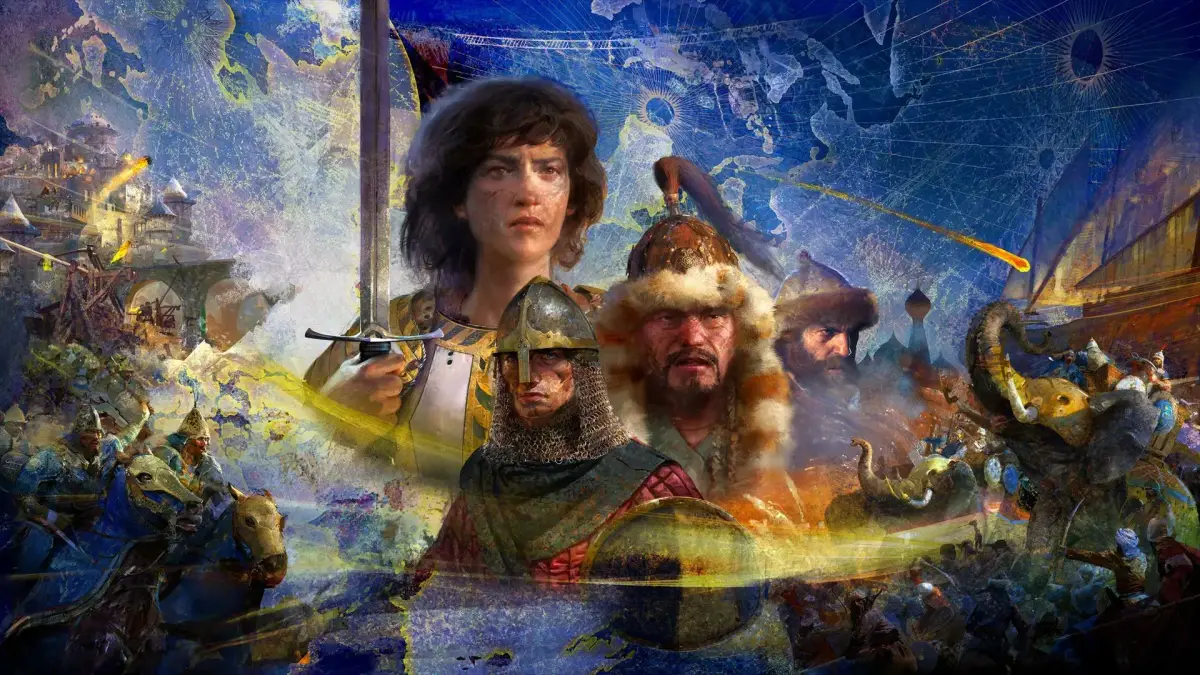
Explore the enduring legacy of Ancient Greece in Age of Empires IV, from its impact on medicine and mathematics to politics and science.
Greek language and culture spread behind Alexander the Great's armies. The Romans adopted much of Greek culture, preserving it and spreading it to new parts of the world. After the fall of Rome, Greek culture was preserved and expanded upon within the Byzantine Empire and in the Arab world, and passed on to the West following the Renaissance.
The legacy of ancient Greece has had an impact on many disciplines, including medicine (the scientific approach to medicine; the Hippocratic Oath taken by doctors), mathematics (Euclidean geometry; the Pythagorean theorem), literature (the Iliad and the Odyssey), theater, poetry, sculpture, language (the Bible's New Testament was written in Greek; thousands of words passed on to modern languages), architecture (the White House; the British Museum), history (Herodotus is regarded as the father of history), politics (democracy), philosophy (all philosophical studies since Plato have been referred to by one writer as mere footnotes to his work), science (the scientific method; laws of nature; the classification of plants and animals; the heliocentric theory), athletics (the Olympic Games), and trade (Greeks established trade routes to India and the Silk Road to Asia).
- Recognize the widespread influence of Greek culture on various aspects of civilization.
- Note the specific examples provided for each discipline, such as the Hippocratic Oath in medicine or Euclidean geometry in mathematics.
- Understand how Greek culture was preserved and transmitted through different empires and historical periods.
100% Human-Written. AI Fact-Checked. Community Verified. Learn how AntMag verifies content