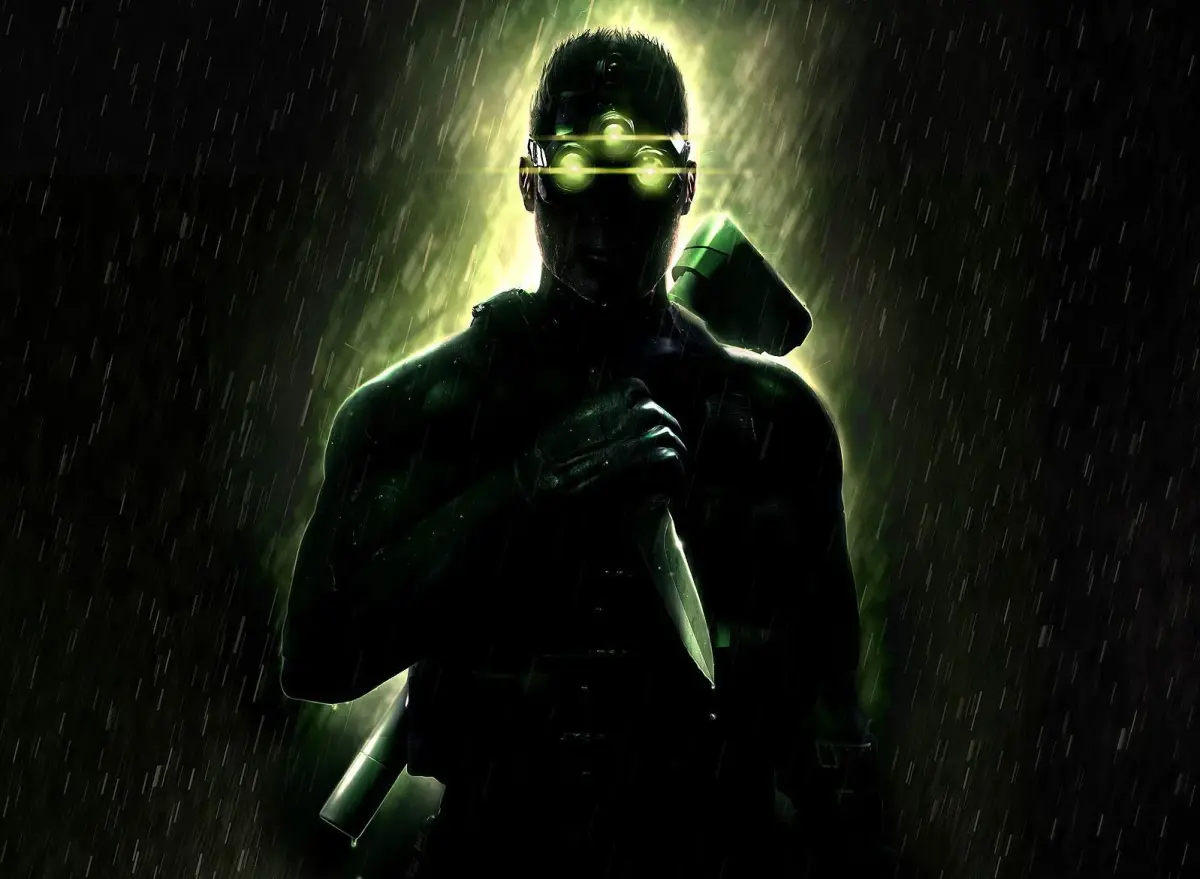
Tom Clancy's Splinter Cell: Chaos Theory puts you back in the tactical boots of Sam Fisher for his stealthiest mission yet. As a third-person, story-rich stealth action game, you'll navigate complex environments, utilizing Sam's essential gadgets and vision modes to neutralize threats efficiently, aiming for perfect infiltration and exfiltration. It's a masterclass in atmospheric tension and satisfyingly precise gameplay.
This guide covers every objective with detailed walkthroughs, helping you master the game's challenges. We'll guide you through achieving perfect scores, finding all collectibles, and overcoming tricky situations in key locations like the Presidential Palace and the I-240 tunnel. Whether you're aiming for a Gold Medal or just want to experience the full story without getting caught, this guide has your back.
-------------------------------Table of Contents-------------------------------
Navigate Tom Clancy's Splinter Cell: Chaos Theory with this comprehensive table of contents, covering missions, equipment, controls, and cheats.
- 1SC1 Getting Started
- SC1.1 Equipment
- 2SC1.2 Controls
- 3SC1.3 Moves List
- 4SC2 Mini-games
- SC2.1 Lock-picking
- 5SC2.2 Hacking
- 6SC3 Statistics Overview
- 7SC4 Walkthrough
- SC4.1 Lighthouse
- 8SC4.2 Cargo Ship
- 9SC4.3 Bank
- 10SC4.4 Penthouse
- 11SC4.5 Displace
- 12SC4.6 Hokkaido
- 13SC4.7 Battery
- 14SC4.8 Seoul
- 15SC4.9 Bathhouse
- 16SC4.10 Kokubo Sosho
- 17SC5 Cheats
- 18SC6 Conclusion
- To quickly search between sections, press Ctrl+f, type the SC# next to the section you are looking for, and press Enter.
SC1-----------------------------Getting Started--------------------------------
Learn the basics of Tom Clancy's Splinter Cell: Chaos Theory, a stealth combat game featuring Sam Fisher and his support team.
Tom Clancy's Splinter Cell: Chaos Theory is a stealth combat game where you control one of the US government's secret operatives, Sam Fisher. He is the best at what he does, performing covert, secret government operations. Equipped with an arsenal of gadgets and information, Fisher is sent into hostile situations that require a pair of unseen eyes and ears.
Fisher is given his orders by Colonel Irving Lambert, who will often stay in contact with Fisher to update mission objectives. For computer prowess, look no further than Anna Grimsdottir, or Grim for short. She is a computer genius and will often require Fisher to hack various computers for information. The last man on your team is William Redding, your information expert. He will provide background information on your objectives and will help Fisher by providing any relevant data to his current situation.
- Pay attention to mission updates from Colonel Lambert.
- Be prepared to hack computers as requested by Anna Grimsdottir.
- Utilize information provided by William Redding to your advantage.
SC1.1------------------------------Equipment-----------------------------------
Explore the advanced gadgets and weapons available to Sam Fisher in Tom Clancy's Splinter Cell: Chaos Theory, including the SC-20K rifle and EEV.
Fisher's goggles feature three vision modes: thermal, which highlights heat signatures; night vision, for visibility in darkness but susceptible to bright light; and electro-magnetic frequency (EMF) vision, which detects active electronics like cameras and computers.
The primary weapon is the SC-20K rifle, which can be outfitted with different attachments. The default launcher attachment allows for four ammo types: sticky shockers and ring airfoils (silent, non-lethal, with airfoils best at the head), gas grenades (for non-masked enemies), and sticky cameras. Sticky cameras act as remote viewing devices, allowing Fisher to change their view, vision mode, create distractions, or release poisonous gas, and can be retrieved if not used.
Other SC-20K attachments include the foregrip for precision automatic fire, the shotgun for loud, close-quarters combat, and the sniper attachment for increased zoom and armor-piercing shots that can penetrate cover (press the cover button to crouch behind walls or objects).
Fisher's silenced backup is the 5-7 Pistol, featuring an Optically Channeled Potentiator (OCP) that can disrupt electronics like lights and cameras from a distance, though it requires a recharge period after each use.
Explosive options include lethal frag grenades, flash grenades for temporary sensory disabling, and smoke grenades for cover. Wall mines, which are motion-sensitive, can also be found and disabled during missions.
The Electronically Enhanced Vision (EEV) device is a binocular-like tool for scanning objects, hacking electronics, and listening to conversations with its integrated laser microphone.
- Utilize the different vision modes on Fisher's goggles to adapt to various environments and threats.
- Experiment with the SC-20K's various ammo types and attachments to suit different combat scenarios.
- The OCP on the 5-7 Pistol is useful for disabling electronic devices without direct engagement.
- Sticky cameras offer strategic advantages for reconnaissance and enemy incapacitation.
- Be mindful of the noise generated by certain weapons, like the shotgun attachment.
SC1.2------------------------------Controls------------------------------------
Master the controls for Tom Clancy's Splinter Cell: Chaos Theory, including button mappings for movement, combat, and gadgets.
Controls:
- Square: Equip Item, Draw Weapon
- X: Interact (Pickup, Open, Grab, etc.)
- Triangle: Jump
- O: Crouch/Stand
- Up on D-pad: Equip EMF (Electromagnetic Field detector)
- Down on D-pad: Equip Sticky Camera
- Right on D-pad: Equip Thermal vision
- Left on D-pad: Equip Night vision
- Select: Open OPSAT menu (Objectives, Notes, Maps)
- Start: Open Pause menu (Save, Load, Restart, Quit)
- L1: Perform a KO attack (Non-lethal)
- L2: Whistle
- L3: Back against wall (to cling to surfaces)
- R1: Perform a Lethal attack
- R2: Quick Inventory (Hold for inventory selection)
- R3: Equip EEV (Enhanced Visuals)
- Left Analog Stick: Movement
- Right Analog Stick: Camera control
- Familiarize yourself with the D-pad functions for quickly switching between essential vision modes and gadgets.
- Use L1 for non-lethal takedowns and R1 for lethal force when necessary.
- The Left Analog Stick controls your character's movement, while the Right Analog Stick controls the camera.
Similar guides you might like






100% Human-Written. AI Fact-Checked. Community Verified. Learn how AntMag verifies content