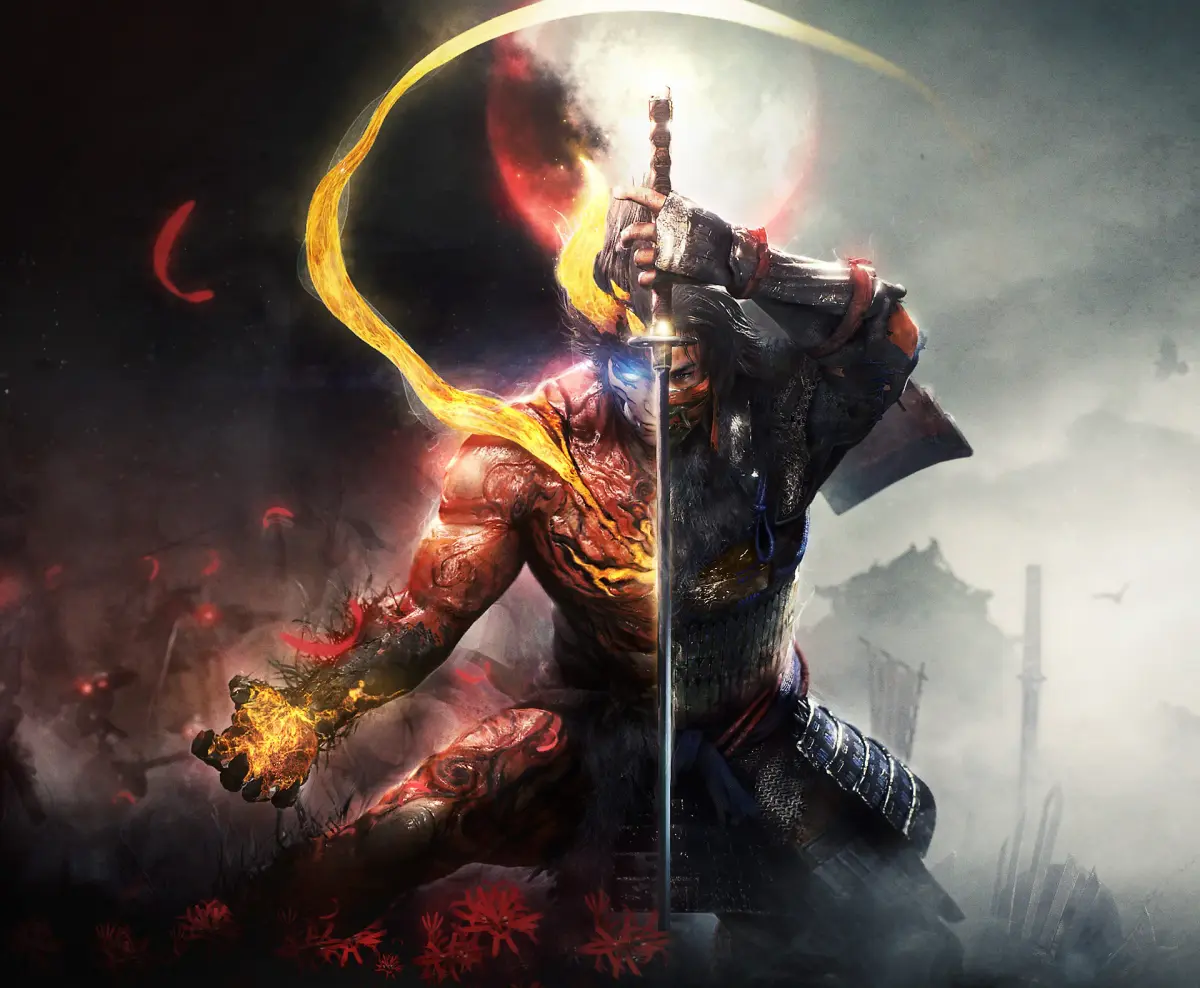
Nioh 2 throws you into the Sengoku period of Japan as a half-human, half-yokai warrior. You'll master deep samurai combat, wield powerful yokai abilities, and navigate treacherous missions, from the eerie Village of Cursed Blossoms to the depths of The Cavern Depths. It’s a challenging action RPG that demands precision and strategic use of your Ki.
This guide is here to help you conquer Nioh 2. We'll break down core mechanics, offer advanced strategies for tough bosses, and provide a clear path through every mission. Whether you're optimizing your build with specific weapons and armor or just trying to survive the onslaught, we've got your back.
Guide and Walkthrough (PS4) by vreaper
Explore the Nioh 2 Table of Contents, covering missions, mechanics, Dojo, Blacksmith, and more. Updated April 2020.
- 1Main Mission: The Village of Cursed Blossoms
- 2Main Mission: The Beast Born of Smoke and Flames
- 3Main Mission: The Viper's Sanctum
- 4Main Mission: The Hidden Monsters of Okehazama
- 5Main Mission: The Mysterious 1 Night castle
- 6Main mission: The hollow fortress
- 7Main mission: A way out
- 8Main mission: Corpses and Ice
- 9Main mission: Bird in a cage
- 10Main Mission: Pervading Waters
- 11Main mission: The frenzied Blaze
- 12Main mission: The sun sets on mount tenno
- 13Main mission: Ruin draws near
- 14Main mission: 2 Faces of Hospitality
- 15Main mission: The High spirited Demon
- 16Main mission: The Mausoleum of Evil
- 17Main mission: The Golden Castle
- 18Main mission: Cherry Blossom Viewing in Daigo
- 19End of New game, Final missions and New game+
- The guide was updated on 04/30/2020 and was a FAQ of the Month Winner in April 2020.
- Sections include Hub and Overworld (Hut, Shrine, Blacksmith, Dojo, Hidden Teahouse and torii gate), Mechanics (Equipment, Guardian Spirits and Soul cores, Items, Learning Skills and Skill customization, Status, Titles and Amirita memories, Misc. Tips and build helps), Smithing Scripts, a Trophy guide, and Credits.
Hub and overworld
Navigate Nioh 2's country map, unlock new regions like Awakening and Soaring, and understand Twilight Missions and post-game content.
Nioh 2 takes place across several key locations in Japan. Between story and side missions, you will access a large map screen where you can select your next mission. Initially, only the region Awakening is available, but more regions unlock as you clear main missions. Completing missions fills the map with main and side missions. You can also select unlocked Twilight Missions from red bubbles on the left, which become available after finishing your first region. You can save and change regions at any time.
Missions and Twilight Missions
Normal missions are divided into main and side missions. Side missions typically unlock after finishing a main mission, while main missions are story-related. Completing any mission for the first time yields unique rewards; subsequent completions offer lower rewards. Twilight Missions are higher difficulty missions based on main missions and longer side mission stages. Beating them provides better-than-normal rewards, and first-time rewards can be earned daily. Two Twilight Missions are available per day and change daily at twilight. Aside from first-time mission rewards, Twilight Missions are the only way to obtain quality umbracite.
Each region provides a "starting point" from which you can access useful facilities:
- The Hut
- Shrine
- Blacksmith (Unlocked after the second main mission)
- Dojo
- Hidden Teahouse (Unlocked in the 2nd region)
- Torii Gate (Online)
- The Interim (Unlocked in the 6th region)
Each region contains 25 Kodama (spirits) to collect across main and sub missions. Each region also has hidden items scattered throughout, which become available after finishing the main missions of that region. Finding these locations rewards various items and lore. Discovering 10 such locations grants a trophy.
Post Game/New Game+/Dream of the Strong Content
After defeating the final boss of the main story, you will unlock Dream of the Strong (DotS), a post-game replay of all missions with stronger enemies and slightly altered missions. Divine weapons will now drop in all missions, even normal ones. DotS missions feature new first-time clear rewards, including divine gear, smithing texts, locks, and valuable materials for the blacksmith. Additionally, in DotS missions, you can use up to 10 Ochoko cups (items used to summon help) when selecting a mission to increase divine drop rates. New Game+ (NG+) also offers much higher amrita (experience points) and gold gains throughout.
The first-time mission rewards in DotS are the only way, aside from forging, to obtain fabled umbracite and divine umbracite. However, not all regions are immediately unlocked in DotS; initially, only Awakening and Soaring are available. All missions within these regions are accessible. You can unlock more regions by clearing available missions; after reaching a certain number, Shadow will unlock, followed by the rest. Unlocking NG+ also enables new functions for the blacksmith and your Hut. In addition to the two daily Twilight Missions in normal maps, NG+ offers an additional two, providing four missions with daily completion rewards. Over time, you will also unlock several training missions that can be replayed for locks and other rewards, though they do not award new skills.
- Unlock new regions by completing main missions.
- Twilight Missions offer daily rewards and are essential for obtaining quality umbracite.
- The Blacksmith is unlocked after the second main mission, and the Hidden Teahouse in the second region.
- Dream of the Strong (NG+) significantly increases enemy difficulty and reward potential.
- Use Ochoko cups in Dream of the Strong to boost divine item drop rates.
Guide and Walkthrough (PS4) by vreaper (2)
Explore Nioh 2's PS4 guide and walkthrough by vreaper (2). Navigate missions, mechanics, and trophies in this comprehensive walkthrough.
This guide, written by vreaper (2), covers the PlayStation 4 version of Nioh 2. It's a comprehensive walkthrough that won the FAQ of the Month for April 2020. The guide is structured to help players navigate through the game's content, from the introductory elements to the final missions and New Game+.
The Table of Contents provides a clear roadmap of the guide's sections:
- Introduction
- Hub and overworld (including Hut, Shrine, Blacksmith, Dojo, and Hidden Teahouse/torii gate)
- Mechanics (covering Equipment, Guardian Spirits/Soul cores, Items, Skills, Status/Titles/Amirita memories, and Misc. Tips/builds)
- Smithing Scripts
- Walkthrough (detailing all main missions from 'The Village of Cursed Blossoms' to 'Cherry Blossom Viewing in Daigo', plus end-game content)
- Trophy guide
- Credits
The walkthrough section specifically lists 19 main missions, guiding players through each one. It also touches upon the end of the New Game experience, final missions, and the transition into New Game+.
Hut
Master the Hut in Nioh 2! Learn about changing appearance, managing your storehouse, saving builds, viewing illustrations, remodeling, and optimizing tea utensils for better drops.
Hey there! So, you've stumbled upon the Hut in Nioh 2, and it's way more than just a pretty room. Think of it as your personal hub for all sorts of handy management and customization. Let's break down what you can do here so you don't miss out on any of its perks.
Changing Your Appearance
This is where you can tweak your protagonist's look, essentially diving back into the character creator. You can change everything from their appearance to their gender and voice. Plus, you can save different looks as presets. There's also a 'transform' option that lets you swap your appearance with a character avatar you get from the tea house. This avatar will show up everywhere except in cutscenes, which is a neat little cosmetic trick.
Storehouse
Your item bag has a limit of 500 items (that's armor, weapons, and soul cores, but not consumables). The storehouse is your lifeline for keeping all the excess gear you don't want to sell, disassemble, or just drop. It's a lifesaver for managing soul cores especially. The storehouse can hold a massive 4000 items, so you've got plenty of room.
Manage Equipment Sets and Builds
This feature lets you save specific combinations of your equipped gear. It's super useful for quickly switching between different loadouts for various situations. The 'Builds' option, however, only unlocks after you defeat the final boss. Once unlocked, it lets you save not just your gear sets, but also your core stats, skills, skill customizations, and pretty much everything that defines your character's build. Keep in mind, switching between builds that have different core stats requires a Book of Reincarnation. You can buy these from the blacksmith for an ever-increasing amount of money (up to 1 million) or from the tea house using glory.
View Illustrations
This section is like your personal gallery. You can view information about Yokai, story characters, and your guardian spirits. It's also where you can rewatch any cutscenes you've already seen in the game.
Remodel Hut
Want to personalize your space? This is the place. You can change the overall look of the hut and add decorations like wall scrolls. You can also choose a 'visitation' option, which lets you select one of your guardian spirits to appear in the hut. It doesn't affect gameplay, but it's a nice touch.
Tea Utensil Placement
This is arguably one of the most important aspects of the Hut, right up there with Builds, the storehouse, and appearance. After a certain point in the second or third regions, you'll unlock the hidden tea house. You can collect tea utensils from enemy drops or other sources. Some need to be appraised in the tea house first, but once done, you can place them here. You get a shelf with 4 slots for these utensils. Each tea utensil has three main stats: Splendor, Simplicity, and Eccentricity. Each stat boosts one of your attributes: Luck (for rarer drops), Money Acquired, and Tea Utensil Drop Rate, respectively. You can place 4 utensils at a time, and the order doesn't matter. The game offers a 'recommended placement' option, but I wouldn't use it. It balances the stats, which isn't efficient. The main goal here is to boost your drop rates, as the other two functions are already covered by other game mechanics. I highly recommend focusing solely on Splendor to maximize your Luck.
Similar guides you might like




100% Human-Written. AI Fact-Checked. Community Verified. Learn how AntMag verifies content