
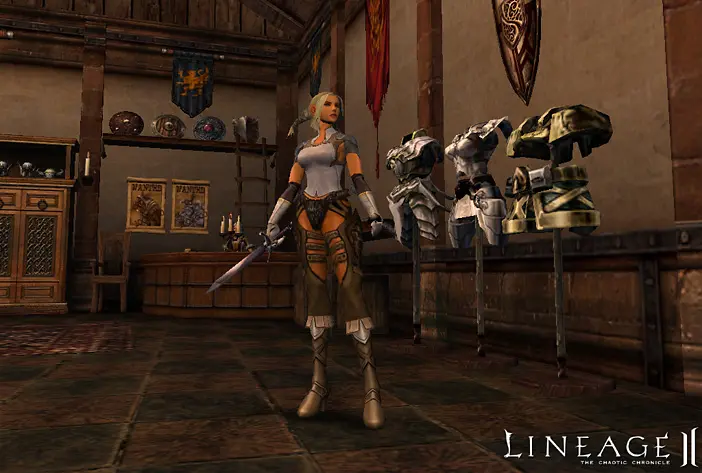
Master your character's skills and spells in Lineage II. Learn efficient acquisition, enhancement, and strategic usage to conquer Elmoreden.
Mastering your character's skills and spells is paramount to success in the perilous world of Lineage II. This detailed guide will walk you through the acquisition, enhancement, and strategic use of your abilities, ensuring you're always prepared for the challenges ahead.
Skill Acquisition: The Path to Power
Skills and spells are not simply granted; they must be learned. The primary method of acquiring new abilities is through Skill Trainers located in major towns and villages. These trainers specialize in specific classes and will offer you new skills as you level up.
- Locating Trainers: Open your world map (default key: M) and look for the "Skill Trainer" icon (often represented by a scroll or a magic staff). Common locations include:
- Gludin Village: Near the central plaza, catering to early-game Human and Elf classes.
- Gludio Castle Town: Multiple trainers spread throughout, offering a wider range of skills for various races.
- Dion Castle Town: Similar to Gludio, a hub for skill learning as you progress.
- Giran Castle Town: A major metropolis with trainers for advanced classes and higher-level skills.
- Learning Skills:
- Approach the appropriate Skill Trainer for your class.
- Right-click on the trainer to open their skill learning interface.
- Skills available for your current level will be highlighted. Each skill will display its MP cost, required SP (Skill Points), and any prerequisite skills.
- Click on the desired skill and then click "Learn" to acquire it. Ensure you have sufficient SP and Adena (for some higher-tier skills).
- Skill Books: Certain rare and powerful skills are not learned from trainers but are instead acquired through Skill Books. These can be:
- Dropped by specific raid bosses or high-level monsters.
- Obtained as rewards from challenging quests.
- Purchased from other players via the private store system or the Grand Exchange.
- Example: The "Greater Heal" skill book for Priests might drop from the Cruma Tower's upper floors, or be a rare reward from the "Whispers of the Giants" questline.
Skill Enhancement: Beyond the Basics
Once learned, many skills can be further enhanced to increase their potency, reduce their cooldown, or add secondary effects. This process is known as Skill Enchanting or Skill Augmentation, depending on the chronicle you are playing.
- Enchanting Scrolls: The primary method for skill enhancement involves using specific enchantment scrolls. These scrolls are often class-specific or skill-type specific.
- Acquisition: Enchant scrolls can be obtained through various means:
- Drops from high-level monsters (e.g., "Enchant Skill Scroll: Attack" from Giants Cave).
- Raid boss rewards.
- Crafted by Dwarven crafters using rare materials.
- Purchased from the Luxury Shop in Giran or Aden, though at a steep price.
- Process:
- Open your inventory and right-click on the appropriate Enchant Skill Scroll.
- A new window will appear, allowing you to select the skill you wish to enchant.
- Each enchantment attempt has a chance of success or failure. A successful enchant will increase the skill's level (e.g., "Power Strike +1"). A failed enchant will typically reset the skill to its base level, so proceed with caution!
- Higher enchantment levels offer diminishing returns on success rate, making advanced enchanting a significant investment.
- Acquisition: Enchant scrolls can be obtained through various means:
- Skill Paths: Some skills, particularly at higher levels, offer different "paths" of enchantment. For example, a damage skill might have paths for "Power," "Cost," or "Chance."
- Power Path: Increases the skill's raw damage or healing output.
- Cost Path: Reduces the MP consumption of the skill.
- Chance Path: Increases the likelihood of a debuff or status effect applying.
- Choose the path that best suits your playstyle and party composition. A damage dealer might prioritize "Power," while a support class might opt for "Cost" or "Chance."
Strategic Skill Usage: Maximizing Your Potential
Knowing your skills is one thing; using them effectively is another. Strategic skill usage can turn the tide of any battle, whether against a formidable raid boss or a rival player in PvP.
- Understanding Cooldowns: Every active skill has a cooldown period before it can be used again. Pay close attention to these timers to ensure you're not wasting precious seconds waiting for a crucial ability.
- Tip: Arrange your hotbar to group skills with similar cooldowns or those that synergize well together.
- MP Management: Spells and many active skills consume MP (Magic Points). Efficient MP management is vital, especially for magic-heavy classes.
- Potions: Always carry a stock of "Spirit Ore" for Soulshots/Spiritshots and "Mana Potion" or "Greater Mana Potion."
- Buffs: Seek out party members who can provide MP regeneration buffs, such as an Elven Elder's "Mana Recharge" or a Shillien Elder's "Recharge."
- Equipment: Look for equipment with MP regeneration bonuses or passive skills that reduce MP consumption.
- Skill Combos: Many classes have skills that work in tandem for increased effect.
- Example (Warrior): A "Power Break" debuff followed by a "Fatal Strike" can significantly increase your damage output.
- Example (Mage): Applying a "Curse of Doom" to reduce magic defense before unleashing a powerful "Blaze" or "Aura Burn."
- PvP vs. PvE Considerations:
- PvE: Focus on maximizing damage per second (DPS) or healing per second (HPS), and managing aggro.
- PvP: Prioritize crowd control (stuns, sleeps, roots), debuffs, and burst damage. Understanding enemy class skills is crucial for effective counter-play.
100% Human-Written. AI Fact-Checked. Community Verified. Learn how AntMag verifies content