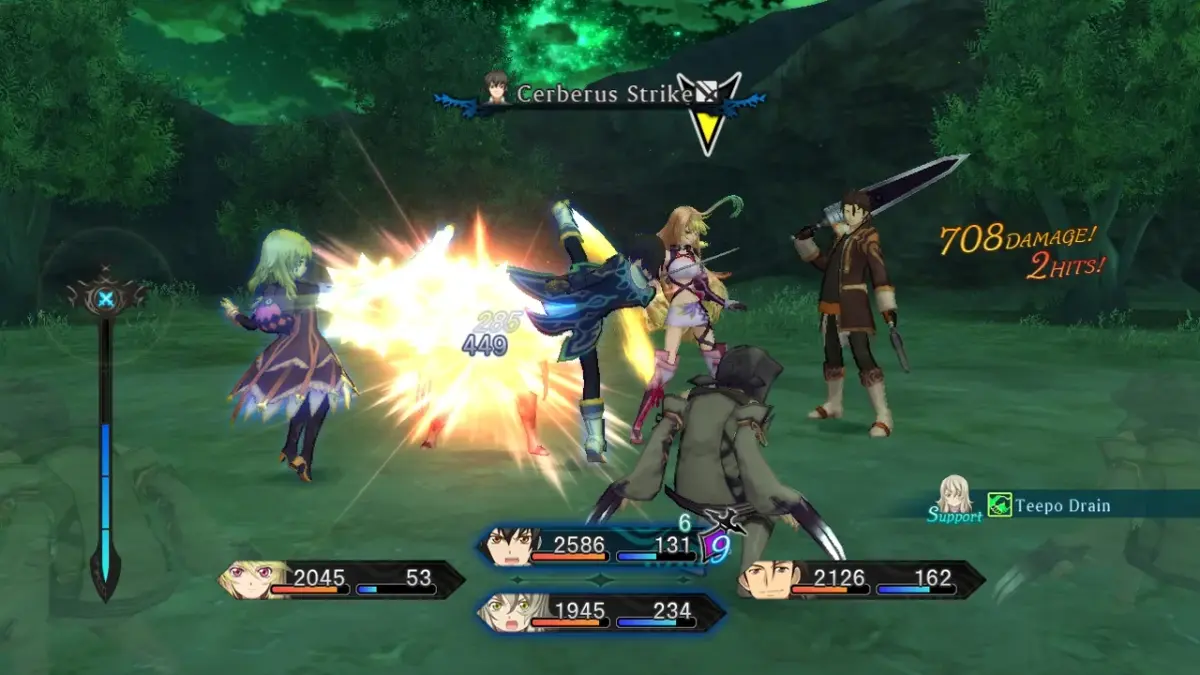
Welcome to *Tales of Xillia*, a PlayStation 3 exclusive RPG where you'll embark on a grand adventure alongside Jude Mathis and Milla Maxwell. This game blends fast-paced combat with a compelling narrative as you navigate the world of Rieze Maxia, uncovering secrets and facing powerful adversaries.
This guide is your ultimate companion for mastering every aspect of your journey. We'll provide in-depth chapter walkthroughs, starting strategies to get you off on the right foot, and advanced combat techniques to help you overcome tough boss battles. Whether you're struggling with item management, side quests, or just need a clear path forward, this guide covers it all to ensure you fully experience this captivating RPG.
Getting Started
Your essential guide to starting Tales of Xillia. Learn about the world of Rieze Maxia, the main characters Jude Mathis and Milla Maxwell, and the core gameplay mechanics.
Getting Started
Your essential guide to starting Tales of Xillia. Learn about the world of Rieze Maxia, the main characters Jude Mathis and Milla Maxwell, and the core gameplay mechanics.


Difficulty Settings & Impact
Tailor your Tales of Xillia journey by adjusting difficulty settings. This guide explains how altering game settings impacts gameplay and your overall experien.
Tales of Xillia offers a flexible difficulty system that allows players to tailor their experience, from a casual journey through Rieze Maxia to a challenging test of skill. Understanding how these settings work and their impact on gameplay is crucial for maximizing your enjoyment and efficiency.
Accessing Difficulty Settings
You can adjust the game's difficulty at almost any point outside of battle or cutscenes. Follow these steps:
- Press the START button to open the main menu.
- Navigate to the System tab (usually the last option).
- Select Options.
- Choose Game Settings.
- Locate the Difficulty option and select your desired setting.
Note that changing difficulty mid-battle will not take effect until the next encounter. Some difficulty settings may be locked until certain conditions are met, typically by completing the game once.
Difficulty Levels and Their Effects
Tales of Xillia features several difficulty levels, each with distinct impacts on enemy stats, item drop rates, and experience gain.
Easy
- Enemy Stats: Significantly reduced HP, Attack, and Defense. Enemies are less aggressive and their AI is simpler.
- Experience/Gald: Slightly increased compared to Normal.
- Item Drops: Standard drop rates.
- Strategy: Ideal for players who want to focus on the story, explore the world without much combat friction, or are new to action RPGs. You can often brute force encounters with minimal tactical planning.
- Recommendation: Great for a first playthrough if you're primarily interested in the narrative and character interactions.
Normal
- Enemy Stats: Standard HP, Attack, and Defense. Balanced aggression and AI.
- Experience/Gald: Standard rates.
- Item Drops: Standard drop rates.
- Strategy: Provides a balanced challenge that requires some understanding of the combat system, character linking, and elemental weaknesses. You'll need to manage your items and equipment effectively.
- Recommendation: The recommended starting difficulty for most players. It offers a good blend of challenge and accessibility.
Hard
- Enemy Stats: Increased HP, Attack, and Defense. Enemies are more aggressive, use Artes more frequently, and exhibit more complex AI patterns.
- Experience/Gald: Slightly decreased compared to Normal.
- Item Drops: Slightly increased chance of rare item drops from enemies.
- Strategy: Requires a solid grasp of combat mechanics, including proper linking, effective use of Artes, and strategic item usage. Exploiting enemy weaknesses and managing your party's Over Limit gauge becomes crucial. Expect to use more healing items like Apple Gels and Life Bottles.
- Recommendation: For players seeking a more engaging combat experience on their first playthrough, or for those familiar with the Tales series.
Unknown
- Unlock Condition: Typically unlocked after completing the game once on any difficulty.
- Enemy Stats: Drastically increased HP, Attack, and Defense. Enemies are extremely aggressive, often use powerful Artes in quick succession, and possess highly advanced AI. Bosses can be particularly brutal.
- Experience/Gald: Significantly increased compared to Normal.
- Item Drops: Noticeably increased chance of rare item drops, including higher-tier materials and equipment.
- Strategy: This difficulty demands mastery of the combat system. You'll need optimized equipment, well-developed Lilium Orb paths, and precise execution of combos, linked Artes, and Mystic Artes. Grinding for better gear and levels, especially in areas like the Xagut Floodmeadow or Featherfall Way, becomes more important. Consider crafting powerful accessories like the Risky Ring (for increased EXP/Gald at the cost of defense).
- Recommendation: For veteran players seeking the ultimate challenge, or for those on a New Game+ run looking to maximize rewards and test their skills.
Impact on Gameplay and Rewards
The chosen difficulty setting has a direct impact on several aspects beyond just combat:
- Resource Management: Higher difficulties will deplete your stock of Gels and Bottles much faster. Ensure you frequently visit shops in towns like Hamil or Fenmont to restock, or use the Item Shop development in your base camps.
- Grinding: While Unknown offers more EXP and Gald, the increased difficulty means battles take longer and can be riskier. You might find yourself needing to grind more effectively to keep pace with enemy power spikes, especially for optional bosses like the Golden Mage Knight.
- Lilium Orb Progression: On harder difficulties, optimizing your Lilium Orb path for maximum stats and useful Artes becomes paramount. Prioritize unlocking key support Artes and stat bonuses relevant to your party's roles.
- Trophy Hunting: Some trophies may require completing the game on specific difficulties, or achieving certain combat feats that are easier/harder depending on your setting.
- New Game+ Benefits: Playing on harder difficulties in New Game+ can be incredibly rewarding, especially if you carry over items, Gald, or character levels. This allows for a smoother transition into the increased challenge while still reaping the benefits of higher drop rates.
Experiment with the settings to find what best suits your playstyle and current progress in the game. Don't be afraid to adjust it if you find yourself struggling or breezing through encounters too easily!
Introduction & Game Premise
Begin your Tales of Xillia adventure in Rieze Maxia, navigating the conflict between nations and the spirit world. Choose Jude or Milla's path.
Welcome, aspiring adventurers, to the vibrant world of Rieze Maxia! Tales of Xillia plunges you into a conflict between two powerful nations, Rashugal and Auj Oule, and the mysterious spirit world that binds them. You'll embark on an epic journey, choosing to experience the narrative through the eyes of either Jude Mathis, a brilliant medical student, or Milla Maxwell, the enigmatic Lord of Spirits. While the core story remains consistent, your chosen protagonist offers unique perspectives, initial party compositions, and exclusive character-specific scenes, making a second playthrough highly rewarding.
Choosing Your Protagonist
At the very beginning of your adventure, after the introductory cutscenes, you'll be prompted to select your main character. This choice impacts your starting location and initial party members:
- Jude Mathis: You begin in the bustling city of Fenmont, a hub of medical research. Your initial objective will be to investigate a disturbance at the city's research facility. Jude's path often provides more insight into the human perspective of Rieze Maxia's political and scientific landscapes.
- Milla Maxwell: Your journey starts in the serene Nia Khera, a village deeply connected to the spirit world. Milla's quest immediately focuses on understanding the weakening of the Great Spirits and the disruption of the world's balance. Her perspective offers a deeper dive into the spiritual lore of the world.
There is no "wrong" choice, but new players might find Jude's initial journey slightly more conventional, while Milla's offers a more immediate immersion into the game's unique spiritual elements.
Initial Steps & Gameplay Fundamentals
Regardless of your chosen protagonist, the early hours of Tales of Xillia serve as a comprehensive tutorial for its engaging combat system and exploration mechanics. Pay close attention to these initial sequences:
Combat System Basics
The game utilizes a refined version of the "Linear Motion Battle System" (LMBS), featuring free-run movement and the innovative "Linked Battle System."
- Basic Attacks (Artes): Learn to chain together normal attacks and special techniques called Artes. Jude, for example, starts with the martial arte "Demon Fist," while Milla begins with the spirit arte "Whirlwind." Experiment with different combinations to find effective attack patterns.
- Linked Combat: This is a cornerstone of Xillia's combat. By linking with a party member (defaulting to the partner the game assigns you initially), you gain access to powerful "Linked Artes" and support abilities.
- Jude's Path: You'll quickly link with Milla. Her support ability, "Spirit Shift," allows Jude to recover from being knocked down quickly.
- Milla's Path: You'll link with Jude. His support ability, "Snap Pivot," enables Milla to dodge enemy attacks and counter.
- Over Limit: As you fight, a gauge will fill. Activating Over Limit grants temporary invincibility, faster arte casting, and allows for continuous arte chains. Save this for critical moments or boss encounters.
Exploration and Item Acquisition
As you navigate the initial areas, keep an eye out for hidden treasures and gathering points:
- Treasure Chests: These are often visible and contain valuable items like Gald (currency), equipment, or consumables. For instance, in the early Fenmont Sewers (Jude's path) or Nia Khera Shrine (Milla's path), you'll find your first few chests containing items like Apple Gels and Life Bottles.
- Material Points: Sparking spots on the ground indicate material points. Interact with these to gather crafting materials such as Small Beast Bones, Hard Wood, or Mysterious Fragments. These materials are vital for upgrading shops and crafting later in the game.
- Shop Upgrades: A unique system in Tales of Xillia allows you to invest Gald and materials into shops (Weapon, Armor, Item, Accessory, Food) to unlock new inventory and discounts. Prioritize upgrading the Weapon and Armor shops early on to keep your party well-equipped.
Story Introduction (Spoiler-Free)
The core premise revolves around the land of Rieze Maxia, where humans coexist with spirits. However, a powerful, unseen force is disrupting the balance, causing spirits to vanish and threatening the very existence of the world. Milla Maxwell, the Lord of Spirits, descends to the human world to investigate this phenomenon. Her path intertwines with Jude Mathis, a young medical student who inadvertently becomes embroiled in her quest. Together, and with a growing cast of diverse characters, they must uncover the truth behind the spirit depletion and confront the forces that seek to control or destroy Rieze Maxia.
Prepare for a journey filled with political intrigue, personal growth, and the classic Tales of series' blend of heartwarming character interactions and intense, strategic combat. Enjoy your adventure!
Save System & Save Points — Tales of Xillia Guide
Master the save system in Tales of Xillia. This guide explains where to find save points and offers best practices since the game lacks an auto-save function.
Maintaining a consistent save habit in Tales of Xillia is crucial for a smooth and enjoyable playthrough. This section will detail how the save system works, where to find save points, and best practices to avoid losing progress.
Understanding the Save System
Unlike some modern RPGs, Tales of Xillia does not feature an auto-save function. All progress must be manually saved at designated Save Points. Failing to save can result in significant loss of progress if your party is wiped out in battle or if you need to turn off your PlayStation 3 console.
When you interact with a Save Point, you will be presented with a menu allowing you to:
- Save Game: This is your primary option. Select an available save slot to record your current progress. It's highly recommended to use multiple save slots, especially before major boss battles or entering new, unfamiliar areas. This provides a fallback if you make a critical mistake or encounter an unexpected challenge.
- Load Game: Access previously saved data.
- Exit: Close the Save Point menu.
Each save file records your party's current location, character levels, equipment, Gald, items, progress in the story, and completed sub-events.
Locating Save Points
Save Points in Tales of Xillia are easily identifiable on the field. They appear as glowing, ethereal blue orbs. As you approach them, a prompt will appear, usually indicating "Press X to Save."
Common Save Point Locations:
- Towns and Cities: You will almost always find a Save Point near the entrance of major towns like Fennmont, Hamil, or Sharilton. They are also frequently located near inns or shops.
- Dungeons and Field Maps: Save Points are strategically placed throughout dungeons and larger field maps. Expect to find them:
- Before significant boss encounters (e.g., the battle against the Lance of Kresnik in the Fezebel Marsh).
- At the beginning and end of particularly long or complex areas (e.g., the Labari Hollow or the Voltea Woods).
- Occasionally in the middle of larger areas, often after a challenging series of regular enemy encounters.
- Story Progression: The game often places a Save Point immediately after a major story event or before a point of no return, signaling that you should save your progress.
Strategic Saving Practices
To maximize your enjoyment and minimize frustration, consider these saving strategies:
- Save Frequently: Make it a habit to save every time you encounter a Save Point, even if you just saved a few minutes prior. You never know when a random encounter might go south or a power outage might occur.
- Utilize Multiple Save Slots: As mentioned, using several slots (e.g., Slot 1 for your main progress, Slot 2 for a recent backup, Slot 3 for a "pre-boss" save) can be a lifesaver. This is especially important for areas with difficult boss fights or branching story paths.
- Before Major Decisions: While Tales of Xillia doesn't have a vast array of branching choices, saving before any significant dialogue option or character interaction can allow you to re-experience different outcomes if you wish.
- Before Entering New Areas: Always save before venturing into an unknown dungeon or a new region on the world map. This prepares you for any unexpected challenges or powerful enemies.
- After Acquiring Valuable Items or Gald: If you've just completed a side quest that rewarded you with a rare item like a Rare Metal or a substantial amount of Gald, save your game.
By following these guidelines, you'll ensure that your journey through Rieze Maxia and Elympios is as smooth and stress-free as possible, allowing you to focus on the epic story and engaging combat that Tales of Xillia offers.
Similar guides you might like






100% Human-Written. AI Fact-Checked. Community Verified. Learn how AntMag verifies content