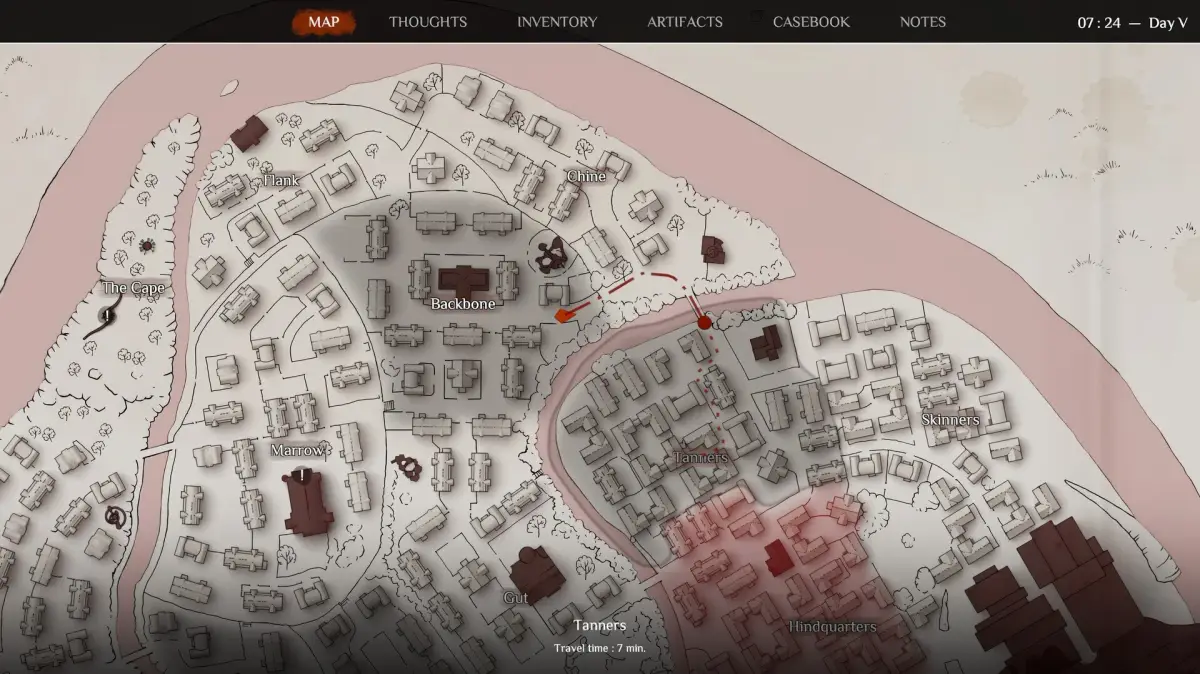
Master Pathologic 3: Quarantine's fast travel. Learn how to use it, its limitations, time costs, and strategic tips for efficient navigation.
Fast Travel System in Pathologic 3: Quarantine
Navigating the sprawling and perilous districts of Uroboros is a core challenge in Pathologic 3: Quarantine. While the game emphasizes the arduous nature of travel, a Fast Travel System exists to alleviate some of the burden. However, this system is far from a simple "click and go" mechanic. It is deeply integrated into the game's core themes of time scarcity, resource management, and inherent risk. Understanding its nuances is crucial for efficient survival.
Understanding the Fast Travel Mechanics
The Fast Travel System in Pathologic 3: Quarantine operates through a network of established transit points scattered throughout Uroboros. These points are not merely abstract nodes but tangible locations within the game world that you must discover and, in some cases, activate.
- Designated Transit Hubs: Fast travel is facilitated by specific locations that serve as transit points. These are typically marked on your map once discovered. Examples include:
- The Train Station: A primary hub for inter-district travel, often requiring a ticket or a specific interaction to use.
- The Harbour Docks: Connecting certain coastal areas, this point might be crucial for reaching specific outlying settlements or islands.
- Key Public Buildings: Certain administrative buildings or community centers in each district can act as local transit points, allowing for quicker movement within a district or to adjacent ones.
- The Quarantine Zone Checkpoints: While seemingly restrictive, some checkpoints might offer limited fast travel options to areas within or adjacent to the quarantine zones, albeit with increased risk.
- Discovery and Activation: Not all transit points are available from the outset. Many must be discovered through exploration. Some may require:
- Physical Proximity: Simply walking near a designated transit point will often reveal it on your map.
- Story Progression: Certain points become active only after specific story beats or quests are completed. For instance, the train station might only become fully operational after a certain event related to the ongoing plague.
- NPC Interaction: Speaking with specific NPCs, such as station masters or ferrymen, might be necessary to unlock or utilize a transit point.
- Minor Quests: Occasionally, a small task might be required to gain access, such as delivering a package or paying a small fee.
- Map Interface: Once discovered and active, transit points are visible on your Town Map (typically accessed via the 'M' key). Active points are usually highlighted or marked with a distinct icon.
- Initiating Travel: To fast travel, open your Town Map, select an active and accessible transit point, and confirm your destination.
Requirements, Limitations, and Costs
The Fast Travel System in Pathologic 3: Quarantine is deliberately designed to be costly and risky, reflecting the harsh realities of the town. It is not a free or consequence-free service.
- The Unforgiving Cost of Time: This is the most significant limitation. Fast travel consumes a substantial amount of in-game time. A journey that might take 30 minutes to walk could be reduced to 1-2 hours via fast travel, but this is still a considerable chunk of your limited daily allowance. You must constantly weigh the time saved against the time lost.
- Resource Expenditure:
- Tickets/Fees: Many transit points, especially major ones like the train station or harbor, will require the purchase of a ticket or a direct payment to the operator. These costs can vary depending on the distance and the current economic state of the town.
- Specific Items: In rare cases, you might need to expend a specific item to use a transit point, such as a permit or a token.
- Quarantine and Apathy:
- Restricted Zones: Areas under severe quarantine may be completely inaccessible via fast travel, even if a transit point exists nearby. The game will explicitly state if travel to a certain area is blocked due to quarantine measures.
- Increased Risk with Apathy: The higher the town's overall apathy level, the greater the chance of negative events occurring during fast travel. This can range from losing items, contracting minor ailments, or even facing ambushes by desperate inhabitants. The game will often warn you if travel is particularly risky due to high apathy.
- Story Gating: As mentioned, many transit points are tied to the narrative. If a particular district is undergoing a major story event or is in lockdown due to plague outbreaks, its associated transit points may become temporarily or permanently inactive.
Character-Specific Considerations
While the core mechanics of fast travel are the same for all playable characters (The Bachelor, The Haruspex, The Saboteur), their unique circumstances can influence how they perceive and utilize this system.
- The Bachelor: As a doctor, the Bachelor might have a slightly easier time accessing some medical-related transit points or may be able to negotiate passage through certain checkpoints due to his profession. However, his primary concern remains the efficient use of time to treat the sick and research the plague. Fast travel is a tool to maximize his medical rounds.
- The Haruspex: Clad in her traditional attire and often viewed with suspicion, the Haruspex might face more resistance or higher fees at certain transit points. Her connection to the town's spiritual and hidden aspects might, however, grant her unique knowledge of less conventional or secret transit routes that are not marked on the standard map. Her focus is often on gathering rare ingredients and understanding the town's deeper mysteries, making fast travel a way to reach distant, often dangerous, locations for her rituals or investigations.
- The Saboteur: As an outsider with a hidden agenda, the Saboteur might find some transit points blocked to him or might need to employ more clandestine methods to use them. He might have access to unique, perhaps illicit, transit options or be able to bribe his way through checkpoints more effectively. His goal is to disrupt the established order, and fast travel can be a tool for rapid deployment to key sabotage locations or for escaping pursuit.
Strategic Application of Fast Travel
Effective use of the Fast Travel System is a hallmark of experienced Pathologic players. It requires careful planning and a deep understanding of the game's temporal economy.
- Prioritize Essential Journeys: Use fast travel only for journeys that are absolutely critical and would otherwise consume an impractical amount of time. This typically includes traveling between distant districts for crucial quests, urgent medical supplies, or to meet vital NPCs.
- Unlock All Available Points: Make it a constant objective to discover and activate every possible transit point. The more options you have, the more flexible your movement becomes, allowing for more efficient route planning. Explore thoroughly, talk to everyone, and complete small tasks that might unlock new routes.
- Consider the Time of Day and Apathy Levels: Before initiating fast travel, check the current time and the town's apathy level. Traveling at night might place you in a dangerous situation upon arrival. High apathy increases the risk of negative transit events, so consider if the risk is worth the reward. If apathy is high, walking might even be safer if you can manage the time.
- Factor in Resource Costs: Always ensure you have enough currency or the required items to pay for fast travel. A failed attempt to fast travel due to lack of funds can be a significant setback.
- Combine with Other Activities: If you must travel a long distance, consider if there are any smaller, time-sensitive tasks you can complete at your destination or along the way before or after fast traveling. This maximizes the utility of the time spent.
- Avoid Unnecessary Travel: Always ask yourself: "Can I achieve my objective by walking?" Often, the answer is yes, and the time spent walking can be used to gather resources, complete minor tasks, or interact with the environment, all of which are vital for survival.
The Fast Travel System in Pathologic 3: Quarantine is not a shortcut to be abused, but a strategic tool to be wielded with precision. Its limitations are as important as its benefits, forcing players to make difficult choices about time, resources, and risk, thereby deepening the immersive and challenging experience of surviving the plague-ridden town of Uroboros.
100% Human-Written. AI Fact-Checked. Community Verified. Learn how AntMag verifies content