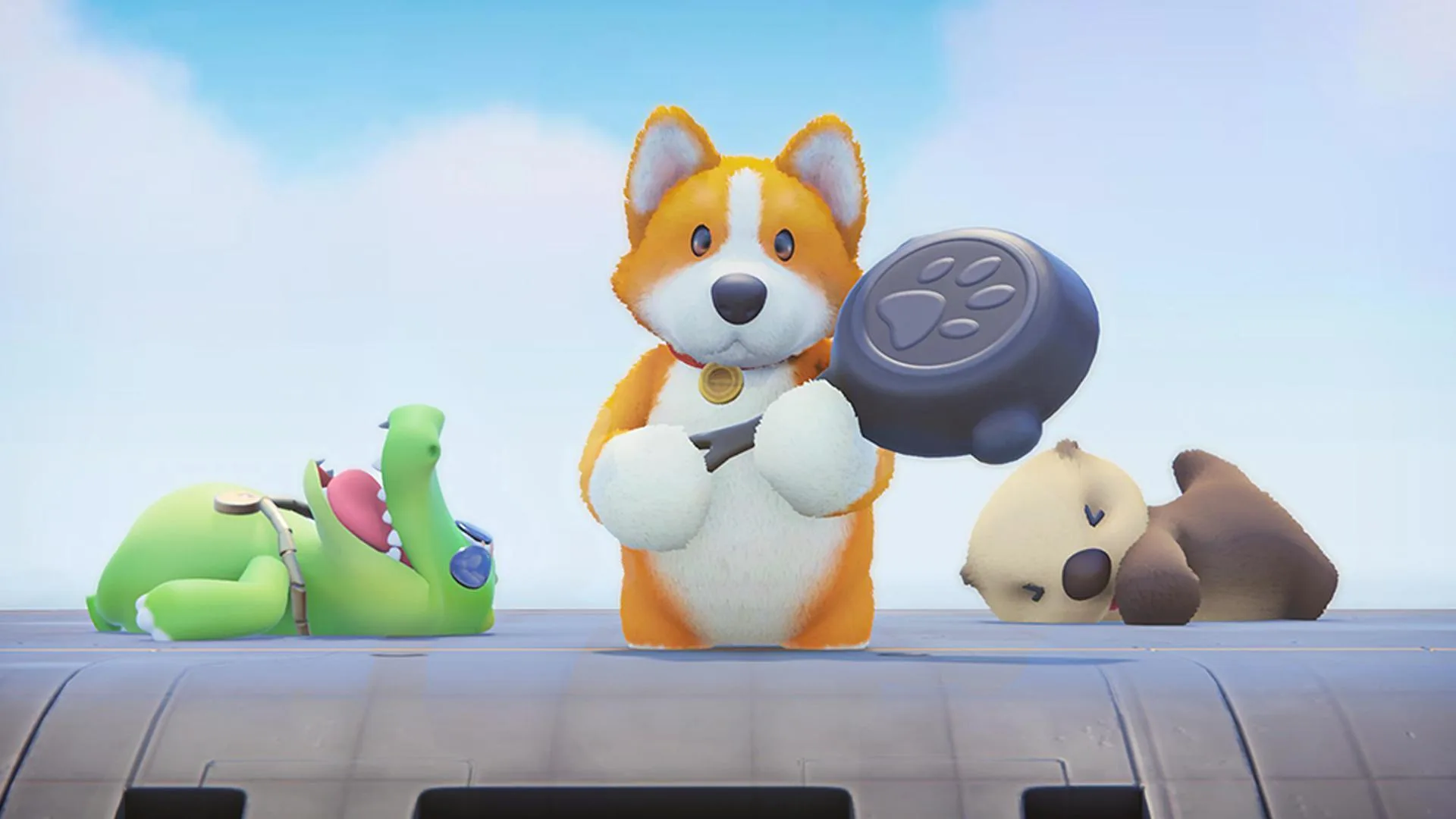
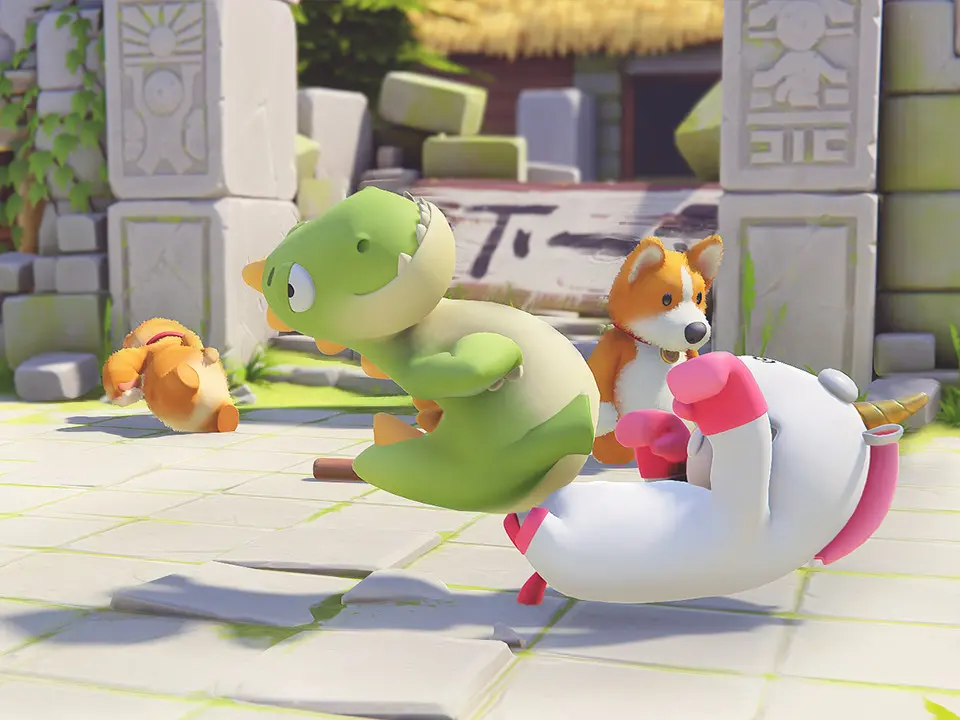
Party Animals focuses on physics-based brawling, not complex character skill trees. Learn how player skill and environment interaction determine success.
Character Selection & Cosmetic Differences
In Party Animals, the charming cast of characters is one of its most endearing features. Unlike traditional RPGs, there are no complex ability trees, skill points, or leveling systems. Instead, the game focuses on physics-based brawling where player skill and environmental interaction are paramount. Therefore, when we talk about "character abilities and skills" in Party Animals, we're primarily discussing the nuances of character selection, their cosmetic variations, and any subtle gameplay implications these choices might have.
Understanding Character Selection
Choosing your animal in Party Animals is largely a matter of personal preference and aesthetic appeal. Each character is a unique, adorable creature with its own distinct look and personality. While the core gameplay mechanics remain consistent across the roster, there are a few subtle elements to consider.
Cosmetic Variety & Customization
The primary "ability" of each character in Party Animals is their ability to look absolutely adorable and to be customized! The game offers a rich array of skins, outfits, and accessories for each animal, allowing players to express themselves and stand out in the arena.
- Default Skins: Every character comes with a charming default appearance.
- Unlockable Skins: Many skins can be unlocked through various means:
- In-Game Currency (Cookies): Earned by playing matches and completing daily/weekly challenges.
- Battle Pass/Season Rewards: Progress through seasonal passes to unlock exclusive outfits.
- Special Events: Participate in limited-time events for unique cosmetic rewards.
- Real-Money Purchases: Some premium skins and bundles are available for purchase.
- Accessories: Hats, glasses, and other adornments can further personalize your chosen animal. These are often mix-and-match, allowing for truly unique combinations.
Strategy Tip: While skins are purely cosmetic, a well-chosen outfit can sometimes be a fun way to intimidate opponents or simply make you easier to spot in a chaotic brawl!
Subtle Gameplay Differences (Weight & Hitboxes)
While the developers emphasize that all characters are designed to be balanced, there are extremely subtle, almost imperceptible differences that some veteran players claim to notice. These are not "abilities" in the traditional sense, but rather inherent properties of the character models.
- Weight Class (Perceived):
- Some characters, due to their visual design (e.g., larger, bulkier models), might feel slightly "heavier" or "lighter" to some players. However, the game's physics engine applies consistent rules to all characters regarding momentum, throws, and knockouts. Any perceived difference is often psychological or a result of hitbox perception rather than actual weight statistics.
- Heavier-looking characters (e.g., some of the larger dogs or the gorilla) might feel more stable, while lighter-looking characters (e.g., the cat or duck) might feel more agile. These are subjective player experiences.
- Hitbox Perception:
- All characters have standardized hitboxes for gameplay purposes. However, the visual size and shape of a character model can sometimes influence how players perceive hits and grabs. A visually larger character might feel easier to hit or grab, even if their actual hitbox is proportionally the same as a smaller character.
- Conversely, a smaller character might feel more elusive, even if their actual hitbox is not significantly smaller than others.
Important Note: The developers have consistently stated that character selection is primarily cosmetic and that gameplay balance is maintained across the roster. Any perceived differences in weight or hitbox are minimal and do not confer a significant competitive advantage. Player skill in mastering the game's physics and controls is far more impactful than character choice.
Mastering Core Mechanics (The True "Skills" of Party Animals)
Instead of character-specific abilities, Party Animals demands mastery of its universal control scheme and physics interactions. These are the true "skills" players develop.
Basic Movement & Actions
Understanding these fundamental actions is crucial for any character you choose:
- Walking/Running: Standard movement. Running builds momentum for jumps and dives.
- Jumping: Essential for platforming, avoiding ground attacks, and gaining height.
- Diving (Headbutt/Slide):
- Input: Jump + Attack (while airborne) or Run + Jump + Attack.
- Utility: A powerful offensive move that can knock down opponents, break their grip, or cover distance quickly. It's also a great way to recover from being stunned or knocked down.
- Punching/Kicking (Light Attack):
- Input: Attack Button.
- Utility: Quick, low-damage attacks used for chipping away at opponents, interrupting their actions, or setting up stronger moves.
- Strong Attack (Charged Punch/Kick):
- Input: Hold Attack Button.
- Utility: Slower but more powerful attacks that deal significant damage and have a higher chance to stun or knock back enemies. Timing is key to land these effectively.
- Grabbing:
- Input: Grab Button (near an opponent or object).
- Utility: The cornerstone of many strategies. Grab opponents to hold them, throw them, or prevent them from moving. Grab objects to use as weapons or throwables.
- Throwing:
- Input: Hold Grab, then release or press Attack.
- Utility: Once you've grabbed an opponent or object, you can throw them. The direction and force of the throw depend on your momentum and aiming. Throwing opponents off the stage is a primary win condition.
- Lifting/Carrying:
- Input: Hold Grab (on a downed opponent or small object).
- Utility: Allows you to pick up and carry stunned opponents or items. Useful for relocating them to hazards or throwing them further.
- Climbing/Hanging:
- Input: Jump towards a ledge and hold Grab.
- Utility: Crucial for navigating maps, recovering from falls, and surprising opponents from above.
- Blocking/Dodging:
- Input: Block Button.
- Utility: Reduces incoming damage and can sometimes deflect attacks. Timing a block perfectly can stun an attacker.
- Rolling/Recovery:
- Input: Jump + Block (while on the ground after being knocked down).
- Utility: A quick way to get back on your feet and avoid follow-up attacks after being knocked down.
Advanced Techniques & "Skill" Application
True mastery in Party Animals comes from combining these basic actions into fluid, effective strategies. These are the real "skills" you develop as a player, regardless of your chosen character.
- Momentum Management: Understanding how your character's momentum affects jumps, dives, and throws is critical. A running dive is far more impactful than a standing one.
- Environmental Awareness: Each map is a character in itself, filled with unique hazards, interactive elements, and opportunities for creative plays.
- Examples: Pushing opponents into the ice in Ice Breaker, throwing them off the plane in Broken Arrow, or using the train in Subway.
- Strategy: Always be aware of your surroundings and look for ways to use the environment to your advantage.
- Weapon Utilization: Various weapons spawn on maps, offering temporary boosts in damage or utility.
- Types: Lollipops (melee), shovels (melee/digging), tennis rackets (melee), crossbows (ranged), bombs (explosive), etc.
- Strategy: Know which weapons are best for which situations. A bomb can clear a crowd, while a lollipop is great for quick, successive hits. Don't forget you can throw weapons!
- Teamwork (Team Modes): In modes like Team Score or Last Stand, coordinating with teammates is paramount.
- Examples: Two players grabbing and throwing one opponent, one player distracting while another scores, or protecting a teammate carrying an objective.
- Strategy: Communicate with your team (even with pings) and focus on objectives.
- Recovery & Edge Guarding: Preventing opponents from recovering to the stage after being knocked off is a key skill. Similarly, knowing how to recover yourself is vital.
- Edge Guarding: Diving, punching, or throwing objects at opponents trying to climb back up.
- Recovery: Using jumps, dives, and grabs to latch onto ledges and pull yourself back to safety.
- Feinting & Mind Games: Experienced players will try to anticipate your moves. Using feints (e.g., pretending to throw, then punching) or unpredictable movements can give you an edge.
Character Roster Overview (Cosmetic Focus)
Here's a look at some of the beloved characters you can choose from, emphasizing their unique visual appeal rather than distinct "abilities."
Macchiato (Cat)
- Appearance: A sleek, often mischievous-looking cat. Known for its agility and expressive animations.
- Popular Skins: Detective Macchiato, Ninja Macchiato, various striped and patterned furs.
- Perceived Playstyle: Often chosen by players who enjoy quick, precise movements and perhaps a bit of stealthy maneuvering.
Nemo (Corgi)
- Appearance: A fluffy, adorable corgi with a perpetually happy or determined expression.
- Popular Skins: Pirate Nemo, Astronaut Nemo, various dog breed patterns.
- Perceived Playstyle: A fan-favorite, often chosen for its cute factor. Some players might feel it has a good balance of perceived stability and agility.
Harry (Duck)
- Appearance: A charming, wobbly duck. Its unique body shape leads to some hilarious physics interactions.
- Popular Skins: Sailor Harry, Chef Harry, various feathered patterns.
- Perceived Playstyle: Often chosen for comedic effect. Its smaller size might make it feel harder to hit for some, while its wobbly nature can lead to unexpected bounces.
Tiagra (Tiger)
- Appearance: A majestic and powerful tiger. Its larger model gives it a strong presence.
- Popular Skins: Royal Tiagra, Arctic Tiagra, various striped patterns.
- Perceived Playstyle: Often chosen by players who prefer a more "heavy-hitter" feel, even if the underlying mechanics are the same. Its visual bulk can be intimidating.
Gator (Alligator)
- Appearance: A formidable alligator, often with a toothy grin or stern expression.
- Popular Skins: Diver Gator, Punk Gator, various scale patterns.
- Perceived Playstyle: Similar to Tiagra, chosen for its imposing presence. Its long snout can sometimes lead to interesting visual hit interactions.
Barbie (Gorilla)
- Appearance: A powerful and robust gorilla. One of the largest characters visually.
- Popular Skins: Wrestler Barbie, Safari Barbie, various fur colors.
- Perceived Playstyle: The go-to for players who want to feel like a tank. Its large visual size can make it feel like it has more "oomph" in throws and punches.
Fumo (Panda)
- Appearance: A cuddly and lovable panda, often seen with a bamboo shoot or other accessories.
- Popular Skins: Samurai Fumo, Chef Fumo, various fur patterns.
- Perceived Playstyle: A balanced choice, popular for its universal appeal and adorable nature.
Conclusion: The True "Ability" is You!
In Party Animals, the characters are the canvas, and you, the player, are the artist. Your "abilities" and "skills" are not tied to a character's stat sheet or a list of unlockable powers, but rather to your mastery of the game's intuitive yet deep physics system. Experiment with different animals, find the one whose aesthetic you love, and then focus on honing your timing, spatial awareness, and strategic thinking. That's how you truly become a party animal champion!
100% Human-Written. AI Fact-Checked. Community Verified. Learn how AntMag verifies content