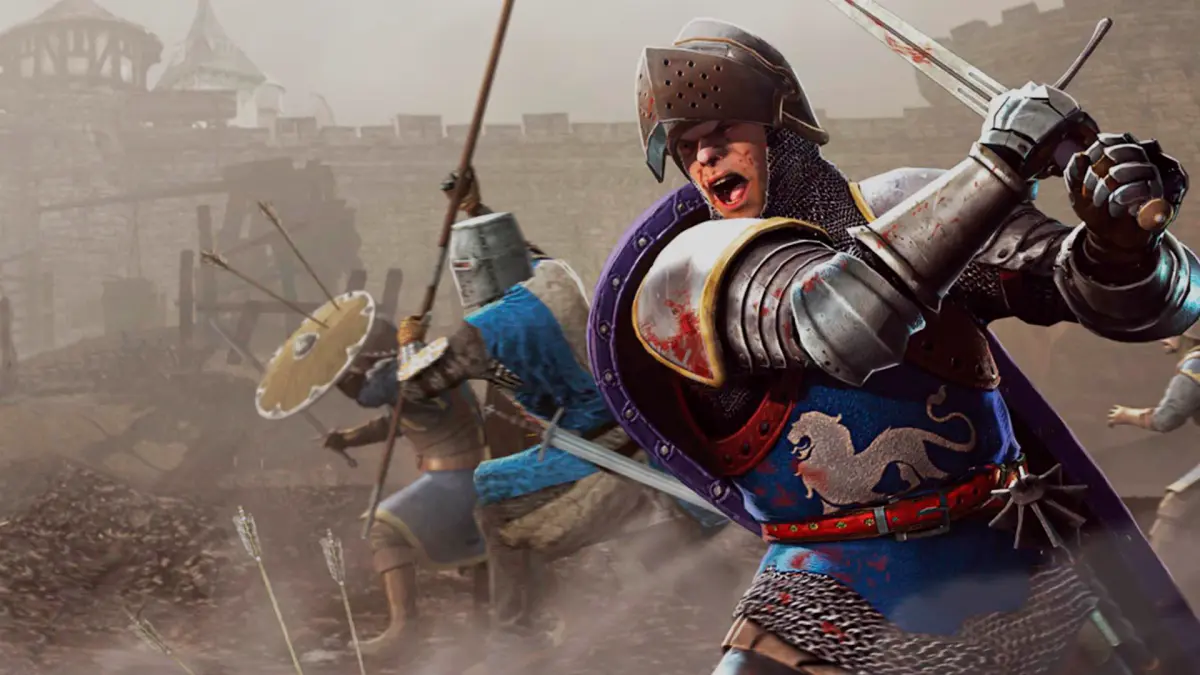
Analyze Chivalry: Medieval Warfare weapon properties, including swing speed and damage arcs. Learn how these traits affect combat effectiveness.
Mastering Chivalry: Medieval Warfare goes beyond simply knowing your weapon; it's about understanding its intrinsic properties. Every weapon in the game possesses unique characteristics that dictate its effectiveness in combat, primarily its swing speed and damage arcs. Ignoring these details will leave you at a significant disadvantage against more knowledgeable opponents.
Swing Speed: The Art of the Initiative
Swing speed refers to how quickly your weapon completes its attack animation, from initiation to impact. This is crucial for controlling the pace of an engagement and landing hits before your opponent can react or counter.
- Fast Weapons (e.g., Short Sword, Messer, Dane Axe): These weapons excel at interrupting enemy attacks and delivering quick, successive blows. They are ideal for aggressive playstyles and for exploiting small openings in an opponent's defense.
- Strategy: With a Short Sword, for instance, you can often land a quick overhead or stab to flinch an opponent, then follow up with another attack before they recover. The Messer, despite being a larger weapon, has surprisingly quick horizontal swings that can catch opponents off guard.
- Countering: Against fast weapons, precise blocking and parrying are paramount. Anticipate their quick strikes and aim for a counter-attack immediately after a successful block.
- Medium Weapons (e.g., Longsword, Broadsword, Poleaxe): These offer a balanced approach, providing a good mix of speed and damage. They are versatile and can adapt to various combat situations.
- Strategy: The Longsword is a prime example of a medium weapon. Its overheads are reasonably fast and damaging, while its horizontal swings have decent reach. Learn to mix up your attacks to keep opponents guessing.
- Countering: Against medium weapons, timing your dodges and footwork becomes more important. Create distance or close it quickly to disrupt their attack rhythm.
- Slow Weapons (e.g., Greatsword, Maul, Halberd): These weapons deliver devastating damage but require careful timing and positioning due to their lengthy attack animations. They are best used for punishing mistakes or in situations where you can guarantee a hit.
- Strategy: The Maul, with its incredibly slow but powerful overhead, is a prime example. You must "wind up" your attack and aim for an opponent who is committed to an attack or caught off guard. The Halberd's long reach can be used to keep enemies at bay, but its slow swings make it vulnerable up close.
- Countering: Against slow weapons, exploit their wind-up time. Dodge their attacks and punish them during their recovery frames. Aggressive footwork and quick stabs can often interrupt their heavy swings.
Damage Arcs: Where Your Hits Land
Damage arcs refer to the trajectory and area of effect of your weapon's swing. Understanding these arcs is crucial for hitting your target effectively, especially when dealing with multiple opponents or aiming for specific body parts.
- Horizontal Swings (Slashes): These attacks sweep across a wide arc, making them excellent for hitting multiple enemies or for "dragging" your weapon to hit an opponent who is trying to dodge.
- Weapons: Most swords (e.g., Broadsword, Longsword), axes (e.g., Dane Axe, Battle Axe).
- Strategy: Use horizontal swings to clear space around you or to catch opponents who are flanking. The Broadsword's horizontal slashes are particularly wide and can be devastating in a tight group. Learn to "mouse drag" your swings by moving your mouse in the direction of your swing to extend its effective arc and hit targets further away or around corners.
- Vertical Swings (Overheads): These attacks come down in a narrow, powerful arc, making them ideal for headshots and for bypassing shields.
- Weapons: Greatsword, Maul, Poleaxe, War Axe.
- Strategy: Overheads are your go-to for maximum damage, especially against unarmored heads. The Maul's overhead is arguably the most damaging single attack in the game. Aim for the head, or use them to break through an opponent's guard if they are holding their shield too high.
- Stabs (Thrusts): These attacks are linear and fast, excellent for poking through gaps in armor, interrupting enemy attacks, and maintaining distance.
- Weapons: Spear, Longsword, Estoc, Short Sword.
- Strategy: The Spear is the quintessential stabbing weapon, offering incredible reach. Use stabs to harass opponents, keep them at bay, or to finish off a weakened enemy. They are also very effective for interrupting enemy wind-ups due to their quick initiation.
Combining Speed and Arcs for Dominance
The true mastery of Chivalry lies in your ability to combine your understanding of swing speed and damage arcs. For example:
- A Longsword user might start with a quick stab to interrupt an enemy, then follow up with a wide horizontal slash to catch them as they try to retreat.
- A Maul wielder might feint an overhead to draw out a block, then quickly switch to a horizontal swing to hit their exposed side.
- An Estoc user can use its fast stabs to maintain distance and poke at enemies, then switch to a quick overhead if an opportunity for a headshot arises.
Practice in the Training Grounds is invaluable. Experiment with each weapon, observe its animations, and pay close attention to its effective range and the areas it covers. This deep understanding of weapon properties will transform you from a mere fighter into a true warrior of the battlefield.
100% Human-Written. AI Fact-Checked. Community Verified. Learn how AntMag verifies content