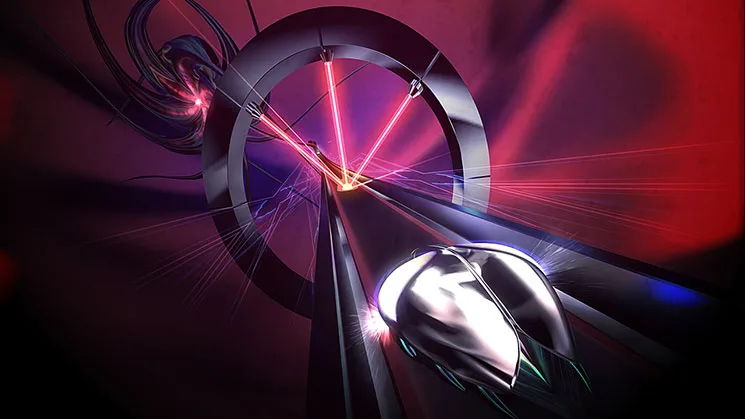
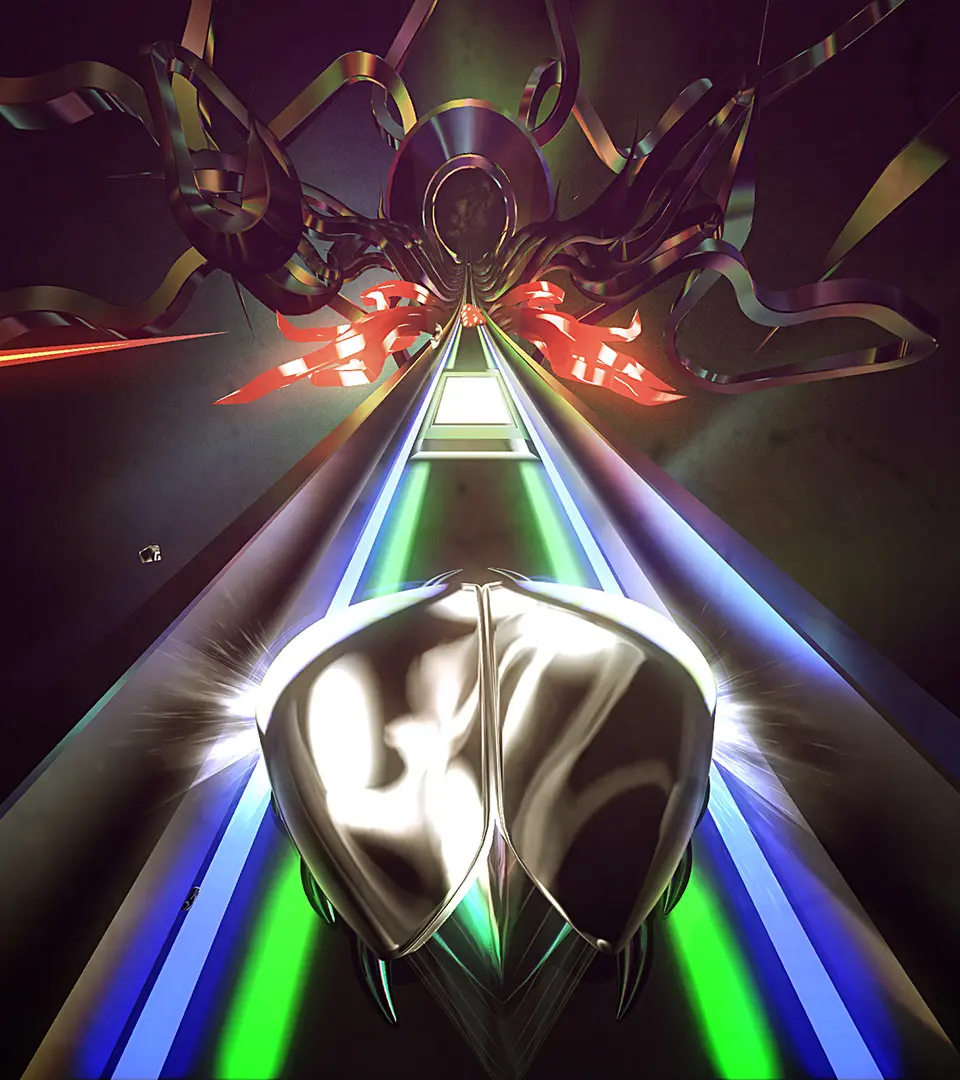
Achieve flawless lines and maintain speed in Thumper by mastering optimal pathing and line management strategies for intense rhythm sections.
Mastering Thumper isn't just about hitting beats; it's about anticipating the track and executing flawless lines. Optimal pathing and line management are crucial for maintaining speed, achieving high scores, and surviving the most intense sections. This section breaks down advanced strategies for navigating Thumper's relentless rhythm.
The Core Principles: Precision and Anticipation
Every turn, every barrier, every Crystalline Wall presents an opportunity to either maintain momentum or lose it. The key is to think several beats ahead, not just the immediate obstacle.
- Look Ahead: Your eyes should always be focused on the next two to three obstacles, not just the one directly in front of your Space Beetle. This allows you to prepare for complex sequences and adjust your line proactively.
- Minimal Movement: Unnecessary lateral movement wastes precious milliseconds and can throw off your rhythm. Aim for the most direct path through obstacles, only shifting when absolutely necessary.
- Rhythm as a Guide: The audio cues are your best friend. Internalize the rhythm of each section, as it often dictates the optimal timing for turns and slams.
Navigating Turns and Barriers
Turns and barriers are the bread and butter of Thumper's challenge. Executing them perfectly is paramount.
- Perfect Turns: To execute a perfect turn, initiate the turn input (left or right on the D-pad/analog stick) just as your Space Beetle enters the turn segment. Hold the input until the turn is complete. A perfect turn generates a satisfying sound cue and maintains your speed. Missing the timing or releasing too early will result in a speed reduction.
- Barrier Slams: Barriers require a precise "slam" input (X button on PlayStation, or equivalent). The optimal timing is just as your Space Beetle makes contact with the barrier.
- Single Barriers: Straightforward slams. Focus on the visual cue of the barrier approaching.
- Consecutive Barriers: These often appear in rapid succession. Maintain your rhythm and anticipate each slam. There's a subtle audio cue for each successful slam that can help you chain them.
- Offset Barriers: When barriers are slightly offset, you may need to make a micro-adjustment to your line just before slamming to ensure a perfect hit. Don't oversteer; a slight nudge is usually enough.
- Crystalline Walls: These require a slam to break. Unlike regular barriers, Crystalline Walls often appear at the end of a long straight or after a series of turns. Ensure your line is straight and centered for maximum impact.
Advanced Line Management Techniques
The "Ghost Lane" Strategy
In sections with multiple lanes, especially those with alternating obstacles, consider the "Ghost Lane" strategy. This involves mentally (or physically, with subtle adjustments) preparing for a lane change before it becomes explicitly necessary.
- Anticipate Lane Shifts: If you see a series of obstacles in your current lane, but the adjacent lane appears clear a few beats ahead, begin to subtly drift towards that lane. This allows for a smoother transition when the time comes to fully commit to the lane change.
- Pre-empting Obstacles: For example, if you have a left turn followed immediately by a right barrier in the next lane, you might want to take the left turn slightly wider to set yourself up for an easier transition to the right for the barrier.
Maximizing "Thump" Opportunities
Thumps (the glowing blue orbs) are crucial for scoring and maintaining your shield. Optimal pathing ensures you collect every single one.
- Prioritize Thumps: If a choice exists between a perfect turn and collecting a Thump, always prioritize the Thump, as long as it doesn't lead to a crash. Often, a slightly imperfect turn that collects a Thump is better than a perfect turn that misses it.
- Thump Chains: Some sections feature chains of Thumps. These require precise line management to collect them all without losing momentum. Focus on maintaining a straight line through the chain, only making minimal adjustments if necessary.
Boss Encounters: Strategic Positioning
Boss fights introduce unique pathing challenges, often requiring you to navigate around their attacks while simultaneously hitting their weak points.
- Phase 1 (Initial Attack): During the boss's initial attack phases, your primary goal is survival. Focus on dodging projectiles and maintaining your shield. Your line management here is purely defensive.
- Phase 2 (Weak Point Exposure): Once the boss exposes its weak points (often marked by glowing targets), your pathing shifts to offensive.
- Direct Approach: For stationary weak points, aim your Space Beetle directly at them, ensuring a powerful slam.
- Tracking Shots: For moving weak points, you'll need to adjust your line dynamically. Anticipate the weak point's trajectory and position yourself to intercept it. This often involves subtle lateral movements and precise timing.
- Post-Attack Recovery: After hitting a weak point, the boss often retaliates. Be prepared to immediately shift back to defensive pathing, dodging incoming attacks.
By internalizing these principles and practicing these techniques, you'll transform from a reactive player to a proactive master of the track, effortlessly navigating Thumper's challenging landscapes and achieving truly legendary scores.
100% Human-Written. AI Fact-Checked. Community Verified. Learn how AntMag verifies content