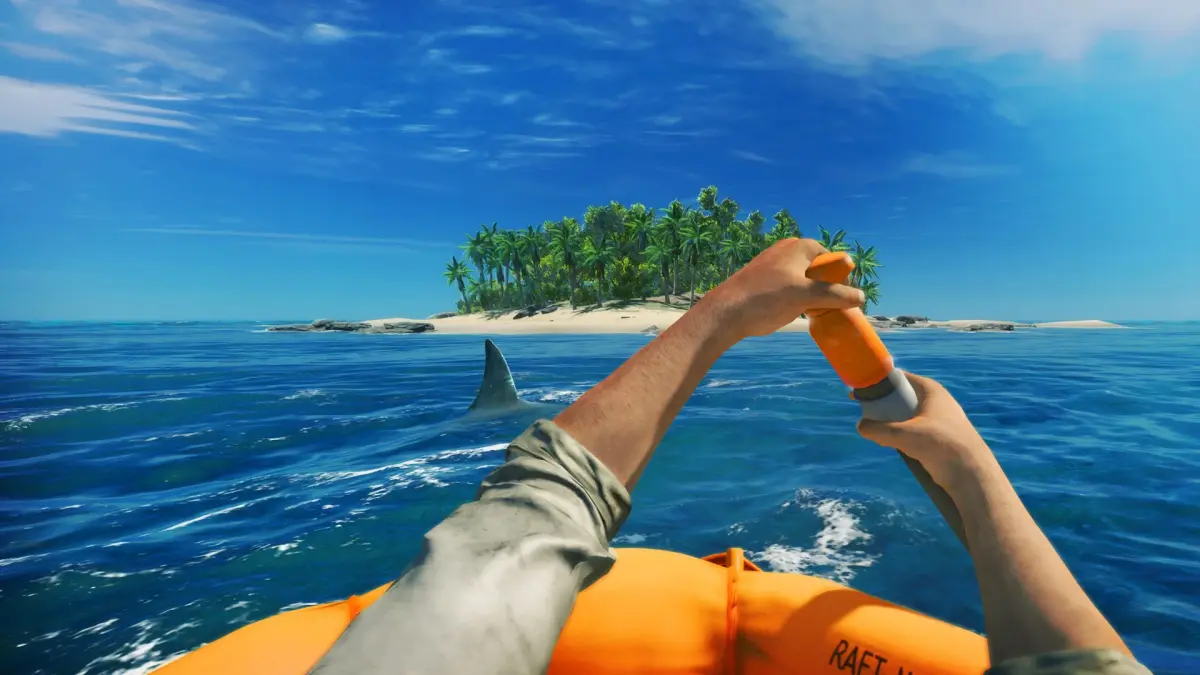
Navigate Stranded Deep's vast ocean with effective World Map and navigation tools. Plan routes, identify islands, and avoid dangers for successful survival.
Navigating the vast, procedurally generated ocean of Stranded Deep is crucial for survival and eventual escape. Understanding your position, identifying new islands, and planning your routes effectively will significantly reduce your chances of getting lost or falling prey to oceanic dangers. This section details the essential tools and strategies for mastering navigation.
The Compass: Your First Navigational Aid
The Compass is arguably your most important early-game navigation tool. It provides a constant bearing, allowing you to maintain a consistent direction when traveling between islands or returning to your home base.
- Crafting: The Compass requires 1x Leather and 1x Stick. Leather is obtained by hunting Hogs or Sharks and then crafting a Tanning Rack (4x Sticks, 4x Ropes) to process their hides. Sticks are abundant on most islands.
- Usage: Equip the Compass to see the cardinal directions (N, S, E, W). When sailing, pick a direction and try to stick to it. Mark your home island or important locations by noting their relative direction.
- Strategy: Before setting out on an expedition, always note the direction of your current island. For example, if you leave your home island heading East, you'll need to travel West to return.
The Binoculars: Scouting Distant Shores
While not a direct navigation tool, the Binoculars are invaluable for scouting distant islands and identifying potential resources or dangers without expending precious raft fuel or stamina.
- Crafting: The Binoculars require 2x Plastic and 1x Duct Tape. These items are typically found in shipwrecks or cargo containers scattered across the ocean floor or washed up on beaches.
- Usage: Equip the Binoculars and aim them towards the horizon. You can zoom in to get a clearer view of far-off landmasses.
- Strategy: Use the Binoculars from a high vantage point (like a tall rock formation or a custom-built watchtower) to maximize your viewing range. Scan the horizon for new islands, shipwrecks, or even the tell-tale fins of a Great White Shark.
The Gyrocopter: The Ultimate Exploration Vehicle
Once you've progressed significantly and established a robust base, the Gyrocopter becomes your premier tool for mapping and long-distance travel. Its aerial perspective makes spotting islands and planning routes incredibly efficient.
- Crafting: The Gyrocopter is a complex build requiring numerous advanced components, including an Engine, Propeller, Seat, and various Metal Parts. These are primarily salvaged from large shipwrecks or found in specific loot containers.
- Usage: Once built on a Crafting Station, you can pilot the Gyrocopter to fly high above the ocean.
- Strategy: Use the Gyrocopter to systematically explore your world. Fly in a grid pattern, or spiral outwards from your home island, noting the locations of new islands. This is the most effective way to uncover the full extent of your generated world map. Remember to carry extra Fuel (crafted from Potatoes in a Fuel Still) for longer excursions.
Mapping Your World: The Cartographer's Approach
Stranded Deep does not feature an in-game map that automatically fills in. You must create your own mental or physical map to keep track of discovered islands and their resources.
- Mental Mapping: For early game, simply remember the general direction and approximate distance of key islands relative to your starting point.
- Physical Mapping (Recommended):
- Designate a "Home" Island: Choose a central island with good resources as your primary base.
- Use Beacons: Craft Beacons (1x Stick, 1x Cloth) and place them strategically on each island you discover. Beacons emit a visible light at night and a smoke plume during the day, making islands easier to spot from a distance.
- Compass & Bearing: When traveling to a new island, always note the Compass bearing. For example, "Island A is North-East of Home Island."
- Raft Markers: If you're using a custom raft, consider adding a small chest or container to store a few spare Beacons and a Compass.
- Advanced Mapping with Gyrocopter: Once you have the Gyrocopter, fly over each island and make a note of its unique features (e.g., "Island with two shipwrecks," "Island with abundant potatoes"). This level of detail is invaluable for targeted resource gathering.
By diligently using these tools and strategies, you will transform from a castaway adrift to a master navigator of your oceanic prison, greatly increasing your chances of survival and eventual rescue.
100% Human-Written. AI Fact-Checked. Community Verified. Learn how AntMag verifies content