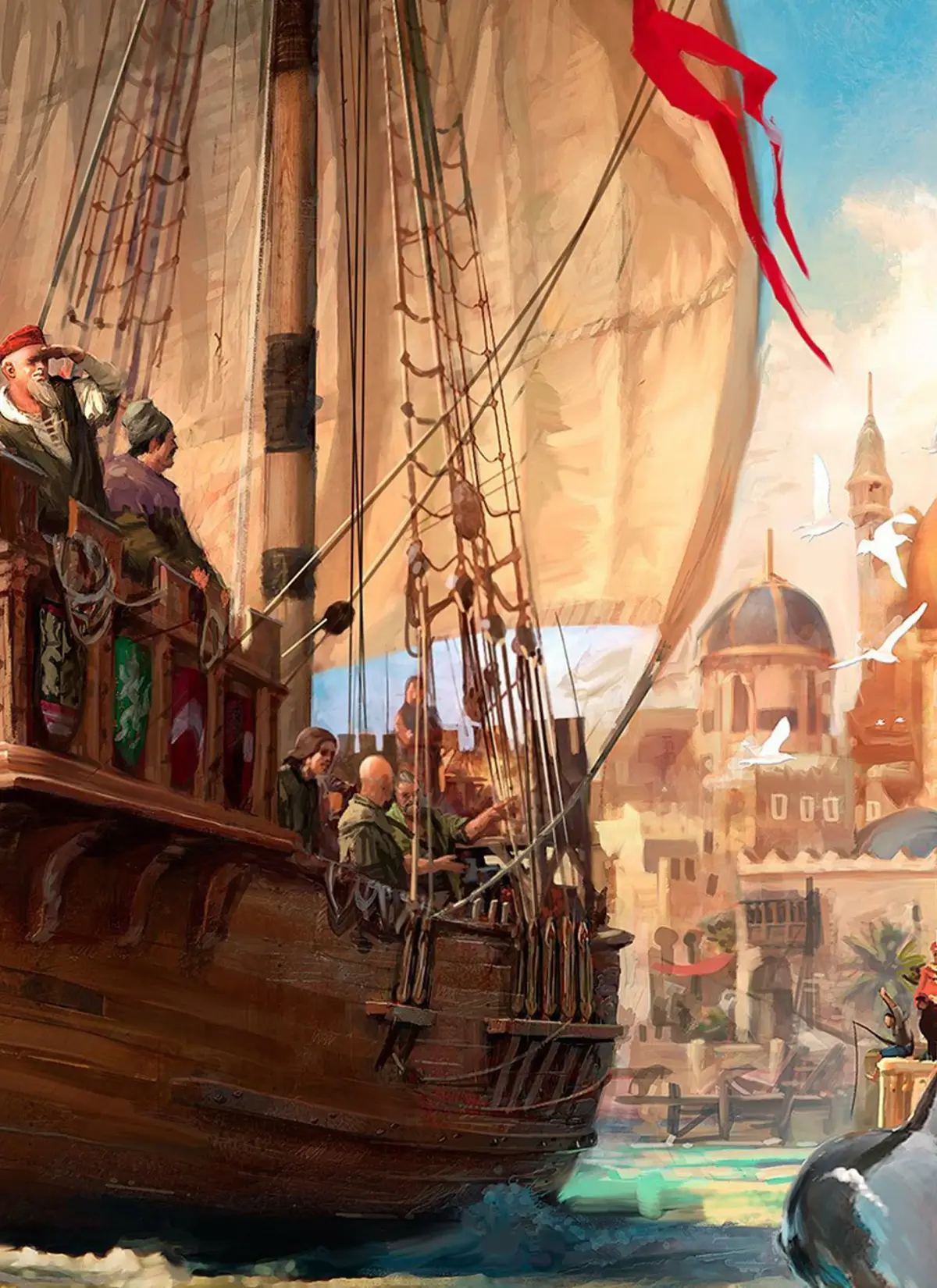
Anno 1404 small settlements use less space and require fewer resources to level up, offering an early game survival advantage.
Walkthrough
- 1Small settlements require less space on your island, leaving more room for resource generation.
- 2Fewer resources are needed for inhabitants to level up, allowing easier progression to later civilization levels.
- 3Once you reach Aristocrats, your population will increase rapidly, and minor expansions are manageable, facilitating the move to Metropolis status.
- 4Early on, you will have less money, but lower resource generation costs are offset by unchanged war costs, creating a disadvantage against early attackers.
- 5Small settlements are weak in the early game due to limited funds but become powerful later with access to Tier 5 upgrades.
- 6In the early game, focus on survival; you will have fewer funds for war than players with larger settlements, but as the defender, you have an advantage and do not need to build Battleships if you are not attacking.
- 7Holding out until Tier 5 provides a significant power increase, enabling a decisive blow against opponents.
- 8The best strategy depends on your playstyle and the map; large settlements are advantageous on maps with plentiful resources and large islands, while small settlements are better with small islands and limited resources.
- 9A balanced approach, opting for a middle ground, can provide more even early to late game performance, which is useful when the map is initially hidden.
- 10Deciding between building many resource generators and marketplaces on resource islands (an outpost) or creating a small settlement to speed up goods generation is a key tradeoff.
- 11On very tiny islands, an outpost is often the only viable choice.
- 12The increased generation from settlements comes at the cost of additional resources needed to upgrade inhabitants to the next city level.
- 13Limiting the civilization to Settlers or Citizens by not building required public buildings can mitigate this cost, but basic resources like Food, Clothes, and Herbs will still be required in greater amounts.
- 14Building small settlements on islands that generate later goods (Spices, Pottery, Dates, and Garments) allows you to trade earlier resources for later ones.
- 15This is particularly beneficial for Garments if you have a medium or large island with Gold deposits, as Gold Mines are limited and must be placed in one location.
- 16A Gold island might even serve as a main island, working towards a Metropolis if the island is large enough.
- 17Knowing when to build a settlement versus an outpost is learned through experience and depends heavily on the map layout and available resources.
Tips
- Small settlements are weak in the early game due to limited funds but become powerful later with access to Tier 5 upgrades.
- As the defender, you have an advantage and do not need to build Battleships if you are not attacking.
- Holding out until Tier 5 provides a significant power increase, enabling a decisive blow against opponents.
- The best strategy depends on your playstyle and the map; large settlements are advantageous on maps with plentiful resources and large islands, while small settlements are better with small islands and limited resources.
- A balanced approach, opting for a middle ground, can provide more even early to late game performance.
- On very tiny islands, an outpost is often the only viable choice.
- Limiting the civilization to Settlers or Citizens by not building required public buildings can mitigate the cost of upgrading inhabitants.
- Building small settlements on islands that generate later goods allows you to trade earlier resources for later ones.
- A Gold island might even serve as a main island, working towards a Metropolis if the island is large enough.
100% Human-Written. AI Fact-Checked. Community Verified. Learn how AntMag verifies content