
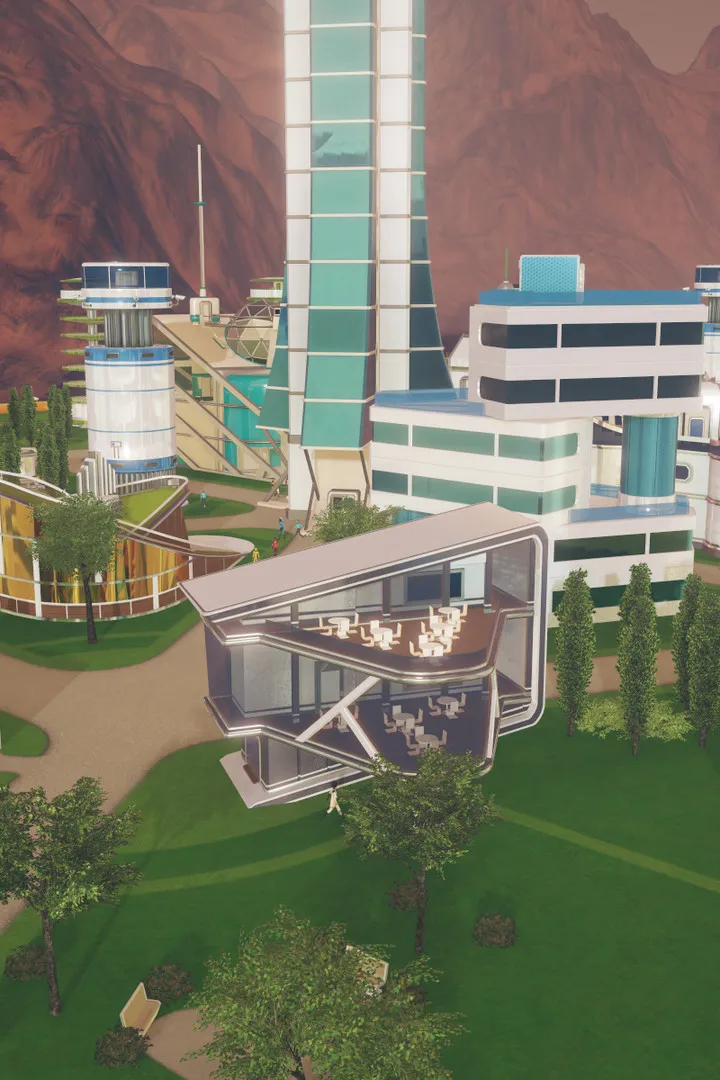
Secure vital water and air resources for your Surviving Mars colony. Optimize life support systems from initial acquisition to ongoing management.
Establishing a stable and efficient water and air supply is paramount for any successful Martian colony. Without these vital resources, your colonists will quickly perish, and your dome infrastructure will fail. This section will guide you through the initial setup and ongoing optimization of your life support systems.
Initial Water Acquisition
Your first priority upon landing is to secure a reliable water source. The early game offers a few options:
- Moisture Vaporator: This is your most basic and readily available water producer. Place several of these around your initial landing zone. While inefficient, they are cheap and require no external water deposits. They are best used as a stop-gap measure until more robust solutions are available.
- Water Extractor: Once you've scanned for underground water deposits (visible as blue patches on the surface scan), deploy a Water Extractor directly over one. These are significantly more efficient than Vaporators but require a power connection and maintenance. Prioritize high-yield deposits for maximum output.
- Water Storage: Always build a few Water Tanks near your extractors and domes. These act as buffers, preventing shortages during dust storms or power fluctuations. A good rule of thumb is to have enough storage to last at least 2-3 Sols without production.
Water Distribution Network
Once you have water production, you need to distribute it to your domes and other water-consuming buildings. This is achieved through a network of pipes:
- Water Pipes: These are the backbone of your water network. Lay them strategically to connect your Water Extractors to your domes and any other buildings that require water (e.g., Farms, Hydroponic Farms, Waste Rock Processors).
- Water Valves: Use these to segment your water network. This is crucial for isolating sections for repairs or in case of pipe breaches, preventing a complete system shutdown. Place them at key junctions or before major dome clusters.
- Water Towers: While not directly producing water, Water Towers increase the pressure in your network, allowing water to reach more distant buildings and improving overall distribution efficiency. They also act as small local storage units.
Air Production and Distribution
Similar to water, air is essential for your colonists' survival within domes.
- Oxygenator: This is your primary air production building. Place one or more Oxygenators near your domes. Each Oxygenator has a limited range, so ensure your domes are adequately covered. They consume power and require maintenance.
- Air Pipes: These connect your Oxygenators to your domes, delivering breathable air. Like water pipes, they can be damaged, so consider redundancy.
- Air Tanks: Just like Water Tanks, Air Tanks are critical for buffering your air supply. Build them near your Oxygenators and domes to prevent suffocation during power outages or production issues. Aim for at least 2-3 Sols of stored air capacity.
Advanced Water & Air Strategies
- Terraforming Integration: As you progress into terraforming, the atmosphere will gradually thicken, reducing the reliance on Oxygenators. However, this is a long-term goal, and early-game air production remains vital.
- Waste Rock Processing: The Waste Rock Processor can extract small amounts of water from waste rock, providing a supplemental source, especially useful if water deposits are scarce.
- Recycling: Researching technologies like "Water Reclamation" and "Air Recycling" will significantly improve the efficiency of your existing infrastructure, reducing consumption and making your colony more self-sufficient. Prioritize these early in your research tree.
- Redundancy is Key: Always build more production and storage than you think you need. A single meteor strike or dust storm can cripple a poorly designed system. Redundant pipes, multiple extractors, and ample storage will save your colony from disaster.
- Monitoring: Regularly check the "Resources Overview" tab (accessible via the top-left UI panel) to monitor your water and air production and consumption rates. This will help you identify potential shortages before they become critical.
100% Human-Written. AI Fact-Checked. Community Verified. Learn how AntMag verifies content