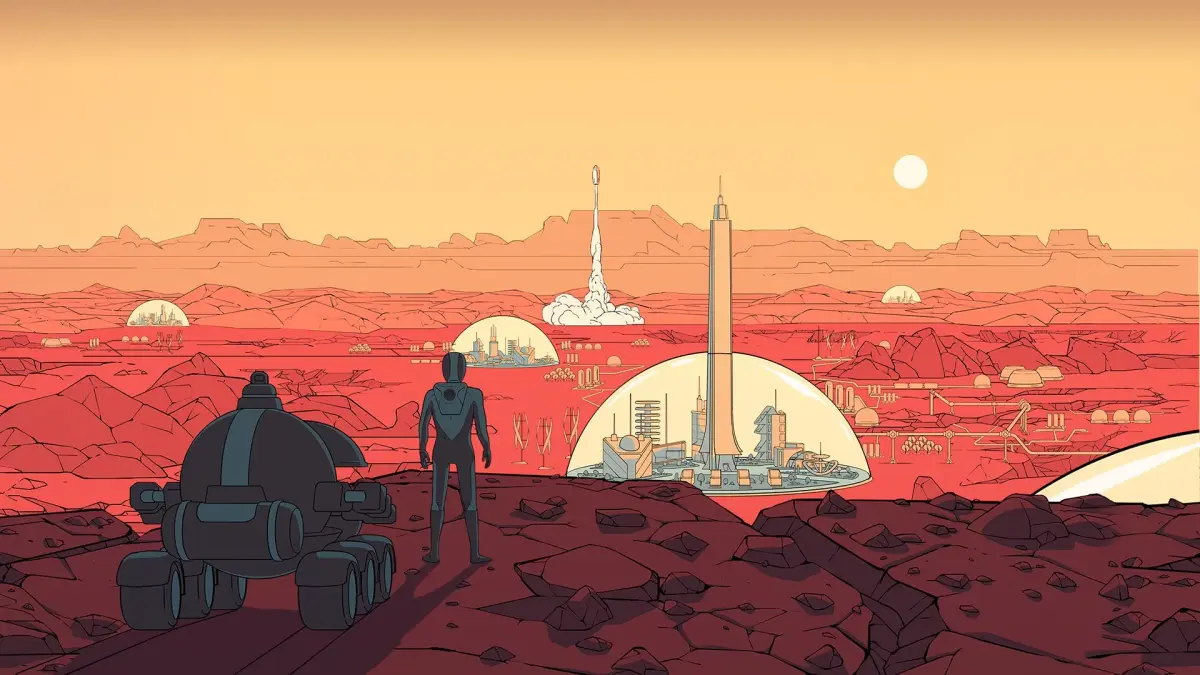
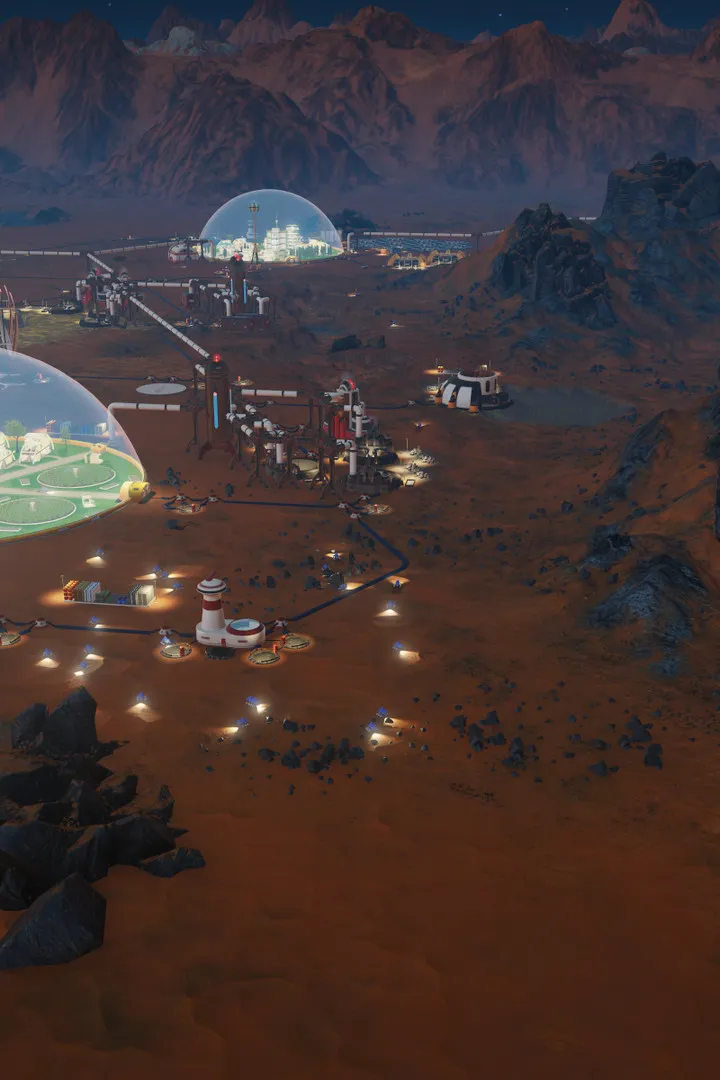
Navigate Surviving Mars difficulty settings and game modes. Choose the best options for your Martian colonization journey and ensure a successful playthrough.
Surviving Mars offers a robust set of customization options to tailor your Martian colonization experience. Before you even land your first rocket, understanding these settings is crucial for a successful and enjoyable playthrough. This section will walk you through each key decision point in the New Game setup, offering strategies and recommendations for both novice and veteran commanders.
I. Game Rules & Presets
Upon selecting "New Game" from the main menu, you'll be presented with the initial Game Rules screen. Here, you can choose from predefined difficulty presets or dive into a fully customized experience.
- Easy Start: Recommended for first-time players. This preset offers generous starting resources, a forgiving sponsor, and a relatively benign Martian environment. Expect fewer dust storms, less severe cold waves, and ample metal deposits.
- Normal Game: A balanced experience for those familiar with city-building or strategy games. Resource management becomes more critical, and environmental hazards are more frequent.
- Hardcore Mode: For veteran commanders seeking a true challenge. Resources are scarce, environmental disasters are frequent and devastating, and colonists are more demanding. Expect to struggle with basic survival before even considering expansion.
- Custom Game: This is where the true depth of Surviving Mars' difficulty customization lies. Selecting this option unlocks a myriad of individual sliders and toggles, allowing you to fine-tune every aspect of your game.
II. Custom Game Settings: A Deep Dive
When creating a Custom Game, you'll encounter several categories of settings. Each choice significantly impacts gameplay.
A. Sponsor & Commander Profile
Your choice of sponsor dictates your starting funds, research bonuses, and unique buildings. Your commander profile provides a specific perk or challenge.
- Sponsor:
- International Mars Mission (IMM): A balanced choice, good for beginners. Offers solid funding and research.
- SpaceY: Focuses on rocketry and resource extraction. Excellent for rapid expansion and trade.
- Paradox Interactive: A fun, unique sponsor with quirky events and bonuses, often involving the "Mystery" mechanic.
- Church of the New Ark: Prioritizes colonist well-being and morale. Good for players who enjoy managing complex social dynamics.
- Blue Sun Corporation: Emphasizes advanced technology and robotics. Ideal for those who want to automate their colony early.
- Brazil: Focuses on agriculture and food production. Useful for sustaining large populations.
- Europe: Strong in scientific research and breakthroughs. Great for tech-focused players.
- India: Specializes in drone efficiency and maintenance. Reduces the burden of early infrastructure.
- USA: Provides a strong starting economy and robust security measures.
- China: Excels in construction and infrastructure development.
- Commander Profile:
- Ecologist: Reduces terraforming costs and increases plant growth.
- Politician: Improves colonist morale and reduces rebellion risk.
- Scientist: Boosts research points and breakthrough discovery rates.
- Inventor: Reduces building maintenance and construction costs.
- Gambler: Randomizes starting conditions, adding an element of surprise.
- Astrogeologist: Reveals more resource deposits on the map.
- Doctor: Improves colonist health and reduces disease outbreaks.
- Mayor: Increases colonist birth rate and reduces housing demand.
B. Map & Environment
These settings define the physical challenges and opportunities of your chosen landing site.
- Landing Site: Choose a specific coordinate on Mars. Each site has unique resource distributions, elevation, and hazard probabilities. Use the "Scan" function to preview resource locations and potential challenges before committing.
- Recommendation: For beginners, look for sites with high concentrations of Concrete, Water, and Metal. Avoid areas with frequent dust storms or extreme cold waves initially.
- Map Difficulty: Influences the frequency and severity of environmental hazards.
- Low: Fewer dust storms, meteor showers, and cold waves. Resources are generally more accessible.
- Medium: Balanced frequency of hazards. Requires proactive preparation.
- High: Frequent and intense hazards. Expect to dedicate significant resources to disaster preparedness and recovery.
- Resource Abundance: Determines the quantity of extractable resources (Metal, Rare Metals, Water, Concrete).
- Very Low: Extremely challenging. Requires extensive exploration and efficient resource management.
- Low: Resources are present but require careful planning and expansion.
- Normal: A good balance. Sufficient resources for a thriving colony.
- High: Abundant resources, allowing for rapid expansion and less concern about shortages.
- Very High: Almost limitless resources, ideal for creative building or learning game mechanics without resource constraints.
- Underground Resources: Toggles the presence of underground resource deposits, which require specific technologies and buildings (e.g., Subsurface Extractors).
C. Game Modifiers
These toggles introduce specific challenges or advantages that alter core gameplay mechanics.
- No Disasters: Disables all environmental hazards. Makes for a very peaceful, but potentially less engaging, experience.
- No Research: Disables the entire research tree. You'll rely solely on starting technologies and sponsor perks. Extremely challenging.
- No Breakthroughs: Prevents the discovery of powerful, game-changing technologies.
- No Mysteries: Disables the unique narrative events that unfold during a playthrough. Reduces replayability but removes potential unforeseen challenges.
- Fast Rockets: Reduces rocket travel time, speeding up resource delivery and colonist arrival.
- Slow Rockets: Increases rocket travel time, making logistics more challenging.
- Permanent Power Shortages: Power production is significantly reduced, forcing reliance on advanced power solutions and efficient energy management.
- Permanent Water Shortages: Water production is severely hampered, making agriculture and colonist survival difficult.
- Permanent Oxygen Shortages: Oxygen production is reduced, increasing the risk of suffocation and requiring more domes.
- Permanent Food Shortages: Food production is less efficient, demanding more farms and careful crop management.
- Cold Waves Only: Only cold waves will occur as environmental disasters.
- Dust Storms Only: Only dust storms will occur as environmental disasters.
- Meteor Showers Only: Only meteor showers will occur as environmental disasters.
- Dust Devils Only: Only dust devils will occur as environmental disasters.
- Rebellious Colonists: Colonists are more prone to rebellion and social unrest.
- Lazy Colonists: Colonists have reduced work efficiency.
- Genius Colonists: Colonists have increased work efficiency and research output.
- Immortal Colonists: Colonists do not die of old age or illness.
- No Children: Colonists cannot reproduce. Requires constant influx of new colonists via rockets.
- More Children: Colonist birth rate is significantly increased.
- No Elderly: Elderly colonists are not present or do not age.
- No Tourists: Disables the tourism mechanic introduced in the Green Planet DLC.
- More Tourists: Increases the frequency and number of tourists visiting your colony.
III. Game Modes (DLC Specific)
Certain DLCs introduce additional game modes or significant gameplay alterations that can be toggled.
- Green Planet (Terraforming): If you own the Green Planet DLC, you can choose to enable or disable the terraforming mechanics. Enabling it introduces new goals and challenges related to making Mars habitable, including managing atmosphere, water, and vegetation. Disabling it focuses the game purely on colony survival.
- Space Race (Rival Colonies): With the Space Race DLC, you can enable or disable rival colonies. Enabling this introduces competition for resources, breakthroughs, and even colonist recruitment, adding a strategic layer of interaction with other factions.
- Below and Beyond (Asteroid Mining & Underground): This DLC adds the ability to mine asteroids and build extensive underground colonies. You can choose to enable or disable these features, significantly altering the scope of your colonization efforts.
IV. Starting Your First Colony: Recommendations
For your very first playthrough, we strongly recommend the following:
- Game Rules: Select "Easy Start." This provides a forgiving environment to learn the core mechanics.
- Sponsor: International Mars Mission (IMM) or SpaceY. IMM offers a balanced start, while SpaceY's focus on rockets helps with early resource acquisition.
- Commander Profile: Scientist or Inventor. Research is crucial for progression, and reduced maintenance/construction costs are always a boon.
- Landing Site: Use the "Scan" function to find a site with high concentrations of Concrete, Water, and Metal. Aim for a location with a "Low" or "Normal" Map Difficulty.
- Game Modifiers: Leave all modifiers at their default settings for a balanced introduction. Consider enabling "No Disasters" if you find environmental hazards overwhelming initially, but be aware this removes a significant challenge.
As you gain experience, gradually increase the difficulty by adjusting individual settings in a Custom Game. Experiment with different sponsors, commanders, and modifiers to discover your preferred playstyle and truly master the art of Surviving Mars!
100% Human-Written. AI Fact-Checked. Community Verified. Learn how AntMag verifies content