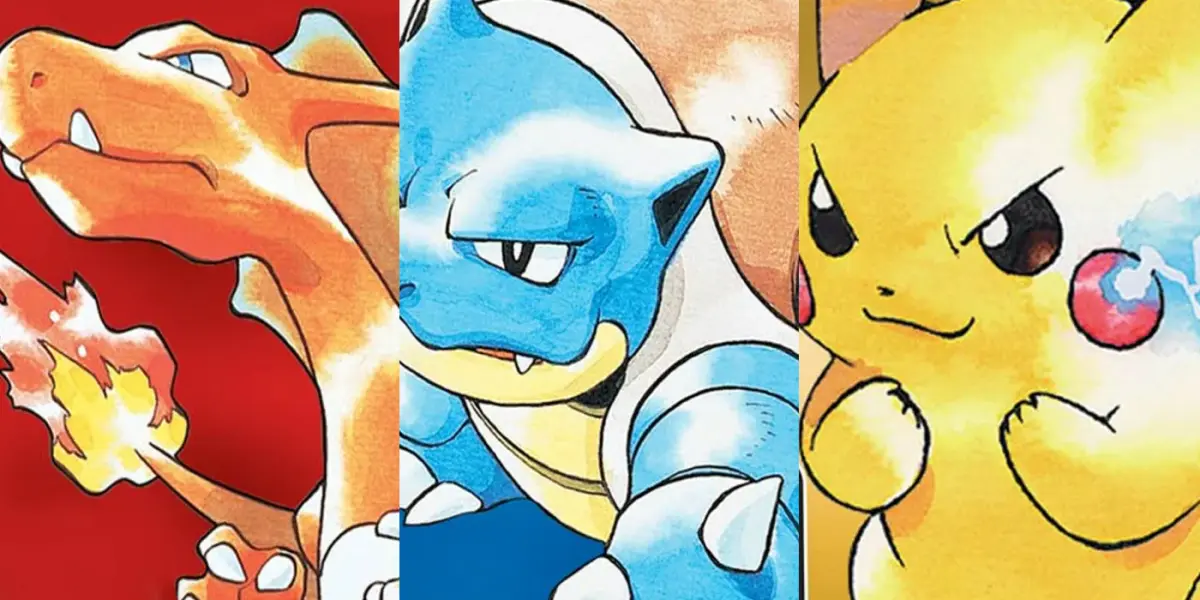
Understand the detailed capture mechanics in Pokémon Red and Blue, including HP factor, status effects, and Poké Ball types.
The process of capturing Pokémon in Pokémon Red and Blue is more complex than simply lowering their HP and throwing a Pokéball. Unlike later games, it's a series of calculations where all operations are truncated, meaning decimals are always removed.
Step #1 - Situational Characteristics: This step considers factors specific to the encounter.
- If the target is a Marowak on Pokémon Tower 6F, the capture rate is 0%.
- If the ball used is a Master Ball, the capture rate is 100%.
- Otherwise, a random number (R1) is generated based on the Pokéball used:
- Poké Ball: 0 to 255
- Great Ball: 0 to 200
- Ultra Ball: 0 to 150
- Safari Ball: 0 to 150
Step #2 - Status: The Pokémon's status condition affects the capture chance. The variable S is 25 if the target is asleep or frozen, 12 if poisoned, burned, or paralyzed, and 0 otherwise.
Step #3 - Capture Chance 1 (CC1): A new variable, CC1, is defined by subtracting R1 from S. If S - R1 results in a CC1 less than 0, the Pokémon is caught. Otherwise, the process continues.
- With a Poké Ball, an unstatused Pokémon has a 1/256 chance of being caught at this stage. This increases to 13/256 (approximately 5%) if the Pokémon is poisoned, burned, or paralyzed (S=12), and 25/256 (approximately 10%) if asleep or frozen (S=25).
- A Great Ball offers odds of 1/200 (0.5%) for unstatused Pokémon, 13/200 (6.5%) for status effects (S=12), and 26/200 (13%) for sleep or freeze (S=25).
- Ultra Balls and Safari Balls have odds of 1/150 (approximately 0.6%) for unstatused Pokémon, 13/150 (approximately 8.7%) for status effects (S=12), and 26/150 (approximately 17.3%) for sleep or freeze (S=25).
Step #4 - Health: The HP Factor (F) is calculated. First, the target's Max HP is multiplied by 255. This is then divided by a value: 8 if using a Great Ball, or 12 otherwise. This result is then divided by the current health divided by four (Current HP / 4) to determine the Current Health Factor (CHF). The final HP Factor (F) is MHF divided by CHF. Simplified, this is (Max HP * 255) / (Current HP * (32 or 48)). If this value exceeds 255, it is capped at 255.
Step #5 - Base Catch Rate: If the Pokémon's base catch rate is less than CC1, the capture fails, and the process moves to the appropriate failure step. Otherwise, the calculation continues.
Step #6 - HP-Based Capture: A second random number (R2) is generated, ranging from 0 to 255. If R2 is less than the calculated HP Factor (F), the Pokémon is captured.
Step #7 - Capture Failed: If the Pokémon is not captured, this step determines the animation of the Pokéball based on the number of wiggles (W).
- W is calculated by multiplying the Pokémon's catch rate by 100.
- W is then divided by 255 for a Poké Ball, 200 for a Great Ball, and 150 for an Ultra Ball or Safari Ball.
- If W is greater than 255, the ball wiggles three times.
- Otherwise, calculate W * F / 255. Add 5 to this value if the Pokémon is poisoned, burned, or paralyzed, or add 10 if it is frozen or asleep.
- If the resulting value is less than 10, the ball misses entirely.
- If the value is between 10 and 29 (inclusive), the ball wiggles once.
- If the value is between 30 and 69 (inclusive), the ball wiggles twice.
- If the value is greater than 70, the ball wiggles three times.
100% Human-Written. AI Fact-Checked. Community Verified. Learn how AntMag verifies content