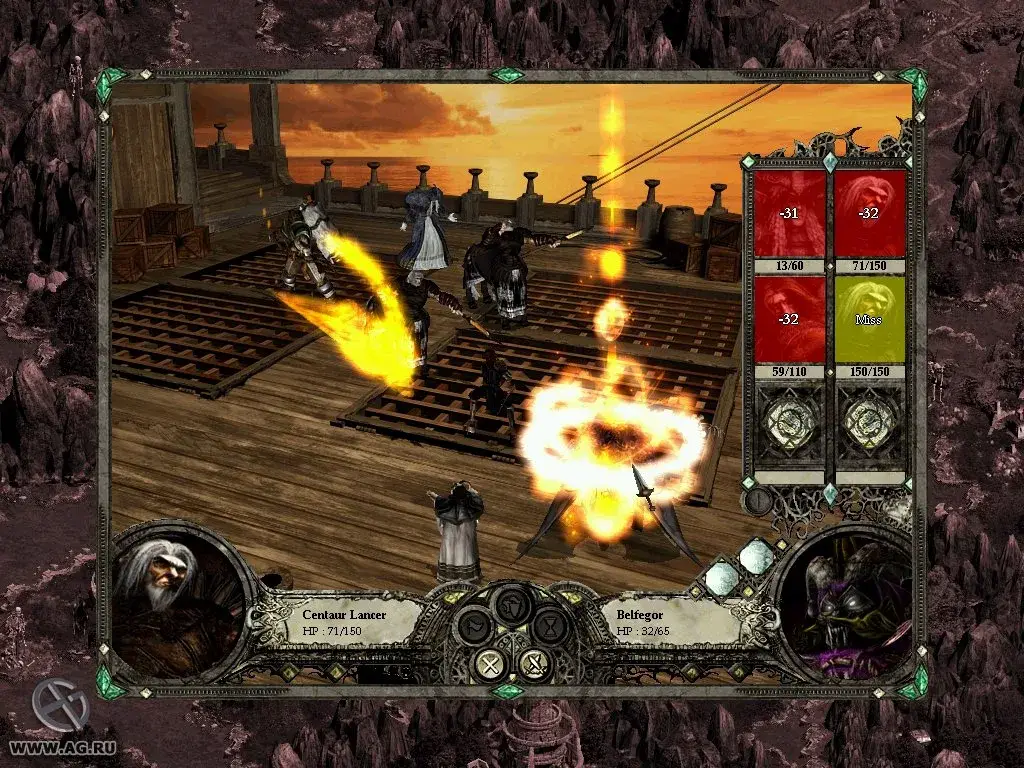
Master combat tactics and city management in Disciples II: Rise of the Elves. Learn unit placement, attack types, combat options, and how city buildings affect unit upgrades and research.
This section covers the core mechanics of combat and city management in Disciples II: Rise of the Elves. Understanding these systems is vital for success.
Combat Basics:
Your six units are positioned on the left side of the combat screen, facing the opponent's six units on the right. Melee units should be placed in the FRONT row to attack adjacent enemies, while spellcasters, generally weaker, belong in the BACK row for ranged attacks.
Each character has a unique attack method and initiative modifier, which determines the order of attacks. While higher initiative generally means attacking sooner, upsets can occur. Combat options include letting the AI handle combat, resolving combat automatically, retreating (be aware of free hits from enemies), or using the Defend command for a specific unit.
Combat concludes when all enemy units are defeated or have fled.
City Management:
When a creature levels up, its appearance generally changes to become stronger, influenced by buildings in your Capital City. For example, an Undead Hordes 'Fighter' can become a Zombie (with Unholy Ground) or a Templar (with Evil Monastery). These upgrade paths are mutually exclusive per unit type and reset at the start of each new level, allowing for strategic changes.
Certain buildings serve specific functions: the Mage Tower for spell research, the Thieves' Guild for recruiting thieves (to spy on enemy garrisons), and the Temple for healing and resurrection. You can only research one spell and build one building per turn.
Non-capital cities cannot have buildings constructed but benefit from those built in the Capital. These cities can grow up to five levels, affecting housing capacity, terrain spread, and HP recovery rates. Each non-capital city can grow once per turn.
Cities can house troops and hold items. The party screen shows troops healing in the city on the left, and garrisoned troops on the right.
The Four Races:
The playable races are:
- The Empire
- The Mountain Clans
- The Legions of the Damned
- The Undead Horde
100% Human-Written. AI Fact-Checked. Community Verified. Learn how AntMag verifies content