
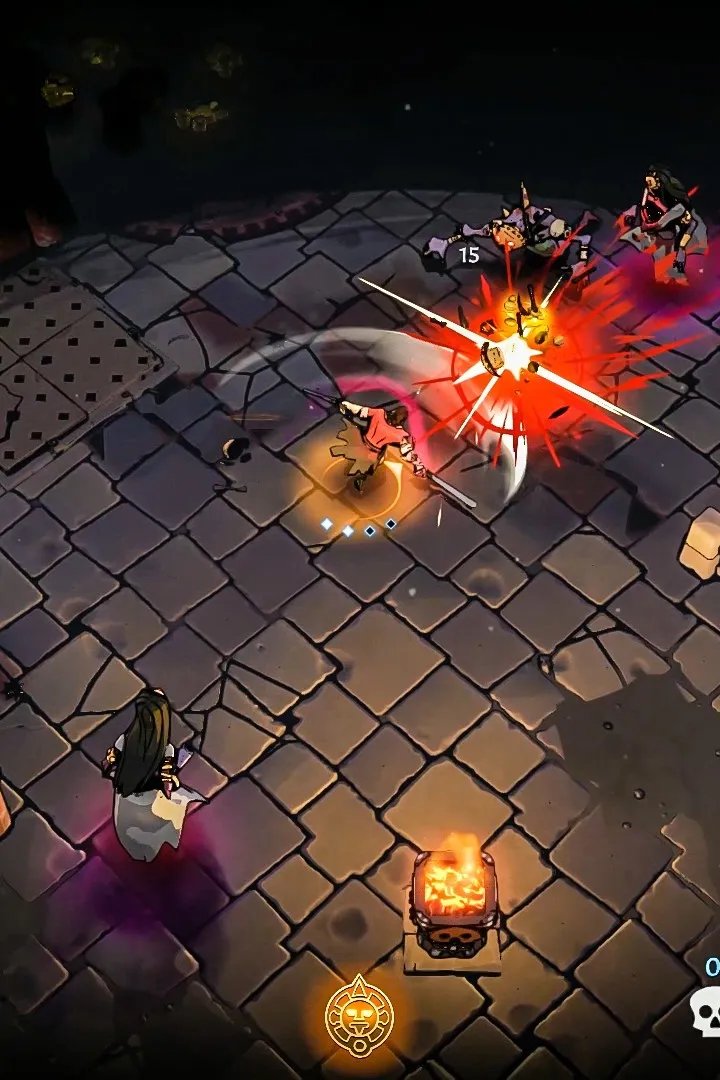
Identify and avoid treacherous traps in Curse of the Dead Gods. Learn the visual and auditory cues that signal danger and how to bypass them.
Navigating the treacherous halls of the cursed temple requires constant vigilance, as numerous traps lie hidden, ready to inflict damage or debilitating status effects. Understanding the visual cues and patterns associated with these hazards is paramount to survival. Many traps are telegraphed by subtle environmental details. For instance, pressure plates, often disguised as floor tiles, will subtly depress when stepped on, triggering dart launchers, falling spikes, or explosive runes. Pay close attention to variations in floor texture, discolored tiles, or small holes in the walls, which can indicate the presence of projectile traps. Some traps, like swinging blades or crushing walls, operate on a timed cycle. Observing their movement patterns before attempting to pass is crucial. The sound des of the game also provides vital clues; a distinct click or whirring sound often precedes the activation of a trap. Learning to recognize these auditory cues can save you from taking unnecessary damage. For example, the tell-tale sound of a mechanism engaging often precedes the sudden appearance of a spiked pitfall.
Beyond visual and auditory cues, environmental storytelling can also hint at danger. Areas littered with the remains of previous, less fortunate adventurers, or scorch marks on walls, often sify a particularly hazardous zone. Some traps are more insidious, designed to lure players into a false sense of security. These might include seemingly harmless levers that actually trigger a cascade of dangers, or chests that, when opened, unleash a swarm of enemies or a localized trap effect. It is always wise to approach suspicious objects or mechanisms with caution. Consider using a ranged attack to trigger a trap from a safe distance if possible, or employ a dash maneuver to quickly bypass a triggered hazard. Remember that certain Curses can also alter trap behavior or introduce new ones, so adapting your awareness to your current affliction is key. For instance, a Curse that causes your vision to blur might make it harder to spot subtle trap indicators, necessitating a more cautious, slower approach.
Specific Trap Types and Countermeasures
- Pressure Plates: These are the most common traps. Stepping on them can trigger dart launchers, spike traps, or even summon enemies. Always scan the floor for slightly depressed or discolored tiles. If a pressure plate is unavoidable, a well-timed dash can often get you across before it fully activates.
- Dart Launchers: Often concealed in walls, these fire projectiles when a pressure plate is triggered or a tripwire is crossed. The darts themselves can inflict minor damage and sometimes a poison status effect. Staying mobile and using cover can mitigate their impact.
- Spike Traps: These can manifest as spikes emerging from the floor, ceiling, or walls. They are frequently linked to pressure plates or timed mechanisms. Observing the environment for holes or seams where spikes might emerge is essential.
- Swinging Blades/Axes: These hazards typically move in a predictable arc. Learning their timing and dashing through them during their retraction phase is the primary method of avoidance.
- Crushing Walls: These traps are often found in corridors. They activate after a delay, attempting to crush You against the opposite wall. Sprinting through the corridor as soon as the mechanism begins to engage is the only way to survive.
100% Human-Written. AI Fact-Checked. Community Verified. Learn how AntMag verifies content