
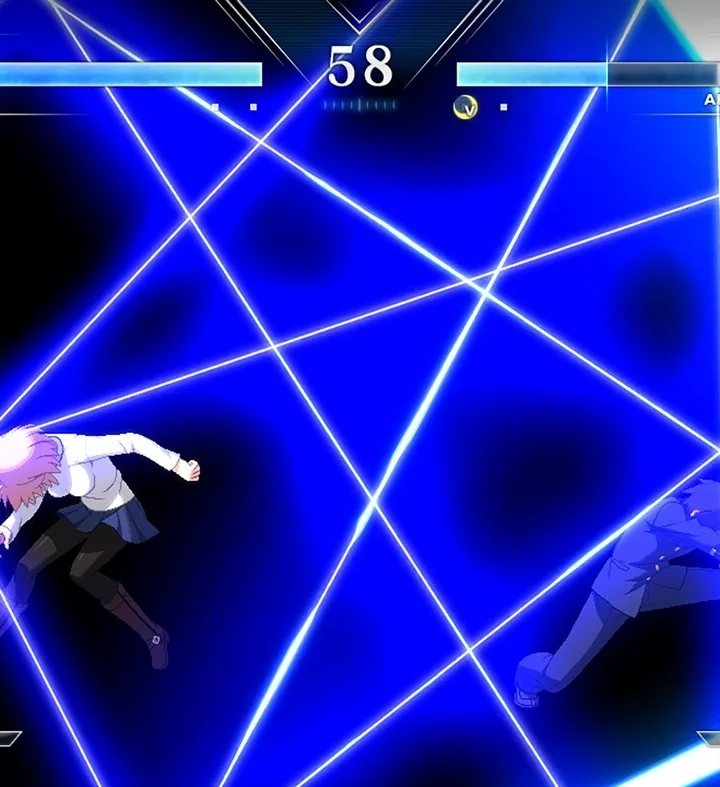
Learn Melty Blood: Type Lumina basic combo theory and structure. Build fundamental pressure and damage opportunities as a Moon Princess or Dead Apostle.
Welcome, aspiring Moon Princesses and Dead Apostles! Mastering combos is the cornerstone of effective offense in Melty Blood: Type Lumina. While flashy, high-damage routes are enticing, understanding the fundamental building blocks will empower you to create your own pressure and damage opportunities on the fly. This section breaks down the core concepts of combo theory and provides actionable steps to construct reliable, effective sequences.
The Golden Rule: Light & Medium Starters
In Melty Blood: Type Lumina, your combo journey almost always begins with a Light (A) or Medium (B) attack. Heavy (C) attacks, while powerful, often have too much hitstun decay or launch properties that make them difficult to follow up directly without specific character mechanics or a Counter Hit. Focus on these starters:
- Light (A) Attacks: These are your fastest and safest pokes. They typically have low damage but are excellent for confirming hits into longer sequences. Many characters have a
5A > 2Aor5A > 5Bstring that serves as a basic combo starter. - Medium (B) Attacks: Slightly slower than Light attacks but offer more damage and often better hitstun. They are frequently used as a follow-up to a Light attack (e.g.,
5A > 5B) or as a direct starter from a dash.
Actionable Step: Go into Training Mode. Pick your main character. Practice confirming 5A > 5B and 2A > 2B into a simple launcher. This will be your bread and butter.
The Launcher: Taking to the Skies
After your initial ground hits, the next crucial step is launching your opponent into the air. This opens up a whole new world of aerial combos and allows for significant damage. Launchers are typically performed with:
- C Attacks: Many characters have a
5Cor2Cthat acts as a dedicated launcher. For example, Shiki Tohno's5Cis a classic launcher. - Special Moves: Some special moves, particularly those with an upward trajectory, can also serve as launchers. Arcueid Brunestud's
623C (Arc Drive)or Ciel's214B (Black Barrel)can launch.
Strategy: Aim to launch when your opponent is still relatively low to the ground. Launching too high or too late in a ground string can result in reduced hitstun and make aerial follow-ups difficult.
Aerial Combos: The Art of Air Control
Once airborne, the goal is to keep your opponent in the air for as long as possible, maximizing hits and damage. Aerial combos often involve:
- Jumping Attacks: Your
j.A,j.B, andj.Cattacks are your primary tools.j.Ais fast for quick hits,j.Boffers more damage, andj.Coften has good hitstun or knockback. - Air Dashes: After a jump, you can often perform an air dash (
66or44in the air) to extend your aerial combo, reposition, or chase your opponent. This is crucial for longer air routes. - Special Moves (Airborne): Many characters have special moves that can be performed in the air, further extending the combo. For instance, Miyako Arima's
j.214A/B/C (Senpuu).
Actionable Step: After a launcher, try to connect j.A > j.B > j.C. Then, experiment with an air dash (j.66) followed by another set of jumping attacks. Pay attention to how many hits you can get before the opponent falls out.
The Finisher: Bringing Them Down
Every good combo needs a strong finisher. This is where you maximize damage, set up for advantageous situations (okizeme), or transition into a super attack. Common finishers include:
- Special Moves: Many special moves have good damage and knockdowns. For example, Vlov Arkhangel's
236C (Flame Pillar)or Noel's214C (Holy Bell). - Ex Specials (A+B): These enhanced special moves consume Meter but offer increased damage, hitstun, and often better knockdown properties. They are excellent for ending combos.
- Arc Drive (A+B+C): Your character's super attack. These are high-damage, cinematic finishers that consume 3 bars of Meter. Always aim to end a high-damage combo with an Arc Drive if you have the Meter.
- Last Arc (236D during Heat): The ultimate finisher, available only during Heat mode. These are incredibly powerful and consume all Heat gauge.
Strategy: Consider your Meter. If you have enough, an Ex Special or Arc Drive is usually the best way to end for maximum damage. If not, a regular special move that provides a good knockdown is preferable for setting up your next offensive opportunity.
Combo Structure Template
While every character has unique properties, most combos in Melty Blood: Type Lumina follow a similar structural flow:
| Phase | Typical Inputs | Purpose |
|---|---|---|
| Starter | 5A, 2A, 5B, 2B |
Confirming the hit, initiating the combo. |
| Ground Extender | 5B, 2B, 5C (if not a launcher), specific special moves |
Building hit count, positioning for launcher. |
| Launcher | 5C, 2C, specific special moves |
Sending the opponent airborne. |
| Air Combo | j.A, j.B, j.C, air dash, air specials |
Maximizing airborne hits and damage. |
| Finisher | Special Move, Ex Special, Arc Drive, Last Arc | High damage, knockdown, okizeme setup. |
Example (Shiki Tohno Basic):
- Starter:
5A > 5B - Launcher:
5C - Air Combo:
j.A > j.B > j.C > j.66 (air dash) > j.B > j.C - Finisher:
236C (Senya)or214B (Gokumon)for knockdown, orA+B+C (Nanaya)for Arc Drive damage.
Practice these fundamental concepts, and you'll quickly find yourself constructing dynamic and damaging combos with ease. Remember, consistency in execution is key!
100% Human-Written. AI Fact-Checked. Community Verified. Learn how AntMag verifies content