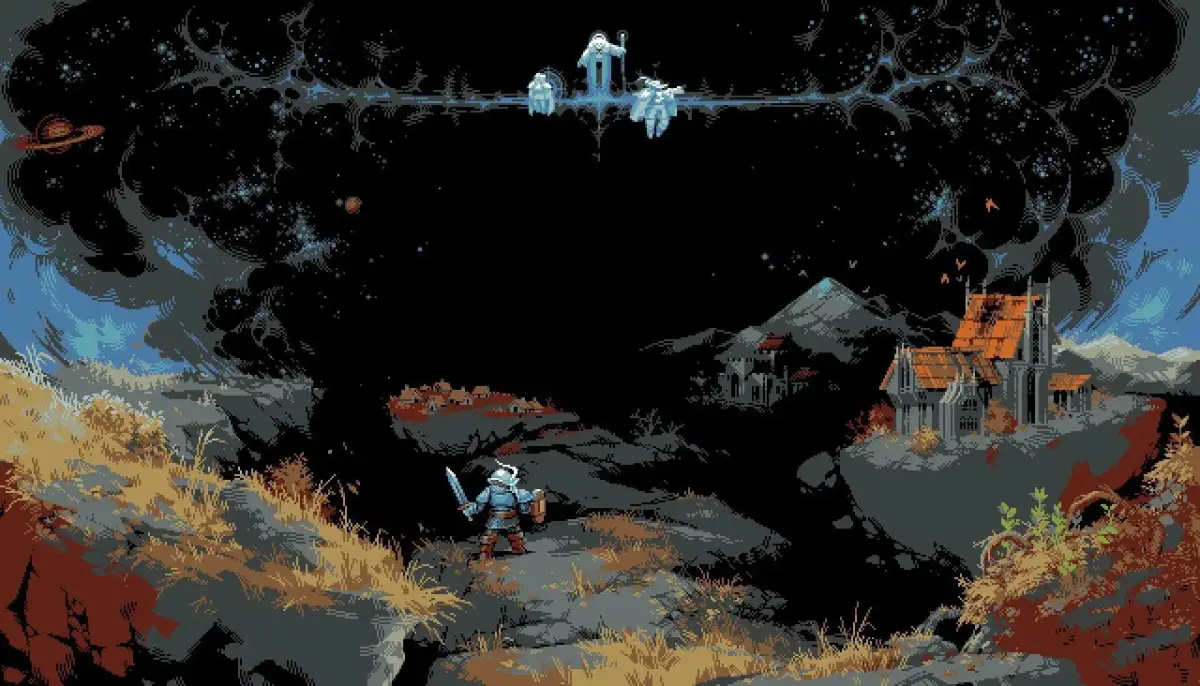
Loop Hero is a unique roguelike RPG where you fight monsters and build a world by placing down landscape tiles. You don't directly control the hero; instead, you strategically place cards like forests, villages, and swamps to create a looping path for them. As the hero completes loops, they fight enemies, gain experience, and collect gear. The goal is to survive the endless cycles and defeat the Lich, who has plunged the world into a chaotic time loop. It's a game for players who enjoy strategic planning, resource management, and seeing their carefully laid plans unfold.
This guide will help you master Loop Hero's intricate mechanics, from understanding fundamental combat and resource loops to mastering advanced tile synergies and character builds. We'll cover strategies for surviving the early game, preparing for the endgame, and overcoming the game's toughest challenges. Whether you're aiming to unlock all Steam Achievements or simply want to conquer the Lich, this guide provides expert advice for every stage of your looping journey.
Part 1
Learn the essential beginner strategy for Loop Hero, including crucial warnings about common mistakes, optimal build orders, and how to approach early-game challenges effectively.
This is a simple guide to a fairly simple game. The beginner strategy focuses on first giving a couple of warnings if you're new to the game and then giving some basic ideas on how to have the right mindset to challenge the game.
Advanced strategy is about how to easily farm areas, use efficient combinations as well as a guide to each class.
Oh and one thing that took me a while to figure out: This game sometimes refers to "armor" or "magic armor". That might sound good. It's actually just "max hp" and "max magic hp". So it's not impressive.
By the way, Magic HP is far better as it recharges every battle.
Beginner Warnings
Before you consider other strategy, there a couple of warnings you should know. If you already made these mistakes, it's not necessary to restart. It's quicker to rebuild. But save yourself time and keep these warnings in the back of your mind.
No Wrong Answers
The first thing you should know is that it's safe to experiment. You can't really do anything too wrong. You gain resources every run, even failed runs. So don't worry.
Experiment.
Worst Mistakes
There really is only five mistakes one can make in Loop Hero.
A. RETREAT IN TIME
When you die, you lose all items and 60% of the resources you've collected in that run. If you retreated before the fatal battle, you would have kept them.
When you retreat, you lose 30% of the resources you've collected in that run, unless you do it while you are at the campfire tile. Most of the time, you should have retreated while at the campfire.
B. WAITING TOO LONG TO FIGHT THE BOSS
The more you develop your little village, the stronger you get. But you don't need a lot of development to beat the bosses of the game if you play it right. Get a feel for their strength by facing each boss a couple of times so you don't spend more time on city development than necessary for your skill level.
C. BUILDING A BUILDING WITHOUT ROOM FOR UPGRADES
There are a couple of buildings, like the Crypt and the Smithy, that have subsequent buildings that have to built adjecant to the previous one. Make sure there is room for them, so you don't have to destroy and rebuild.
Particularly the .... is important to place well. You are going to build 2 warehouses, that each have to be adjecant.
D. BUILDING THE FARM OR LUMBERJACK IN THE WRONG PLACE
When you place a farm, every tile adjecant to it (including diagonal) is turned into a garden. A good placed farm has 8 tiles. A badly placed farm has very few. It is worth pointing out that one of the last developments, the "river", uses a set amount of terrain on the bottom right. It looks like this:
OOOOOO
XOOOOO
XXXOOO
OOXOOO
OOXXOO
OOOXOO
Every X is a river tile. Keep that in mind, as it may steal farm tiles from you as it did for me.
The lumberjack is like the farm, except you have to manually build each forest tile. In any case the farm and lumberjack aren't too important. They help grow a little bit, but you get far more from runs anyways so it's not really worth fussing too much over.
E. UNLOCKING THE WRONG TRAITS
This is a very UNUSUAL tip. After you build the gymnasium, you can receive traits during a run for the duration of that run. Now there is no risk with experimenting with this and trying out which traits work best. Except for one exception.
Each time you defeat a boss, you can choose a bonus. You can either get extra resources, or unlock one of the locked traits. This doesn't just give you the trait for that run, in the future each time you get a trait, this unlocked trait may now be one of the three options.
If you unlock worthless traits, this means you might have less good choices during each of your future runs. If you unlock good traits, this means you'll have more good choices in future runs. If you want to unlock everything in your run, you'll have to unlock them all after defeating bosses.
Beginner Strategy
Build Order
It's worth going for the gymnasium ASAP. Gymnasium unlocks traits. They are upgrades after you get a certain amount of XP each run. Very useful. It also unlocks villages. Villages are a mixed blessing. They heal HP, but they give quests, upgrading the HP of the monster they want you to kill.
Villages shine in combination with vampire manor, which helps get the orb of expansion, that you only get from fighting large groups of enemies. When you just take 7 type of tiles, two of which are vampire manor and village, you can farm orbs of expansion like crazy.
After Gymnasium, the best goal is going for the crypt. The necromancer class is much better than the other two classes, especially when you haven't yet unlocked much. Getting to Necromancer is the end of the early game.
The next goal should be the intel center. The intermediary supply depot helps unlock items, which become useful in the mid/late game, but are not worth worrying about when you have just a couple. The intel center itself is really great. It unlocks gold cards, which are really good cards that you start a new run with. If you went for the crypt first, you now have access to ancestral crypt, which is pretty great.
Part 2
Master Loop Hero Part 2 with our guide! Learn the best building order (Gymnasium, Crypt, Intel Center, Smelter) and essential terrain combos for quick progression.
Alright, let's dive into Part 2 of your Loop Hero journey! We'll cover some crucial building priorities and then get into how to approach the adventure itself. Think of this as leveling up your base and your strategy.
Building Priorities
When you're deciding what to build next, some structures are way more impactful than others. Forget about Farms and Lumberjacks for now; they give a tiny boost to resources, and the 'Wheat' terrain card isn't super exciting. Focus on these first:
- Gymnasium
- Crypt
- Intel Center
- Smelter
The Smelter is especially great because it unlocks the Arsenal card, which gives every class an extra item slot. For the Necromancer, that means more magic abilities to buff your summons. Rogues get extra magic HP (which is like regular HP but recharges differently), and Warriors get helmets with retaliation damage. Everyone benefits from the extra magic effects!
Adventure Strategy & Bosses
Here's a big one: don't wait too long to tackle the first boss! Seriously, people tend to put it off. Each boss you defeat unlocks a new, harder difficulty mode, and trust me, you want those higher difficulties.
- Each new difficulty ramps up monster abilities and how much they grow per loop.
- You get 40% extra resources per difficulty level.
- Your maximum resource cap per run increases by 10 for each difficulty.
These last two points mean higher difficulties are way more profitable, and surprisingly manageable once you get the hang of it. The fourth difficulty is a bit of a curveball, as you'll have less space to build terrain before facing the boss.
Early on, just place whatever terrain you're given. Smaller decks work best, so think about using things like Grove, Cemetery, Battlefield, Spider Cocoon, Rock, Meadow, and Oblivion. A pro tip for Spider Cocoons: place them next to multiple roads to avoid getting swarmed!
Terrain Combinations
Transforming terrain is key to unlocking new enemies and bonuses. Here are some essential combos:
Early Game Combos
- Meadow → Blooming Meadow: Build a Meadow next to *any* other terrain type. Boom! 50% more effective. Easy peasy.
- Mountain/Rock → Mountain Peak: Create a 3x3 area of Rocks and/or Mountains. This gives you a nice HP boost, some free resources, and spawns Harpies. You can only have one Mountain Peak at a time, but you can use the Lich's Oblivion spell to remove a tile and rebuild it for more resources.
- Treasury → Empty Treasury: A Treasury gives bonus resources for adjacent tiles. Once it's completely surrounded, it becomes an Empty Treasury.
- Battlefield → Blood Terrain: When two Battlefields overlap terrain, they create Blood Terrain. This spawns Blood Clots, which are tough but great for farming Shapeless Mass resources.
Mid Game Combos
- Village/Vampire Manor → Ransacked Village: Place a Village right next to a Vampire Manor. It stops giving its normal bonuses but spawns 4 Ghouls when created and when you pass the campfire. This is perfect for farming Orbs of Expansion since the Vampire fights alongside the Ghouls.
- Ransacked Village → Count Village: After passing the campfire three times in a Ransacked Village, it upgrades into a Count Village. It stops spawning Ghouls but is an upgraded village.
- Blood Grove → Hungry Grove: A Blood Grove needs to be next to a Forest, Thicket, or Grove, and also next to a road. If a Blood Grove doesn't have its own adjacent forest/thicket/grove, it becomes a Hungry Grove. These deal damage to you in every fight, so be careful! You can force this by building two Blood Groves next to a single Grove, or by using Oblivion on the original Grove.
- Wheat Fields → Overgrown Field: If you Oblivion a Village, any adjacent Wheat Field becomes an Overgrown Field. It still spawns Scarecrows, but now damaging grass blade enemies appear in empty spaces. Note that Ransacked or Count's Villages won't trigger this; you need to remove the Village entirely.
- Goblin Camp → Advanced Goblin Camp: When a Goblin Camp is next to a Swamp, it starts spawning Archers.
- Forest/Thicket & Storm Temple → Burned Forest: On any horizontal or vertical line with a Storm Temple, Forests and Thickets become Burned Forests, granting 0.5 magical attack damage.
Late Game Combos
- Bookery → Abandoned Bookery: Once all charges of a Bookery are used up, it becomes an Abandoned Bookery. Fights in its territory will now spawn a Tome, a dangerous enemy. Be warned: if a Tome spawns in an area also affected by a Vampire or Watcher, they become upgraded, extremely dangerous versions. They drop good loot, but it's usually not worth the risk.
- Desert/Dunes & River → Oasis: A River next to Dunes or Desert creates an Oasis. This reduces enemy attack speed by 1% and yours by 0.5%. Be aware that your Necromantic summons and allies also get this speed reduction. Oases can be really good for certain builds, though!
Part 3
Master resource farming in Loop Hero Part 3. Learn how to efficiently gather Stable Metal, Food, Wood, Orbs, Craft Fragments, and more for crucial upgrades.
This section of the guide covers advanced strategies and resource acquisition in Loop Hero.
River & Road - Reed: Building river next to roads allows for the Reed upgrade, which spawns fishmen every three days on adjacent roads.
River & Battlefield - Shipwreck: Shipwrecks now spawn normal chests and sirens, no longer mimic chests.
Suburb - Town: Creating a plus sign shape (+) with suburbs turns the center area into a Town, which is twice as effective as a regular suburb.
How to get which resources?
Farming specific resources is made easier by understanding enemy drops and terrain effects. It's recommended to minimize the number of cards in your deck when targeting a particular resource.
Stable metal
Obtained from recycled gear. Build groves and village/vampire manors and battlefields without creating blood paths. Use Lich's Oblivion on bandit camps, as they steal gear.
Food supply
Groves are an easy source of rations and stable wood. A Skinner Knife allows you to get food from ratwolves. Overgrown fields are an alternative. Building a farm with 8 field tiles is also an option if consistently short.
Stable wood
See 'Food supply'. Chests from battlegrounds also provide a significant amount of wood.
Orb of afterlife
Dropped by undead enemies. Focus on runs with graveyards, vampire manors, and villages.
Craft fragment
Most easily farmed from scarecrows.
Preserved rock
Obtained from using rock and mountain terrain. Cemeteries can also provide rock.
Astral Orb
Required for some upgrades and the Alchemist Tent. Farmed from advanced units. Use Bookeries, morph them into empty Bookeries, and build vampires or watchers in the same area. Battles with both a tome and a vampire/watcher transform them into mages, which can drop Astral Shards. Chrono Crystals next to basic roads can rarely spawn dark slimes. Battlefields have a 20% chance of units with souls dying becoming ghosts, which have a 20% chance of becoming ghosts of ghosts, which have a 20% chance of becoming prime matter, all of which drop time shards. Bosses also drop Astral Shards.
Orb of evolution
Dropped by most living enemies, including spiders, ratwolves, goblins, bandits, harpies, scorch worms, fishmen, and sirens.
Orb of unity
Obtained from chaotic type units like shapeless masses. Farmed from blood clots (use battlefield to make bloodpath), swarm of bats (vampires with abilities unlocked), field of blades, and basic slimes.
Book of Memories
Received when your hand is full of terrain cards and a new one is added. Also dropped by tomes and watchers. Starting new runs and letting the game run on 2x speed can also yield these.
Metamorphosis
Obtained from transforming terrain.
Orb of immortality
Dropped by bosses. Can be used to retain all resources upon death, with the cost in orbs scaling with difficulty (1/2/3/4).
ADVANCED STRATEGY
STAMINA
The stamina bar affects attack speed and evasion. High attack speed, counter, or evasion can deplete stamina, leading to dramatic reductions in these stats. Oasis tiles can be useful for high attack-speed runs.
PLAY TO YOUR SUPPLY
Adapt your strategy based on the items you receive, as both item drops and crafting results are random. Items like Skinner Knives are effective against specific enemies (ratwolves), while others like Garlic and Silver Pendants offer defensive bonuses. Antique Shelfs provide significant HP, especially at higher difficulties. Many items are less effective for the Necromancer class as they affect the player directly, not their summons.
NECROMANCER
SKILLS
The Necromancer is a strong class, with skeleton level upgrades being particularly important. While more skeleton types can be summoned, focusing on 3-4 high-level skeletons is often more effective. Survival skills are generally overrated. The Arsenal is good because the shield can upgrade skeletons. Summon quality is useful but secondary to skeleton level. Attack speed is crucial for summoning new skeletons quickly, especially with higher max skeleton levels or many oasis tiles. The Necromancer's advantages diminish in the late game due to limitations with outposts and camp supply items, but it remains a top-tier class.
Part 4
Master Loop Hero's final stages! Learn strategies for defeating the Necromancer, Priestess, Hunter, and the Omega boss in this comprehensive guide.
Alright, we're getting into the nitty-gritty now! This section is all about taking down the big bads and finishing those tough stages. It’s a bit of a mixed bag in here, covering some class tips and then diving straight into boss fights.
Quick Class Notes:
- Warrior: Focus on Vampirism and Defense for general survival, but swap to high damage, attack speed, and evasion for bosses. Be careful not to over-stack monster spawns since your fights take longer.
- Rogue: Needs Arsenal, Forest, and Outpost to really shine. Prioritize attack speed, evasion, and high damage. A good necklace can help with HP. Rogue can handle more monster-spawning cards because fights are super quick.
- Necromancer Battleplan: Desert, Oasis, and Forest landscapes pair well. Outpost is generally bad for Necromancer, but worth using once to see what it does. Suburbs are always good.
Landscape Tips:
- Warrior: Start with Mountain and Meadows. Once unlocked, River and Forest are better. Outposts can help with certain tiles and bosses, but might cost you good item drops.
- Rogue: Forest boosts high attack damage. Deserts help with one-shotting enemies. Oasis and River+Forest tiles prevent over-capping attack speed. Outposts are great for Rogue since you get items at the campfire from trophies, especially with two Outposts near the campfire to help against bosses.
- General: Suburbs are always good.
Defeating the Stages:
There are 4 stages to beat, but you can keep playing after stage 4 to unlock anything you might have missed.
Stage 8.1: Necromancer
The Necromancer gets tougher as his fortress grows. His fortress spawns in a '+' shape around the camp, and each tile adds to his damage and HP. The trick here is to shrink his fortress before it spawns. Any tile you've already placed something on won't spawn a fortress tile. You can use Oblivion cards to remove fortress tiles, but it’s way easier to just pre-plan your landscape. If there’s already something built around the campfire tiles, the fortress won't expand there. Plan ahead from the start, and you can usually stop most, if not all, of the fortress tiles from appearing.
Stage 8.2: Priestess
The Priestess is annoying because she summons fake mirror images that eat your attacks. This makes her tough unless you have lots of summons (like with the Necromancer) or super high attack speed (Warrior/Rogue). Being incredibly durable *can* work, but it's a real challenge, especially since vampirism doesn't even work on those fake images.
Stage 8.3: Hunter
The Hunter and his dogs are actually pretty useful! They give you multiple chances to snag Time Shards, which you need for the Alchemy building. While the Alchemy building itself isn't super exciting, getting those Time Shards is a rare opportunity. The Alchemist's ability to transform resources is handy, but it's so late in the tech tree that it doesn't help much with finishing other buildings. The Hunter isn't a super hard boss, though. Just remember that evasion is less effective here because the Hunter never misses. Still, evasion helps with the other 2/3rds of his attacks, so it's not useless.
Stage 8.4: Fourth Stage - Omega
This is the big one! You have to beat all the previous bosses in a single run. Remember the Necromancer's fortress? You'll need to build around the camp to prevent that again. After the three bosses, you face the OMEGA. This guy's weird – each attack deletes some of your stats. Because of this, varied strategies are key, and golden items become super valuable. Normally, regeneration per second isn't the best, but even a little bit can mean that stat gets deleted instead of something more crucial.
Finishing Thoughts:
This guide is almost done, but not quite! I wanted to get this out there in case I can't finish it up soon. If you've got more info or spot a mistake, hit me up!
Similar guides you might like





100% Human-Written. AI Fact-Checked. Community Verified. Learn how AntMag verifies content