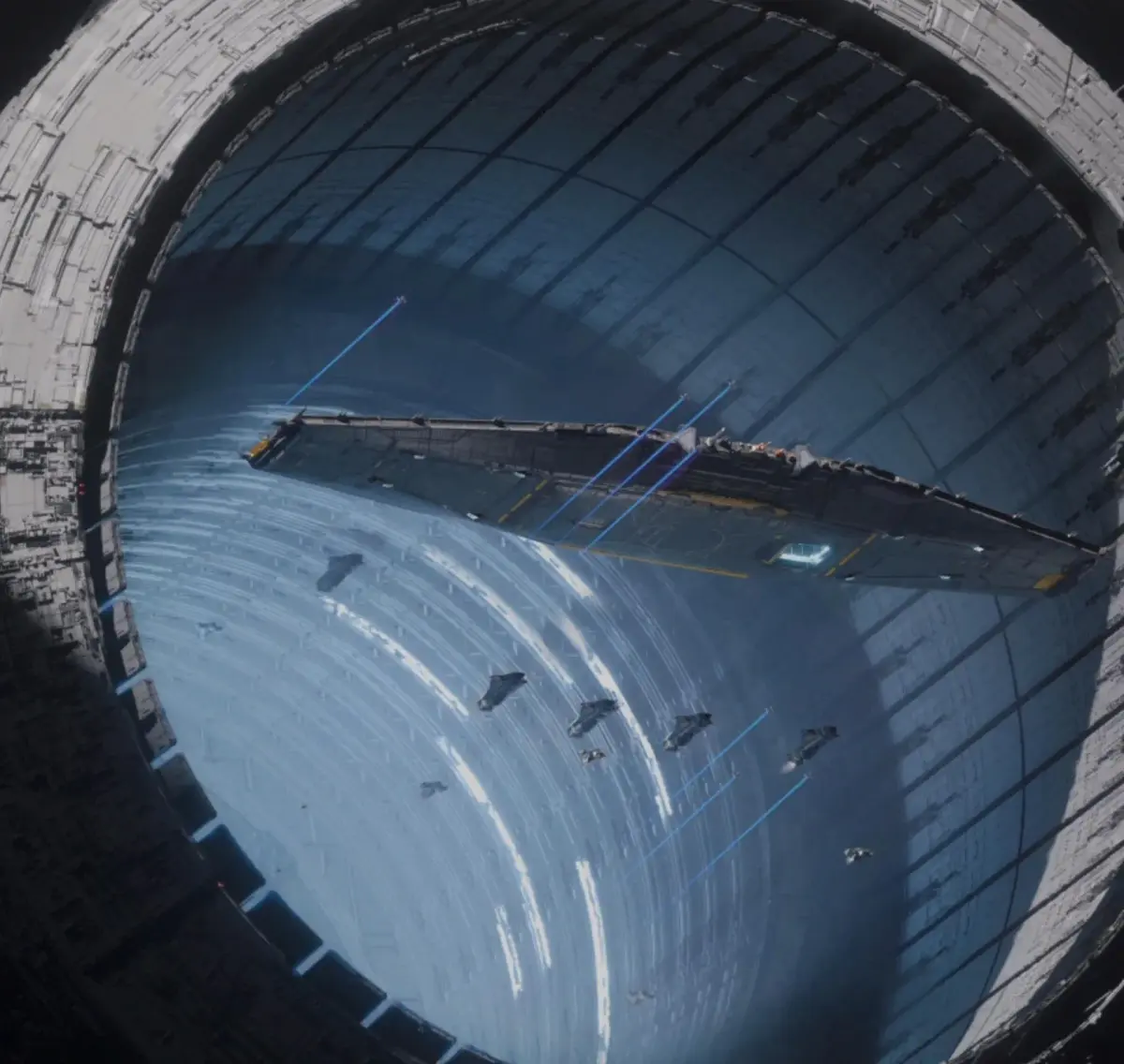
Welcome, Commander. Homeworld 3, developed by Blackbird Interactive, plunges you into an epic sci-fi saga where you'll master the strategic depths of space combat. From building your initial fleet and commanding powerful capital ships to surviving harrowing, story-rich missions, every decision counts as you forge your destiny among the stars. This atmospheric journey is perfect for players who love deep strategy and a compelling narrative.
This guide is your key to conquering every challenge Homeworld 3 throws your way. We'll help you navigate through every mission, ensuring you can achieve Gold Medals on each one. We'll also provide detailed strategies for tackling tough boss encounters and securing all the Steam Achievements, so you can truly become the ultimate commander.
Part 1
Master Homeworld 3's Part 1 with our comprehensive guide. Learn about Resource Units (RU), Support Units (SU), and the vital roles of Command Ships and Carriers.
This guide is designed to help new players of Homeworld: Cataclysm improve their skills and compete with experienced players. Have fun and good luck!
Before starting a game, it's essential to understand the two main types of units that influence your fleet: Resource Units (RU) and Support Units (SU).
Resource Units (RU): These are the currency used to build ships. You can see your current RU total in the lower-right corner of your screen. Most games start with 4000 RU. To increase this, use Workers to harvest asteroids or salvage crystals (the latter requires researching specific technology first).
Support Units (SU): This number limits the size of your fleet. You start with a certain amount of SU and can build additional Support Modules to increase your total capacity. Each ship (except Command Ships and Carriers) consumes a specific amount of SU. You cannot build more ships once you reach your limit. Destroyed ships return their SU, but destroyed Carriers, Command Ships, or Support Modules require rebuilding to regain SU. The SU display in the lower-right corner shows used SU followed by the total possible SU (e.g., "SU: 244/400").
The following table shows ships that provide SU:
| Ship | Amount of SU Given |
|---|---|
| Somtaaw Command Ship | +70 |
| Beast Command Ship | +65 |
| Somtaaw Carrier | +40 |
| Beast Carrier | +96 |
| Somtaaw Support Module | +10 |
| Beast Support Module | +15 |
| Somtaaw Hangar Module | +20 |
Ship Class Descriptions
Understanding the role and importance of each ship class is crucial.
Command Ship (CS) and Carriers
The Command Ship (CS) is your most critical unit. It's essential for building and expanding your fleet. Losing your CS and all carriers results in game over. The game's focus will be on defending your CS while attacking your opponent's.
Initially, your CS has limited operations, allowing it to build only recons, workers, and research modules (for Somtaaw) or recons, workers, and processors (for Beast). For beginners, it's recommended to start with Somtaaw, as the Beast faction is more challenging to master.
The CS serves as your base of operations and technology research hub. To use it effectively, deploy workers to harvest resources (RU) to fund research modules, which unlock new and improved ships.
Carriers function as mini-Command Ships. They can build any ship not requiring external construction (like destroyers, processors, or other carriers) and provide additional SU: 40 SU for Somtaaw Carriers and 96 SU for Beast Carriers. Somtaaw Carriers can also build 6 additional Support Modules, similar to the Command Ship (which can build 12). The Beast Carrier's capabilities are also detailed.
Part 2
Explore Homeworld 3 ship classes: Carriers, Fighters, Corvettes, Frigates, and Super-Capitals. Learn their roles and abilities.
Carriers
Carriers function as mobile shipyards, capable of building most ships except those requiring external construction. Somtaaw Carriers provide 40 SU (Support Units) and can build 6 additional Support Modules, similar to the Command Ship (which builds 12). Beast Carriers offer a flat 96 SU but cannot build additional Support Modules. If your Command Ship is destroyed, the game continues as long as Carriers remain operational.
Fighters
Fighters are crucial early-game units for offense and defense, serving as your primary force until frigates are available. Acolytes, when upgraded with missile technology, can launch two powerful missiles, making them valuable even late-game. Fighters excel at attacking enemy fighters and worker operations but are relatively weak against larger ships without missiles.
Corvettes
Corvettes are heavier-duty fighters. Somtaaw can build ACVs (Advanced Combat Vessels), which are essentially two Acolytes combined and can split into two for increased speed. ACVs can also be upgraded with an EMP charge to temporarily disable enemy ships. Beast can build four types of corvettes: Cruise Missiles, Heavy Corvettes, Missile Corvettes, and Multigun Corvettes. These can inflict significant damage on frigates and larger ships in numbers (20+).
- Multiguns are effective against fighters and other ships.
- Heavy Corvettes have superior armor but less firepower than Multiguns.
- Missile Corvettes are quick to build but slightly less accurate than Multiguns and Heavy Corvettes.
- Cruise Missiles can infect ships up to Processor size (when upgraded) and deal significant damage to Super-Capital ships.
Frigates
Frigates deal more damage than corvettes and fighters and often form the core of your attack fleet. Ramming Frigates are effective against crystals and Capital/Super-Capital ships. Multibeam Frigates (MBFs) are good against fighters and unarmored corvettes. Hive Frigates are strong against other frigates, workers, and can effectively counter fighters. Ion Arrays are the Beast's primary frigate, dealing massive damage to Super-Capitals but are weak against ramming frigates and fighters. Defense Field Frigates (DFFs) deflect a percentage of enemy and allied shots within a radius and can detonate siege shots.
Super-Capital Attack Class
These are the largest and most powerful ships, though rarely built due to high SU and RU costs. The Somtaaw Dreadnought is their largest buildable ship, featuring high attack power, good armor, immunity to infection, and a 'repulse' ability to repel smaller craft and shots. Destroyers are half the size of Dreadnoughts but still potent, though difficult to build early. The Beast's Heavy Cruiser is its only ship in this class, equipped with four large ion cannons, five large rail-gun turrets, and the ability to infect enemy ships.
Non-Combat Ships
Workers are essential for harvesting RU (Resource Units) and building other ships. You typically start with three workers, which may not be enough for the entire game. Workers are vulnerable and require protection. Processors (Procs) can be used in combat with researched rail-guns and repair beams. Their primary role is to act as drop-off points for harvested RU, extending your operational range from your Command Ship or Carriers.
Micro-Ship Class
This class includes Leeches and Sentinels. Leeches are undetectable by non-upgraded Sensor Managers and drain enemy health. Sentinels are slower, heavier micro-ships effective at destroying enemy units.
Part 3
Master Homeworld 3 strategy with tips on worker management, RU conservation, crystal salvaging (6000-10000 RU), and aggressive tactics.
- 1Harvesting: Prioritize defense and management of your worker operation. Aim for at least 8 workers by the 10-minute mark and 10-16 by the 15-minute mark. Consider building a processor around the time workers begin harvesting the second RU patch. A general rule is one processor for every 8 workers. Use the guard function ("G+left mouse drag") or manually follow workers with the processor using the move function ("M"), positioning it slightly below and behind. Keep workers harvesting in the same asteroid cluster for quicker unloading.
- 2RU Management: Avoid building everything at once; stagger your build queues. For example, build a few workers and research modules first, then proceed to other units or modules. Ensure enough workers/processors to support your strategy: 14-18 workers for long-range games, 8-14 for short-range battles. At the start, harvest immediately with automatic workers and turn your Command Ship (CS) to face them to shorten unload times.
- 3Crystal Salvaging: Obtain large amounts of RU by salvaging crystals, but be cautious as they are volatile. Small crystals require 2 workers and yield 6000 RU; large crystals require 4 workers and yield 10000 RU. If a worker or crystal is damaged, salvaging slows. If a worker is destroyed while transporting a crystal, others will stop until a replacement arrives.
- 4Early Attack Vessels: Do not solely focus on research and harvesting; build fighters for offense and defense to avoid being caught unprepared.
- 5Aggression: Once basic elements are established, attack your opponent. Defense alone won't win. Target enemy workers, processors, half-built carriers/dreadnoughts, or fully built carriers for significant losses.
- 6Formation Shifting (FS): A dogfighting tactic. Place fighters in wall formation ("F9"), attack, then switch to sphere formation ("F10") when enemies get close. Alternate between "F9" and "F10" every 2-4 seconds.
- Fighters, when upgraded, can erect a force-field around friendly ships, taking 12 seconds to completely surround a target.
- Position processors slightly below and behind harvesting workers.
- Turn your Command Ship (CS) around to face harvesting workers at the start of a game to speed up unloading.
- Be aware that if a crystal is destroyed near your fleet, nearby units can be heavily damaged or destroyed.
- If you hate a certain tactic being used against you, use it against your opponent.
- Typical game settings for most players include: Free For All (FFA) - Destroy Enemy Command Ship: ON; Allied Victory: OFF.
Similar guides you might like





100% Human-Written. AI Fact-Checked. Community Verified. Learn how AntMag verifies content