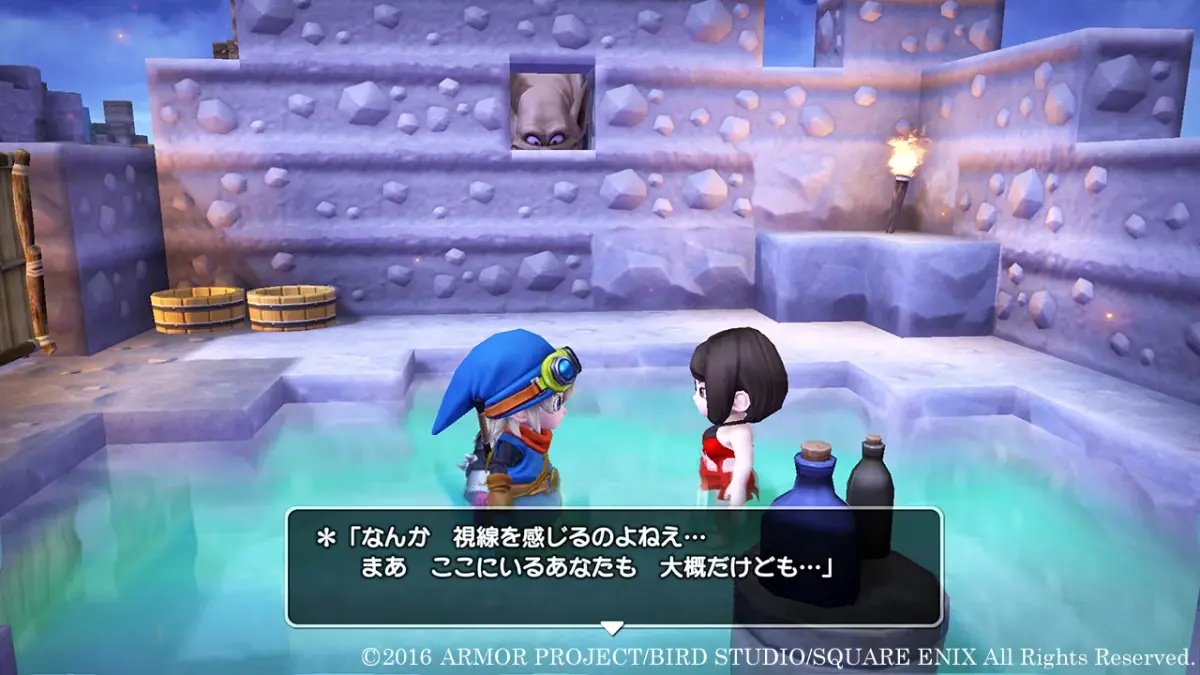
Learn the basics of building rooms, using blueprints, and managing town level in Dragon Quest Builders. Essential for new players.
The game operates under specific rules when it comes to building. The game works with 'rooms', rather than 'buildings'. You can connect many rooms together through connecting walls, that's not a problem as long as it's using the requested material in the case of blueprints. Most rooms do not care for the material used for the walls though, but blueprints will for the sake of completing the request.
The interior of a room is what matters. The rule for making a room is that it requires solid walls 2 blocks high, a door, and a light source. This creates an 'empty room'. Then the game has a priority system to choose which room it will be depending on which decorations are in the room.
In some cases, there are rooms that are named as the one the quest asks for, but it still needs the actual blueprint to be completed for the quest to finish. So even if the room has the same name, make sure you complete the blueprint in those cases. Even if the room has the same name as the blueprint, the quest will not be completed otherwise.
Also blueprints will usually lead to actual room recipes. For example, the Greasy Mallet found in chapter 1 actually becomes a Cookfire Cafe when completed. The Greasy Mallet is just the name of the Blueprint, while the Cookfire Cafe is under the Building list. The blueprints usually vary slightly in the materials used, but still count as the room. For example, again the Greasy Mallet asks for a Crockery and a pot to be placed in, but those items are not in the requirement of the Cookfire Cafe, they are extra items. But since the rest of the items meet the requirements for the Cookfire Cafe, that's what you get.
Extra items will not change the room unless it meets the requirement of another room, as a result. It's very rare that adding items would downgrade a room, but when you're looking for a specific room, sometimes you need to remove items to downgrade the requirements, allowing to meet the requirements of a different room.
For example, you make a room with a Stonemason Workshop, you add a Forge to it, and then you add the items to make a Stonemason's Studio (Shop Sign, fancy light source, and a leather sack). It will become instead a Blacksmith's Studio. But the quest is asking specifically for a Stonemason's Studio, which means you need to remove the Forge to complete the quest. You can put it back in after, you just need it to be noticed to count for progression, or added to your list of completed recipes.
Each room is worth a certain base score of EXP, to then is added the value of the individual items inside. So it's always worthwhile to make rooms that count as a 'named room' to boost your EXP, rather than just put items at random.
The EXP is only tallied with items INSIDE the room, not outside of it. For example, Shop Signs need to be placed inside of the room to count, even though you'd think it's more logical to put it outside of course.
The town's level can never go down. Once you reached level 2, even if you were to destroy the whole town, you would stay at level 2. The maximum level for most chapters is 5, so once you reached it, you cannot go back down, and it's one of the Challenges for each chapters. I suggest making a room that you fill with as much decorations as you have found, then you can remove it to recover that space. Likely a good idea to get your level 4 and 5 at the same time, you should have enough decorations by then.
Rooms can be built outside of town. This is important for certain specific rooms like Cantlin Gardens, as the trees will not grow while outside the town's area. Those rooms will not give any EXP, will not be used by villagers, but will count toward your list of completed rooms for the achievements.
Also villagers never step out of town unless it's for the village defense. If you make a staircase that is even a block outside of town, the NPCs (non-player characters) will not be able to use them to reach the second floor, their pathing is limited to the town area.
Rooms also have function with villagers. In the description of a room, you will often see the note that 'villagers can build things in this room'. In practice, they will craft random objects every so often and put them in the chest of that same room. So you might find some things you never crafted in there, some you never had the recipe for. And in the kitchen, you'll every so often find some cooked meals as well.
Some rooms also confers other bonuses, so sometimes it's worthwhile to give them some upgrades, even if the story doesn't lead you to them.
Vertical buildingYes, you can make rooms on top of other rooms, as long as it follows the conditions : 2 blocks high wall, door, light source. This means it technically doesn't need a floor either, but we all know how functional that would be. In fact, some people made 'stackings' of rooms as a test. Basically, if setup properly, you can have 2 rooms with 3 blocks high walls, placing the doors and the light source at different heights. There's no real advantage or function to it though. But for space saving in your villages, you can put two rooms on top of each other like that. For functionality, I would make a 'floor' between the two of course, so you would plan on 3 blocks height per room (floor + walls). Usually you ignore the floor part since it's always there.
More about floorsWhile on the subject, I think it's important to explain something about the ground, or floor level, in your buildings. While technically not part of the requirements, the floor also counts as part of the room when it comes to EXP for example, so changing the flooring can increase the room's EXP. Similarly, when some rooms require water tiles, it counts what's in the first block below you, not anything lower. In Chapter 2 you get such a case, there is a block that makes a water hole for you, but it makes the water at 'sea level'. Since the water blocks are lower than the ground, you actually need to make the room one block lower, w
100% Human-Written. AI Fact-Checked. Community Verified. Learn how AntMag verifies content