
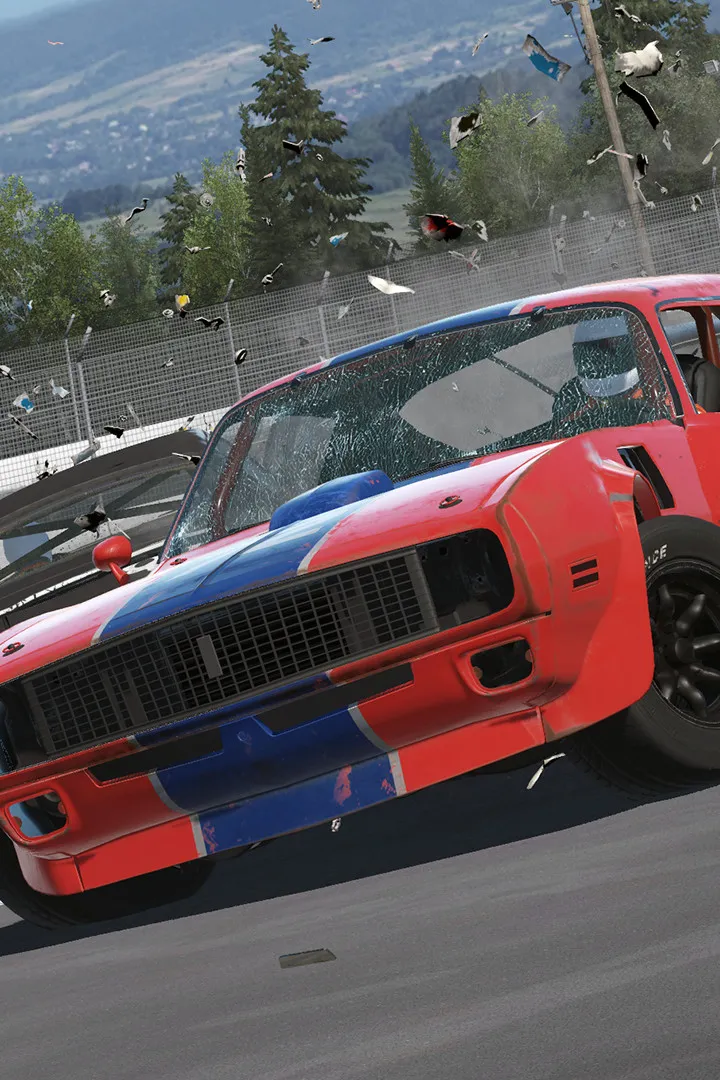
Master Wreckfest's advanced tuning and setup options to optimize vehicles for specific tracks and event types, ensuring competitive performance.
Welcome, aspiring Wreckfest champion! While simply upgrading parts will get you far, mastering advanced tuning and setup is what separates the contenders from the legends. This detailed guide will walk you through optimizing your vehicle for specific track conditions and event types, ensuring you dominate every muddy motor murdering session.
Understanding the Tuning Menu
Access the tuning menu from the Garage before an event. You'll find a wealth of options, each impacting your vehicle's performance in crucial ways. Don't be afraid to experiment, but always save your baseline setup!
- Gear Ratios: This is your primary tool for adjusting acceleration and top speed.
- Suspension: Affects handling, stability, and how your car reacts to bumps and jumps.
- Differential: Controls how power is distributed to your wheels, influencing cornering and traction.
- Brakes: Determines stopping power and brake balance.
- Tires: Crucial for grip and handling on different surfaces.
Strategic Gear Ratio Adjustments
Gear ratios are paramount for optimizing your vehicle's power delivery. Think of them as fine-tuning your engine's output for the specific demands of the track.
Short Gearing (Lower Numbers)
- Strategy: Ideal for tight, technical tracks with many corners, or demolition derby arenas where acceleration and quick recovery are key.
- Impact: Provides rapid acceleration off the line and out of corners, making it easier to maintain momentum and deliver powerful shunts. However, your top speed will be lower.
- Actionable Steps:
- Navigate to the "Gear Ratios" section in the tuning menu.
- Final Drive: Decrease this value for an overall shorter gearing.
- Individual Gears (1st-5th/6th): Slightly decrease the values for each gear to further enhance acceleration. Focus on 1st and 2nd for initial punch.
- Example Track Types: Bonebreaker Valley, Small Stadium, Mudpit.
Long Gearing (Higher Numbers)
- Strategy: Best suited for high-speed oval tracks or circuits with long straights where maintaining maximum velocity is crucial.
- Impact: Increases your vehicle's top speed, allowing you to pull away from opponents on straights. Acceleration will be slower, making corner exits more challenging.
- Actionable Steps:
- Navigate to the "Gear Ratios" section.
- Final Drive: Increase this value for an overall longer gearing.
- Individual Gears: Slightly increase the values for each gear, particularly higher gears (4th, 5th, 6th) to maximize top-end speed.
- Example Track Types: Big Valley Speedway, Northfolk Raceway.
Suspension: Mastering the Bumps and Jumps
Suspension settings dictate how your car handles weight transfer, absorbs impacts, and maintains traction. A well-tuned suspension can turn a bouncy mess into a stable, predictable machine.
Stiffer Suspension (Higher Values)
- Strategy: Excellent for smooth tracks, asphalt circuits, or when you need precise, responsive handling.
- Impact: Reduces body roll in corners, providing a more direct steering feel and quicker weight transfer. However, it can make the car skittish over bumps and jumps, potentially leading to loss of control.
- Actionable Steps:
- Go to the "Suspension" tab.
- Spring Stiffness (Front/Rear): Increase these values. Start with a balanced increase, then fine-tune based on understeer/oversteer.
- Damper Stiffness (Bump/Rebound): Increase these as well. Higher bump stiffness resists compression, while higher rebound stiffness resists extension.
- Considerations: Too stiff, and your tires might lose contact with the ground on uneven surfaces.
Softer Suspension (Lower Values)
- Strategy: Ideal for rough, off-road tracks, tracks with many jumps, or demolition derbies where absorbing impacts is key.
- Impact: Improves traction over uneven terrain by allowing the wheels to follow the surface more effectively. Also helps absorb impacts from collisions and landings, reducing damage. However, it will lead to more body roll and less precise handling.
- Actionable Steps:
- Go to the "Suspension" tab.
- Spring Stiffness (Front/Rear): Decrease these values.
- Damper Stiffness (Bump/Rebound): Decrease these to allow for more suspension travel.
- Considerations: Too soft, and your car might bottom out or become too wallowy, making it difficult to control at speed.
Differential: Powering Through Corners
The differential manages the power split between your drive wheels. Adjusting it can dramatically alter how your car behaves during cornering, especially under acceleration.
Locked Differential (Higher Values)
- Strategy: Provides maximum traction on loose surfaces (mud, dirt) and can help with straight-line stability. Often preferred in demolition derbies for consistent power delivery.
- Impact: Both drive wheels spin at roughly the same speed. This can lead to significant understeer (pushing wide) in corners on high-grip surfaces, as the wheels fight each other. On loose surfaces, it helps dig in and find grip.
- Actionable Steps:
- Access the "Differential" settings.
- Locking Differential: Increase this percentage.
- Example: For the "Mudpit" track, a higher lock percentage will help you power through the thick mud.
Open Differential (Lower Values)
- Strategy: Promotes better turn-in and reduces understeer on high-grip surfaces (asphalt).
- Impact: Allows the drive wheels to spin at different speeds, which is beneficial for cornering. However, on loose surfaces, the wheel with less grip will spin freely, potentially reducing overall traction.
- Actionable Steps:
- Access the "Differential" settings.
- Locking Differential: Decrease this percentage.
- Example: On "Northfolk Raceway," a lower lock will help your car rotate through the sweeping corners.
Brakes: Stopping Power and Balance
Effective braking is crucial for setting up corners and avoiding collisions. Don't just slam the pedal; fine-tune your brakes for optimal performance.
Brake Balance (Front/Rear)
- Strategy: Adjust where the majority of your braking force is applied.
- Impact:
- More Front Bias: Increases stability under braking, reducing the chance of the rear end stepping out. Can lead to understeer on corner entry.
- More Rear Bias: Can help rotate the car into corners (oversteer) but makes the car more unstable and prone to spinning if overdone.
- Actionable Steps:
- Go to the "Brakes" section.
- Brake Balance Slider: Move it towards the "Front" for stability, or towards the "Rear" for more aggressive turn-in.
- Tip: For most scenarios, a slight front bias (around 55-60% front) is a good starting point.
Tires: The Only Contact with the Track
Your choice of tires and their pressure is critical for grip, handling, and durability. Always match your tires to the track surface.
Tire Types
- Road Tires: Best for asphalt and smooth surfaces. Offer high grip and precise handling.
- Dirt Tires: Designed for loose surfaces like dirt, gravel, and mud. Provide excellent traction but are less effective on asphalt.
- All-Terrain Tires: A compromise between road and dirt, suitable for mixed-surface tracks.
- Heavy Duty Tires: Often found on larger vehicles, offering increased durability for demolition events but with reduced grip.
Tire Pressure
- Higher Pressure: Reduces rolling resistance, potentially increasing top speed and responsiveness. However, it reduces the tire's contact patch, leading to less grip and faster wear.
- Lower Pressure: Increases the tire's contact patch, providing more grip and better absorption of bumps. Can lead to increased rolling resistance and a "mushier" feel.
- Actionable Steps:
- Select the appropriate tire type for the track.
- Tire Pressure (Front/Rear): Experiment with slight adjustments. For dirt, slightly lower pressures can improve grip. For asphalt, slightly higher pressures can improve responsiveness.
Putting It All Together: A Practical Example
Let's say you're tackling the "Bonebreaker Valley" track, known for its tight corners, jumps, and mixed dirt/asphalt sections. Here's a potential advanced setup strategy:
- Vehicle Choice: A nimble B-class or A-class car like the Hammerhead RS or Speedemon.
- Gear Ratios: Slightly shorter gearing (lower Final Drive) to maximize acceleration out of the tight corners and over jumps.
- Suspension: A medium-soft setup. Not too stiff to handle the jumps and bumps, but not so soft that it wallows in corners. Slightly stiffer front springs than rear to aid turn-in.
- Differential: A moderate lock (around 40-50%) to help with traction on the dirt sections without causing excessive understeer on the asphalt.
- Brakes: A slight front bias (58% front) for stable braking into corners.
- Tires: All-Terrain Tires are a must for the mixed surface. Experiment with slightly lower than default pressure for better grip on the dirt.
Remember, advanced tuning is an iterative process. Test your changes, observe their effects, and don't be afraid to revert if a change doesn't work. With practice, you'll be fine-tuning your rides to perfection and leaving your opponents in a cloud of dust and shattered metal!
100% Human-Written. AI Fact-Checked. Community Verified. Learn how AntMag verifies content