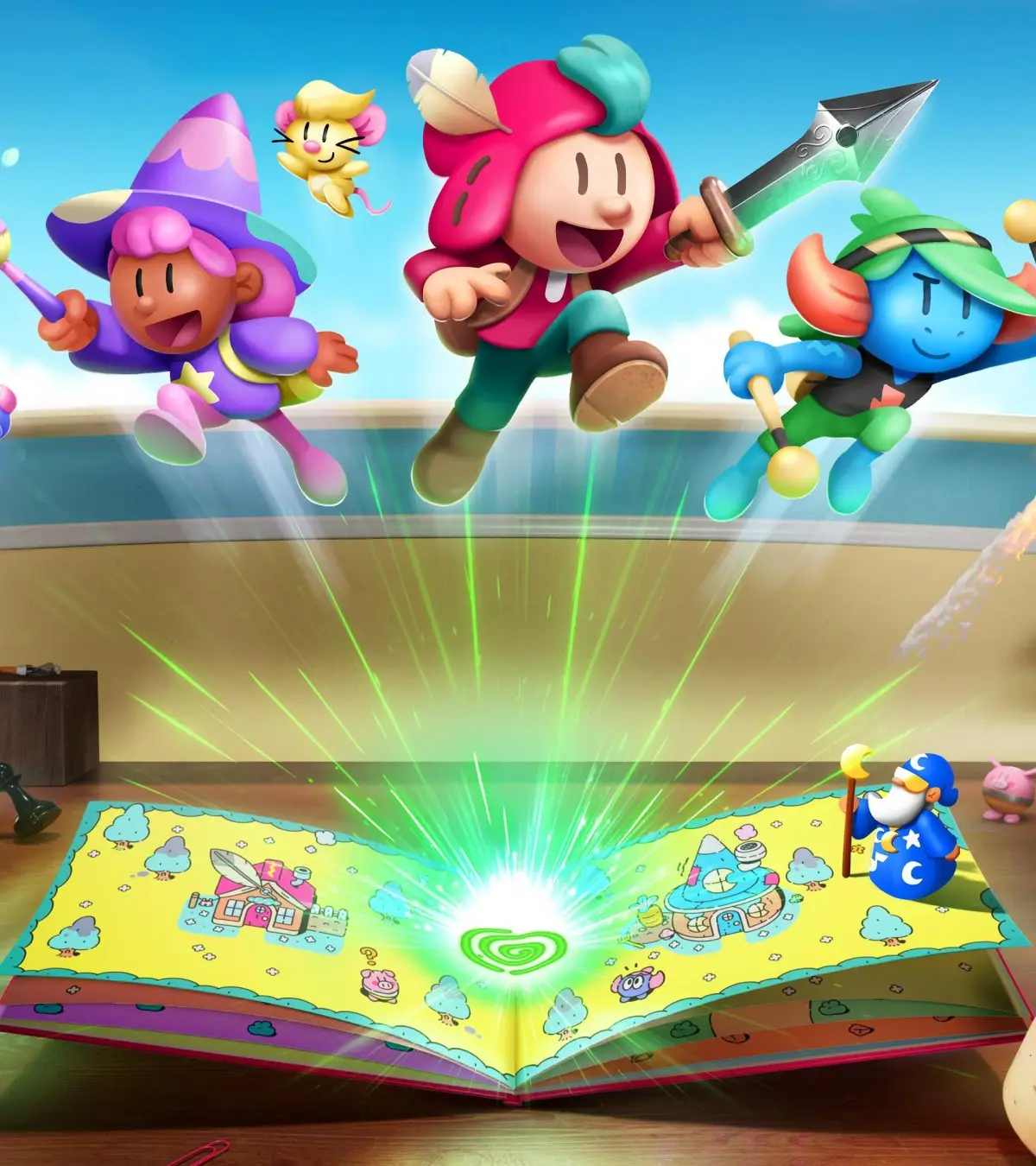
Yahtzee reviews The Plucky Squire, a debut indie game about a children's book character who enters the real world and manipulates the story to defeat an evil wizard.
This week on Fully Ramblomatic, Yahtzee reviews The Plucky Squire.
The Plucky Squire is a debut video game from an indie studio that centers on the concept of a children's picture book coming to life. In-universe, the game features Jot, a squire in a generic children's fantasy world, who is the protagonist of a series of children's books. The game begins with Jot's daily life in a top-down, Zelda 1-esque gameplay arrangement, drawn in a ligne claire style reminiscent of a minimalist Tintin book. Jot's routine involves a quest from a good wizard to defeat an evil wizard.
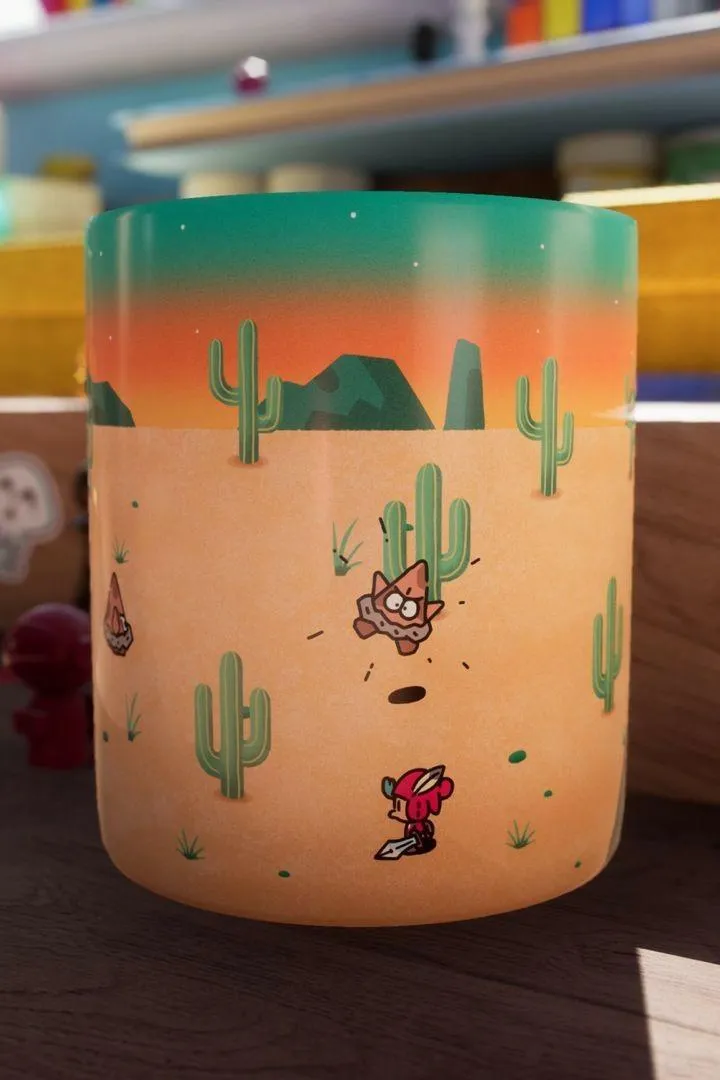
The narrative takes a turn when the evil wizard discovers they are living in a book and, to avoid inevitable failure, casts Jot out into the real world – the cluttered bedroom of the book's owner. Here, Jot becomes a 3D render of himself. The game allows players to use objects from the child's desk to return to the book's world and manipulate the story by altering words on the pages. For example, changing text like "A massive guard was blocking the way" to "A tiny ant was pushing a crumb" can alter the in-game reality. This word-swapping mechanic is presented as the core puzzle element.
Visually, The Plucky Squire is impressive, with the real-world environments being nigh-photorealistic and detailed, contrasting with the simplistic, authentic art style of the children's book sections. The transition between 2D and 3D gameplay is seamless. The writing is solid, featuring good gags and narration in the vein of Thomas Was Alone or The Stanley Parable.
However, the game is criticized for its excessive variety of mechanics that detract from the core premise. While manipulating the book's pages and words is on-theme, other gameplay segments, such as shooting minigames, boss fights resembling Super Punch-Out!! or Dr. Mario, rhythm games, and lengthy stealth sections, are considered off-theme and do not align with the established narrative or gameplay. These minigames often appear when support NPCs have their own story arcs concluded.
The game culminates in a final boss fight outside the book, which is described as playing Space Harrier against a giant alien butterfly, a scenario unrelated to the game's established setup. The reviewer suggests that the game suffers from "first game syndrome," being overly eager to showcase numerous ideas and references, which ultimately spreads its potential too thin.
Despite its flaws, The Plucky Squire is described as a fun and competently assembled game, though it does not reach its full potential due to its lack of focus.
100% Human-Written. AI Fact-Checked. Community Verified. Learn how AntMag verifies content