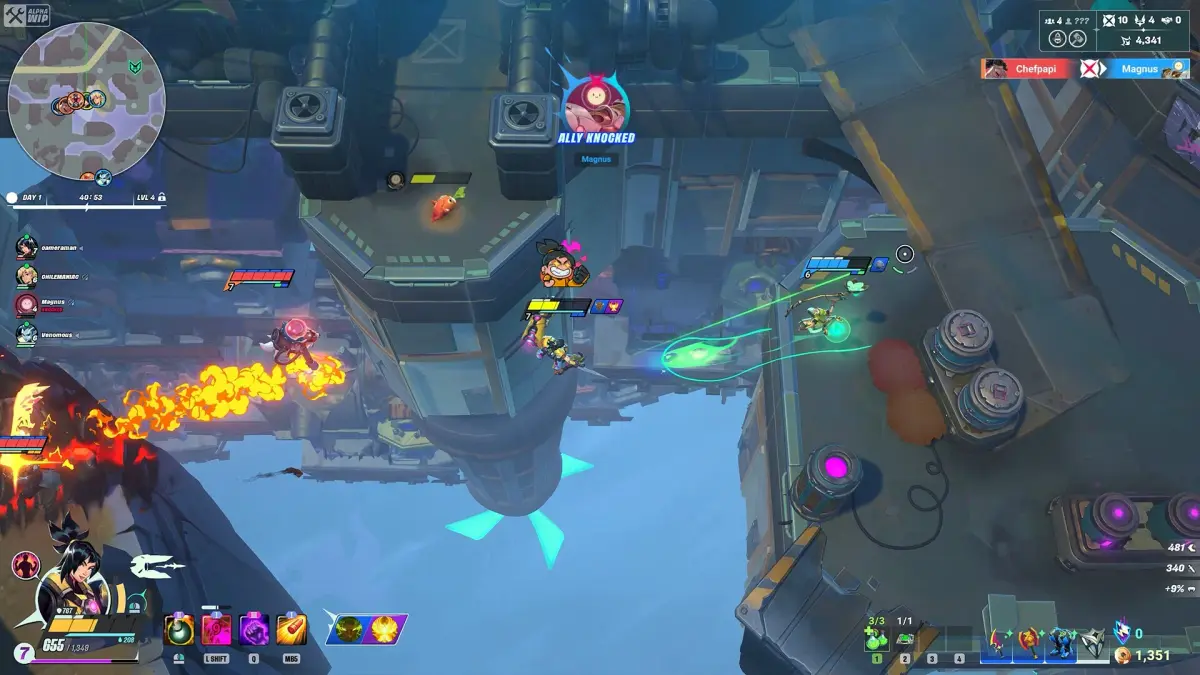

Enhance your SUPERVIVE gameplay with superior map awareness. Learn to use the minimap, sound cues, and enemy patterns for strategic advantage.
In the fast-paced world of SUPERVIVE, knowing your surroundings is as critical as mastering your Hunter's abilities. Map awareness encompasses understanding enemy positions, team movements, objective locations, and potential flanking routes. Cultivating strong map awareness allows for proactive plays, timely rotations, and crucial defensive maneuvers, ultimately leading to more successful engagements and victories.
Map awareness is the continuous mental compilation of information about the game state as it pertains to the map. This includes knowing where your teammates are, where the enemy team is likely to be, the current status of objectives, and the availability of resources like health packs or ammo caches. A key component is the minimap, which displays allied positions, known enemy sightings (often with a delay), and objective markers. Regularly glancing at the minimap, even during intense combat, is a habit that separates novice players from seasoned veterans. Beyond the minimap, also be aware of common enemy patrol routes, choke points, and advantageous positions. For instance, understanding that a certain elevated platform is a popular sniper perch allows you to either avoid it or prepare for an engagement there. Similarly, knowing that a specific corridor is frequently used for flanking maneuvers means you can set up an ambush or reinforce that area. Sound cues also play a significant role; the distinct sounds of enemy footsteps, ability activations, or gunfire can provide vital information about their presence and direction, even if they are not visible on the minimap. Effective map awareness allows for predictive play. If you know the enemy team is pushing towards a specific objective, you can anticipate their arrival and set up defenses or prepare a counter-attack. Conversely, if you notice a lack of enemy presence in a certain area, it might indicate a potential flank or a push on another objective. This proactive approach minimizes surprises and maximizes your team's ability to respond effectively to threats and opportunities. Developing strong map awareness is an ongoing process that involves conscious effort, practice, and learning from every match.
Components of Map Awareness:
- Minimap Usage: Regularly checking allied and enemy positions.
- Enemy Predictability: Understanding common routes and ambush spots.
- Objective Status: Knowing the state of control points or other objectives.
- Resource Management: Awareness of health packs, ammo, and power-ups.
- Sound Cues: Listening for enemy footsteps, abilities, and gunfire.
Developing Map Awareness:
- Frequent Minimap Checks: Make it a habit to glance at the minimap every few seconds.
- Learn Map Layouts: Study the different areas, pathways, and cover points of each map.
- Listen Actively: Pay attention to in-game audio cues for enemy presence.
- Anticipate Enemy Movements: Think about where the enemy team is likely to go.
- Communicate Information: Share your observations with your team to improve collective awareness.
100% Human-Written. AI Fact-Checked. Community Verified. Learn how AntMag verifies content