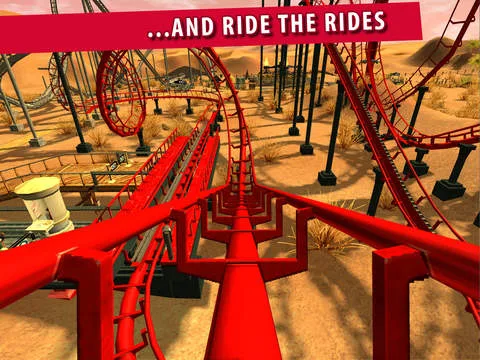
Welcome to RollerCoaster Tycoon 3, the ultimate theme park sandbox from Frontier Developments! In this 2004 classic, you're the mastermind behind the fun, tasked with building exhilarating rides, managing your park's finances, and keeping those eager guests happy. From designing the most stomach-churning coasters to strategically placing food stalls and shops, every decision impacts your park's success. It's a beautiful, fun, and sometimes spooky tycoon experience available on PC and iOS.
This guide dives deep into mastering the art of theme park creation and management. We'll cover everything from the moment-to-moment gameplay of building thrilling rides and maximizing profits to attracting massive crowds. Whether you're aiming to achieve those elusive Gold Medals or just want to build your dream park, this guide provides the strategies and insights you need to succeed.
0. LEGAL SECTION
Understand the legal notice and copyright for RollerCoaster Tycoon 3, including authorized websites and terms of use.
- 1This document is copyrighted 2004 by Andrew McKendry.
- 2It may not be copied, published, displayed, or edited without prior consent from the author, except for personal use on your own computer.
- 3Failure to comply with this notice may result in sanctions.
- 4The author is not responsible for any damage, loss, or injury caused by reading or displaying this document.
- 5Any resemblance to real persons is purely coincidental.
- 6This FAQ is currently authorized only for GameFAQs.com, Neoseeker.com, Cheaccc.com, and Dlh.net.
- 7If you wish to host this FAQ elsewhere or report infringements, contact the author.
- 8This guide is not official and has not been endorsed by Atari Interactive, Inc.
- 9Rollercoaster Tycoon copyright 2004 Atari Interactive, Inc. All rights reserved. © 2004 Chris Sawyer.
- 10Programming © 2004 Frontier Developments Ltd. Developed by Frontier Developments Ltd. All rights reserved.
- 11Manufactured and marketed by Atari, Inc., New York, NY.
- 12ATI and RADEON are trademarks and/or registered trademarks of ATI Technologies Inc.
- 13All other trademarks are the property of their respective owners.
- Always seek permission before republishing or distributing this guide.
- Report any unauthorized use of this guide to the author.
- Remember that this guide is unofficial and created by fans.
1. VERSION HISTORY
Explore the version history of RollerCoaster Tycoon 3, detailing updates from its initial development stages to future planned content.
Hey there! So you're curious about how RollerCoaster Tycoon 3 has evolved over time? Let's take a quick look at the version history. It's pretty interesting to see how the game grew from its early days.
What Was? (Past Updates)
Version 0.4 (December 29, 2004): This update was initially planned to be a big one, but some website hosting rights issues popped up. Because of that, and the delay, some sections might feel like they end a bit suddenly. It's a common issue when managing content rights!
Version 0.25 (December 19, 2004): This was the very first public release, and as the version number suggests, it was about 25% complete. At this stage, sections 1, 2, 3, 9, and 10 were mostly done, with parts of sections 4, 5, and 6 also being worked on. It was a solid start!
Version 0.0a (December 17, 2004): This is where it all began! The FAQ was started on December 17, 2004, around 10:08 PM. Back then, it was all about getting the basic structure down – legal bits, the table of contents, and figuring out the layout. The easiest part, right?
What Will Be? (Future Plans)
Looking ahead, there were plans to flesh out sections 4 and 6 further, and the coaster construction guide needed a proper conclusion. The list of rides was growing, but shops and other facilities were still on the to-do list. There was also mention of adding more to section 3, like the Fireworks MixMaster, as ideas came up. It shows the ongoing development and passion behind the game!
2. GAME OVERVIEW
Discover the features of RollerCoaster Tycoon 3, including its 3D engine, Coaster Cam, Fireworks MixMaster, Sandbox mode, and improved physics. Learn about technical specs and potential bugs.
RollerCoaster Tycoon 3 (RCT3) is the sequel to RCT 2, retaining the core gameplay of building a theme park, earning money, and constructing rollercoasters. It features a new 3D engine with free rotation, a variety of new rides, and innovative features like The Fireworks MixMaster and Sandbox mode.
A standout feature is the "Coaster Cam," allowing players to ride their own coasters and other rides from a first-person perspective. The game also includes a handy importing feature for RCT 1 & 2 coasters. The physics model has been significantly improved for more realistic behavior, though this can make coaster design more challenging. An improved user interface enhances the overall gameplay experience.
However, RCT3 was noted for being rushed, leading to numerous bugs. Some critical bugs, like fluctuating coaster ratings affecting guest willingness to pay, were later addressed by patches, which sometimes introduced new issues. Despite these problems, the game is considered to be on the verge of excellence, with the potential for classic status once bugs are resolved.
Technical Specifications:
- Minimum (Official): Pentium III 733 MHz, 128 MB RAM, 250 MB HDD, 32MB video card with hardware T&L.
- Minimum (Author's Recommendation): Pentium IV/AMD Athlon 1.2GHz, 256 MB RAM, 500 MB HDD, 64MB video card (GeForce FX5000+ or ATI Radeon 9000+).
- Author's System: Pentium IV 2.8GHz, 768 MB RAM, 240GB HDD, Sapphire ATI Radeon 9600 Pro 128MB.
- Graphics Card Requirement: Must be T&L compatible; integrated graphics may not work.
Ratings/Classifications:
- PEGI (Europe): 3+
- ESRB (Americas): E (Everyone) - comic mischief, mild violence.
3. GENERAL GAME STRATEGIES
Learn essential RollerCoaster Tycoon 3 strategies for park setup, layout, and fiscal management. Maximize profits and guest happiness from the start.
This section is a guide to setting up a popular park that earns money efficiently. While Sandbox mode offers unlimited cash, fiscal responsibility is key in career mode. It's recommended to complete the in-game tutorials for basic insights into controls, placing rides, paths, queues, and landscaping.
Aesthetics are valued highly, as they contribute to guest happiness and the overall park appearance.
3.1. The beginnings of a great park
Upon starting with an open landscape and unlimited cash, pause the game and decide on your park's theme and genre (e.g., multi-genre, themed, coaster-focused, or a mix). This decision influences all subsequent planning.
Immediately landscape the area with gentle hills, lakes, and foliage to create a more appealing environment. This can be edited later to accommodate rides, such as a monorail tour through a themed landscaped area.
Ensure your park inspector's thoughts are sent to the toolbar for critical park information.
Choose a primary path type for your park and delete the default gravel path unless intended. Widen paths to two or three units wide to prevent bottlenecks. Placing an information kiosk near the entrance allows guests to buy maps, improving navigation, and provides umbrellas to prevent dissatisfaction from rain.
Hire staff early: typically 2 mechanics and 2 janitors, with reduced salaries initially. Security guards are needed later when vandals appear (triggered by benches, lights, or bins). Entertainers are unnecessary until park attendance increases significantly.
Consider using publicity to boost initial guest numbers, but be cautious with spending in career mode due to potential high costs.
3.2. Initial layout
Use a wide path from the entrance to manage guest flow and avoid bottlenecks. Placing an information desk near the entrance is also beneficial. A common layout involves a wide entrance path, potentially with a "W" shape, filled with foliage or small, gentle rides to improve guest moods immediately.
The first rides should be gentle, placed close to the entrance, to acclimate guests. These rides often have high capacities and moderate ratings, appealing to a broad range of guests.
Place major rollercoasters and thrilling rides further into the park to encourage exploration. Intense rides at the start can lead to guest nausea and vomit near the entrance, potentially deterring new visitors. Guests will naturally pass through the park to reach these rides.
Place an ATM near the entrance to help guests who run out of money quickly.
As you expand outwards and the initial area becomes denser with rides, start placing food and drink shops. Guests enter with empty hunger and thirst bars, which increase after riding intense rides. Nauseating rides can increase the hunger bar by half, so position them further into the park.
Toilets should also be placed near the entrance/exit, as guests typically enter with low bladder fullness.
3.3. Pricing and fiscal management
Pricing is an art that improves with experience. If you charge an entrance fee, guests' tolerance for ride prices decreases, requiring you to adjust ride prices accordingly.
Similar guides you might like
100% Human-Written. AI Fact-Checked. Community Verified. Learn how AntMag verifies content