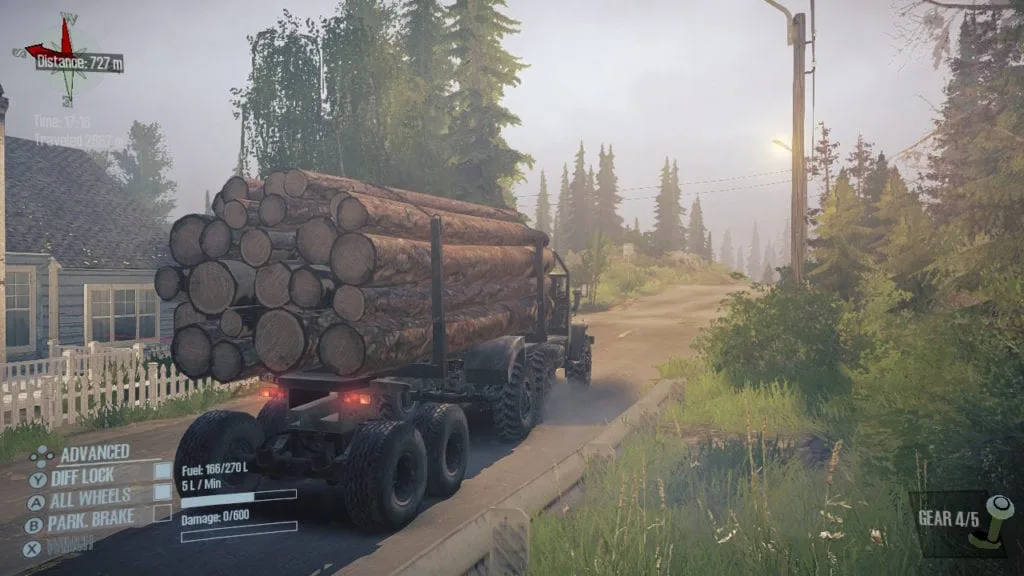
Complete MudRunner's Deliver Medium Logs objective. Learn to select the right trucks and attachments for stability and navigate challenging terrain.
The "Deliver Medium Logs" objective is a core challenge in MudRunner, requiring a blend of careful planning, vehicle selection, and expert navigation. Unlike short logs, medium logs demand specific attachments and present a greater stability challenge due to their length and weight. Success hinges on understanding the terrain, choosing the right truck for the job, and mastering the art of winching and recovery.
Understanding the Objective & Core Mechanics
Your primary goal is to transport a specific quantity of medium logs from designated log stations to a lumber mill. Each map will have unique log station locations and a single lumber mill. The challenge lies not just in the distance, but in the often-treacherous terrain that separates these points.
- Log Stations: These are marked on your map and are where you'll load your medium logs. They typically require you to back your truck and trailer into a specific zone to initiate loading.
- Lumber Mill: This is your destination. Once you arrive with your loaded medium logs and park in the designated drop-off zone, the logs will be delivered, contributing to your objective progress.
- Log Quantity: Medium logs usually require 4 points per load. The total objective often demands 8 or 16 points, meaning 2 to 4 trips depending on your trailer capacity.
- Attachments: Medium logs require specific attachments. You'll need a Medium Log Carrier (for trucks that can carry logs directly) or a Medium Log Trailer (for trucks that pull trailers). Some trucks can also use a Medium Log Cart which attaches to a log carrier.
Recommended Vehicle Selection for Medium Logs
Choosing the right truck is paramount. While heavy-duty trucks can certainly haul medium logs, they are often overkill, less fuel-efficient, and can be cumbersome on tighter paths. Prioritize trucks with a good balance of power, fuel efficiency, and maneuverability for this objective.
Primary Recommendations (Balanced Performance):
- Kamaz-6520 (K-6520): An excellent all-rounder. Good power, decent fuel economy, and can equip the Medium Log Carrier directly. Its 6x4 drivetrain is effective on most terrain.
- MAZ-537 (D-537): A powerful 8x8 truck with excellent traction. It can equip the Medium Log Carrier and handle very difficult terrain. It's more fuel-thirsty than the K-6520 but offers superior off-road capability.
- URAL-4320 (C-4320): A reliable 6x6 workhorse. It can equip the Medium Log Carrier and is a solid choice for most medium log deliveries. Good balance of power and fuel efficiency.
- KrAZ-255 (E-255): Another strong 6x6 option, similar to the URAL but often with slightly more power. Can also equip the Medium Log Carrier.
Trailer Pullers (Requires a separate trailer):
If your chosen truck doesn't have a direct log carrier attachment, you'll need a truck capable of pulling the Medium Log Trailer.
- MAZ-7310 (D-7310): A massive 8x8 truck, excellent for pulling heavy trailers. While powerful, its size can be a hindrance on narrow paths.
- Kamaz-6520 (K-6520) with Trailer Hitch: The K-6520 can also be configured to pull the Medium Log Trailer, offering flexibility.
Situational Recommendation (Extreme Terrain):
- K-700 (B-700): While incredibly powerful and capable of traversing almost any terrain, the K-700 is often overkill for medium logs. Its high fuel consumption and limited maneuverability make it less ideal for general medium log hauling. Reserve this beast for maps with exceptionally challenging terrain, deep mud, or steep inclines where other trucks struggle. It can pull the Medium Log Trailer with ease.
Essential Attachments for Medium Logs
You cannot deliver medium logs without the correct equipment. Ensure your chosen truck is equipped with one of the following:
- Medium Log Carrier: This attachment mounts directly onto the truck chassis. It allows the truck to carry a full load of medium logs without needing a separate trailer. Many of the primary recommended trucks can use this.
- Medium Log Trailer: This is a separate trailer that attaches to a truck's trailer hitch. It's often used by trucks that don't have a direct log carrier option or when you want to use a dedicated trailer-pulling truck.
- Medium Log Cart: Less common, this attachment connects to a Medium Log Carrier on another truck, allowing for an articulated log train. This is typically for very long loads or specific challenges. For a standard objective, a single Medium Log Carrier or Trailer is sufficient.
Step-by-Step Walkthrough: Delivering Medium Logs
- Initial Reconnaissance (Scout Vehicle Recommended):
- Unlock the Garage: If not already unlocked, your first priority on any map is to reach and unlock the garage. This provides repair, refuel, and vehicle change options.
- Explore the Map: Use a lightweight, agile scout vehicle (e.g., UAZ-469, B-6A) to explore the map. Uncover all watchpoints to reveal the full map layout.
- Identify Key Locations: Locate the log stations (where you pick up logs) and the lumber mill (where you drop them off). Note any fuel stations or repair points along potential routes.
- Pathfinding: Crucially, scout potential routes between the log station and the lumber mill. Look for the least treacherous path, avoiding deep mud pits, steep inclines, or narrow passes if possible. Mark difficult sections on your map.
- Vehicle Preparation at the Garage:
- Select Your Truck: Based on your reconnaissance, choose a suitable medium log truck (e.g., K-6520, D-537).
- Equip the Correct Attachment: Install either the Medium Log Carrier or attach a Medium Log Trailer to your truck. Double-check this before leaving the garage.
- Refuel and Repair: Ensure your chosen truck is fully fueled and repaired.
- Traveling to the Log Station:
- Drive your empty truck (with log attachment) to the designated log station. Follow your scouted route.
- Practice careful driving, especially through any challenging sections you identified. This is your chance to learn the terrain without the added burden of a heavy log load.
- Loading Medium Logs:
- Once at the log station, carefully back your truck (or trailer) into the marked loading zone.
- An on-screen prompt will appear to "Load Medium Logs." Confirm to load. This will typically add 4 points to your log count.
- Transporting Logs to the Lumber Mill:
- This is the most critical phase. Your truck will be significantly heavier and less stable.
- Drive Slowly and Deliberately: Avoid sudden turns or accelerating too quickly, especially on uneven terrain.
- Utilize AWD and Differential Lock: Engage All-Wheel Drive (AWD) and Differential Lock (Diff Lock) as needed for improved traction in mud, water, or on inclines. Remember that Diff Lock can reduce steering ability.
- Master Winching: The winch is your best friend. Use it proactively to assist with traction, pull yourself out of sticky situations, or prevent tipping. Attach to trees, other trucks, or anchor points.
- Navigating Obstacles:
- Mud Pits: Approach slowly, engage AWD/Diff Lock, and maintain momentum. If stuck, winch to the nearest solid anchor.
- River Crossings: Scout depth first (with a scout vehicle if unsure). Enter slowly, maintain a steady pace, and be prepared to winch if your wheels lose traction. The river crossing near the garage is a common early challenge; use the winch extensively here.
- Steep Inclines/Declines: Use low gears. On inclines, maintain momentum. On declines, use engine braking (lower gears) to control your speed and prevent runaway.
- Recovery: If you get stuck or tip over, don't panic.
- Winching: Often, a well-placed winch point can right a tipped truck or pull you free.
- Another Truck: If winching isn't enough, you may need to bring another truck to assist in recovery. This is where having a heavy-duty recovery vehicle (like a K-700 or D-537) can be invaluable.
- Delivering Logs at the Lumber Mill:
- Carefully drive your loaded truck into the marked drop-off zone at the lumber mill.
- The logs will automatically be delivered, and your objective progress will update.
- Repeat as Necessary:
- Depending on the total log points required, you will likely need to make multiple trips. Return to the garage to refuel/repair if needed, then head back to the log station for another load.
Common Pitfalls & Pro Tips
- Overloading: While not strictly possible with the game's loading mechanics, attempting to carry more than your truck can handle (e.g., using a small truck with a large trailer) will lead to instability and frequent tipping.
- Ignoring Reconnaissance: Blindly driving into unknown territory with a loaded truck is a recipe for disaster. Always scout.
- Fuel Management: Keep an eye on your fuel gauge. Running out of fuel in the middle of nowhere with a loaded truck is a major setback. Plan fuel stops or bring a fuel trailer.
- Patience is Key: MudRunner is not a race. Slow, deliberate driving and careful planning will save you far more time than reckless speed.
- Use the Map: Constantly refer to your map to plan your next move, identify winch points, and track your progress.
- Practice Winching: The winch is your most powerful tool. Practice using it effectively from different angles and with various anchor points.
100% Human-Written. AI Fact-Checked. Community Verified. Learn how AntMag verifies content