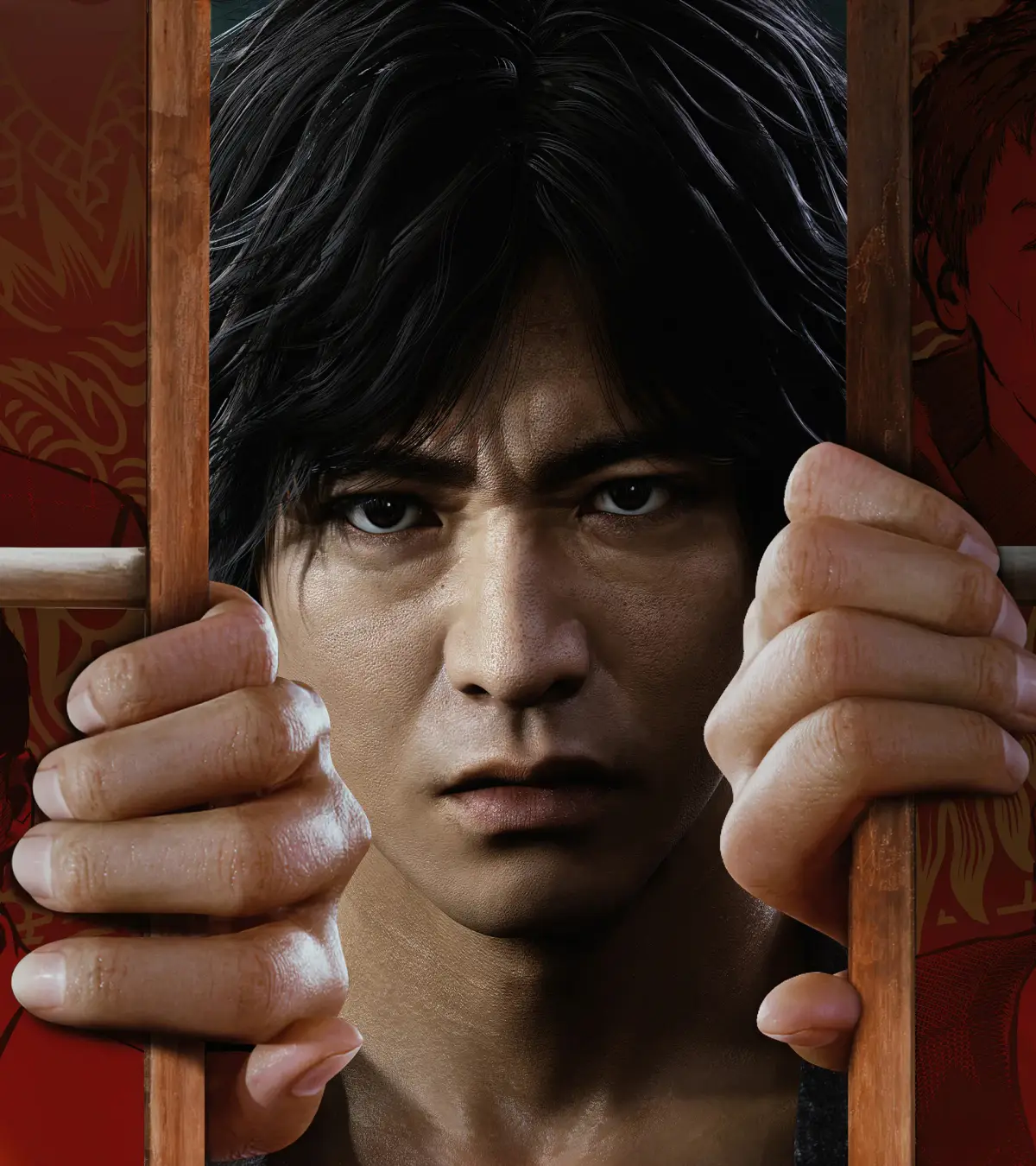
Explore the Lost Judgment Glossary of Terms. Understand Japanese cultural nuances, yakuza slang like 'Aniki' and 'Gokudo', and game-specific vocabulary.
Here I provide some terms that you'll read in the subtitles and also might pick up in the actual language, further explaining how some of those terms are translated to subtitle.
- "Aniki"
- Literally "big brother". Younger brothers tend to refer to older brothers with this term in Japanese, and in the yakuza world and even the business world, someone you refer to as "aniki" is the guy you tag along with to learn the ropes from. Yagami refers to Kaito as his "old aniki".
- Bento
- In short, a boxed lunch. Bento are typically prepared in rectangle containers, usually with a base of rice or noodles, then adding meat, veggies, and so forth. One can buy bento from a convenience store, or in the case of schoolkids, their parents could prepare one for them.
- Cabaret Clubs and Host Clubs
- Cabaret clubs, sometimes known as "hostess clubs", are a concept originally derived from bars and taverns. In a Japanese bar, a hostess was simply someone employed by the bar who would make sure the guests are having a good time, and this would inevitably lead to engaging in polite and sometimes flirtatious conversation.
That said, your average hole-in-the-wall bar isn't a cabaret club by any stretch. The Japanese in their efficiency decided that having bigger clubs with more hostesses allowed multiple types of customers to be served by multiple types of hostesses given what they find pleasing. The "Grand" in Sotenbori is an example of a full cabaret, much like a Western concert hall or theater, with acts on stage, a large hall, and a fair-sized stable of hostesses to service the customers.
The cabaret clubs of modern Japan are the result of some genius realizing that guests weren't coming to the clubs for the alcohol or the shows; they were coming for the ladies. Enter the modern cabaret club, where the process is distilled down to the guest (or group of guests) being paired up with hostesses from the moment they enter. These hostesses will sit down with them at their table and light cigarettes, pour drinks, sing karaoke, and engage in flirtatious conversation in order to keep their customers entertained. Sometimes, the hostesses are expected to go on paid dates outside the club with their regular customers. This is the point where the service starts to veer towards "sex work", but not explicitly. Officially, it's part of the Japanese "water trade" and can be considered a step below regular sex work.
Host clubs then were created as a distaff counterpart to cabaret clubs, where women could pay for a man's company. Often, it would be hostesses themselves who would partake of host clubs. - Family
- In the case of the yakuza, a family ("-kai", or "-gumi") is quite simply an organization with a patriarch at its head. The family could be focused around one specific business, or could have whole neighborhoods in their racket. The family could be small and of low influence, or it could stretch back towards the beginning of the organization and have great power. Smaller families can sometimes go about their business without any great amount of notice, as long as they know their place and don't make waves.
- Girls' Bar
- A slight evolution on cabaret clubs. In the case of a Girls' Bar, instead of sitting down side-by-side, there's a bit more safety as the girl in question is behind the bar, and is the one serving drinks. There's still flirtatious conversation to be had, but it's basically a bit more distant.
- "Gokudo"
- Literally meaning "the ultimate path", but also commonly meaning just "gangsters", members of the yakuza will typically refer to themselves as this. Sometimes when the subtitles say "yakuza", you'll instead hear "gokudo". When the characters say this word, they typically mean that their perspective of their organization is favorable or honorable.
- High School in Japan
- For one, high school in Japan is three years, usually with students aged from 15-18. The year starts in April and concludes in March. One of the most important aspects I think for this story's purpose is establishing that high school in Japan is a bit more of a "privilege" than a "right". Students have to apply and actual attendance isn't compulsory. When you get the news that students haven't been showing up to class for a long time, people tend to care far less in Japan than they might in a Western country. Also, getting involved in a club isn't so much a quick extracurricular activity as much as a major factor of social and work life for students. A student in a club tends to have serious time commitments to their single club, preventing them from doing most anything else.
- Honorifics
- Honorifics exist on a much greater hierarchy in polite Japanese society than Western society's "Mister" or "Mrs." Almost everyone is addressed with some sort of honorific attached to their name. Furthermore, in the case of this game series at least, men tend to be referred to by their family name (Yagami, Genda, Kaito), whereas women tend to be referred to by their given name (Saori, Mafuyu). If someone refers to a character without an honorific, they're either very close with that character or being very rude on purpose. Here's a list of common honorifics you'll find in this game, although plenty more exist:
- "-bo" - Roughly a colloquial way of "boy". Kaito calls Yagami "Ta-bo", which the localization translates to "Tak". In the end, it's pretty much a nickname, and indicative of Kaito and Yagami's friendship as well as the friendships he has with other locals.
- "-chan"
- An honorific typically used as a diminutive. Most often you'll find this used by adults when addressing children. One might think it could mean "My dear" or "Little". As children get older, boys usually are addressed as "-kun", but girls tend to hold onto being addressed as "-chan" into their adulthood.
- "-tan"
100% Human-Written. AI Fact-Checked. Community Verified. Learn how AntMag verifies content