
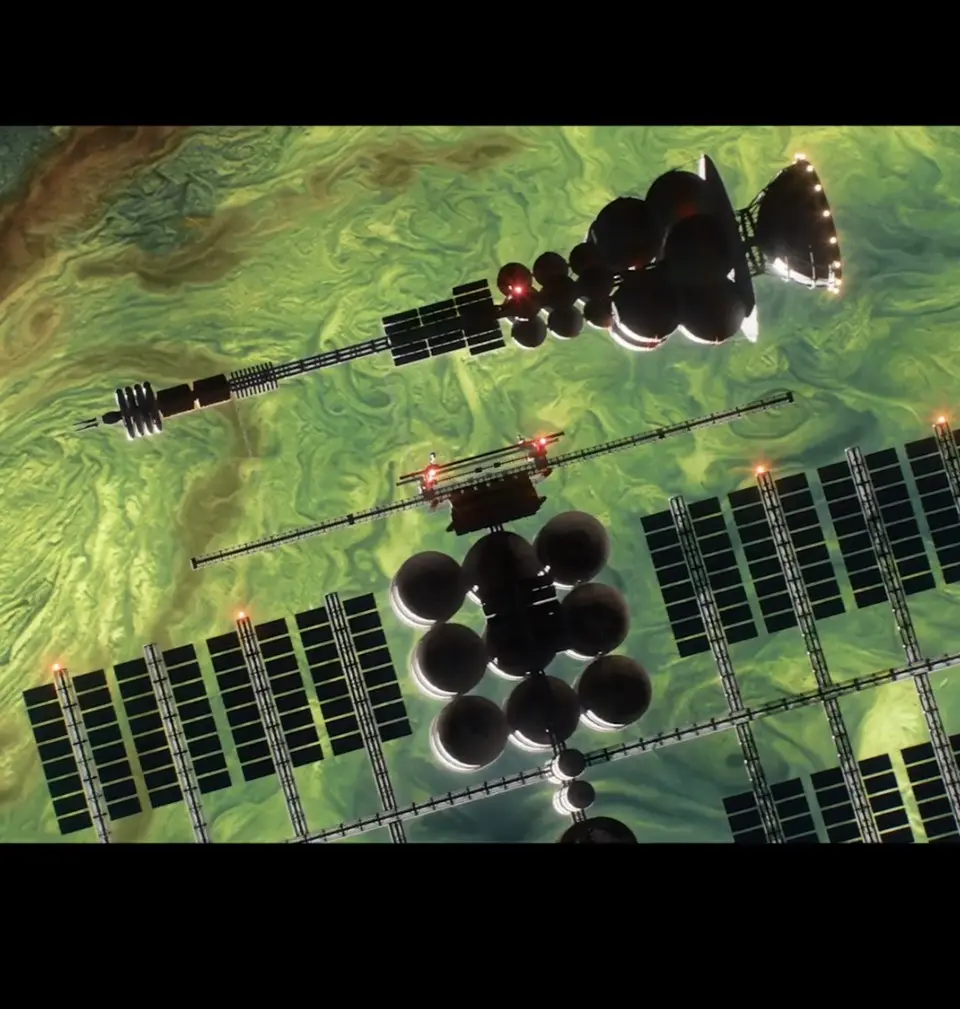
Don't let Delta-V get you down! This guide breaks down the essentials of managing your fuel and thrust in KSP2, helping you plan efficient missions and reach your goals.
Alright, so you've probably heard the term "Delta-V" thrown around a lot in Kerbal Space Program 2. It sounds a bit intimidating, right? Like some kind of space-faring boss battle? Don't worry, it's not as scary as it sounds. Think of Delta-V as your fuel budget for space. It's the total change in velocity your rocket can achieve. The more Delta-V you have, the more maneuvers you can perform, and the further you can go.
The real "tyranny" comes in when you realize you can't just slap on a giant engine and hope for the best. Every part you add, every bit of fuel you carry, affects your rocket's mass, which in turn affects how much Delta-V you actually *get* out of your engines. It’s a balancing act!
Why Delta-V Matters
- Mission Planning: Knowing your Delta-V helps you figure out if your rocket is even capable of reaching its destination and performing the necessary burns.
- Efficiency: A well-planned rocket with the right amount of Delta-V is more efficient, saving you precious resources (and Kerbal lives!).
- Understanding Limits: It helps you understand the limitations of your current designs and what you need to improve for future missions.
Getting Started with Delta-V
The easiest way to get a handle on Delta-V is to use the in-game tools. When you're in the Vehicle Assembly Building (VAB) or the Space Plane Hangar (SPH), you'll see information about your rocket's Delta-V. Keep an eye on this number!
Pro Tip: Don't just aim for the bare minimum Delta-V. Always pack a little extra! You never know when you'll need to correct an orbit or deal with an unexpected anomaly. A good rule of thumb is to have at least 10-15% more Delta-V than your mission plan calls for.
Common Delta-V Needs (Rough Estimates)
These are just ballpark figures, and your actual needs might vary based on your rocket's efficiency and how you fly:
- Kerbin Orbit: Around 3,400 m/s
- Mun Transfer: Add about 800 m/s to Kerbin Orbit Delta-V
- Minmus Transfer: Add about 600 m/s to Kerbin Orbit Delta-V
- Duna Transfer: This one's a bigger jump, usually requiring around 5,500 - 6,000 m/s from the launchpad.
The Tyranny Explained: Staging and Mass
The core of the Delta-V challenge lies in staging. You want to shed mass as you burn through fuel. That's why rockets have multiple stages:
- First Stage: This is your heavy lifter, designed to get you off the launchpad and through the thickest part of the atmosphere. It needs a lot of thrust but doesn't need to be super efficient in terms of Delta-V.
- Upper Stages: These stages are lighter and more fuel-efficient. They're responsible for circularizing your orbit, transferring to other planets, and performing course corrections.
As you discard empty fuel tanks and engines, your rocket becomes lighter, and the remaining engines become much more effective at accelerating you. This is where you get the most "bang for your buck" in terms of Delta-V.
Common Pitfalls to Avoid
- Over-engineering: Don't pack more fuel than you need. That extra mass will require even more fuel to lift, creating a vicious cycle.
- Under-engineering: Not having enough Delta-V is the most common mistake. You'll end up stranded or unable to complete your mission. Always check your Delta-V!
- Inefficient Engines: Some engines are better suited for certain tasks. Lower Specific Impulse (Isp) engines are good for high thrust (getting off the ground), while high Isp engines are great for efficiency in space.
Mastering Delta-V is a journey, not a destination. Keep experimenting, keep learning from your successes and failures, and soon you'll be planning interplanetary missions like a seasoned KSP veteran. Good luck out there, Commander!
100% Human-Written. AI Fact-Checked. Community Verified. Learn how AntMag verifies content