
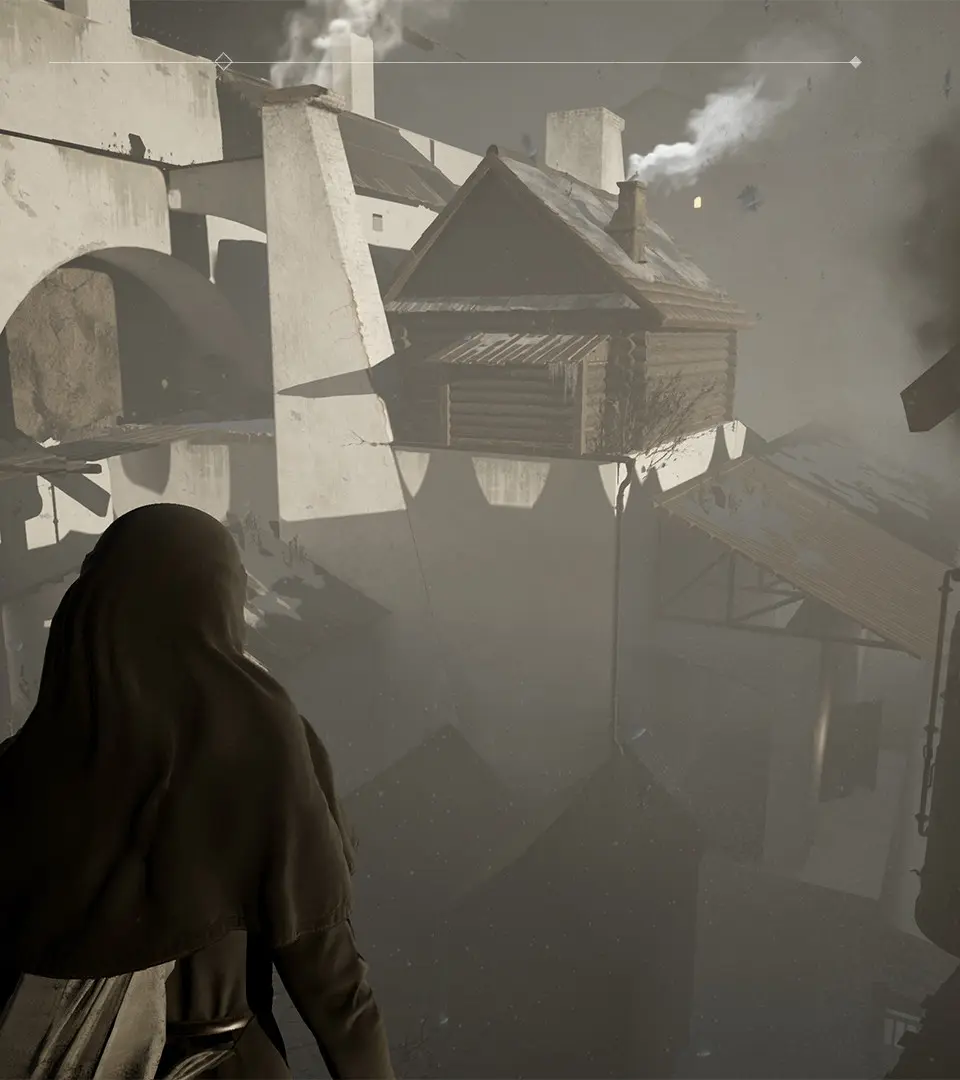
Navigate narrative confrontations in Indika. Learn strategies to overcome psychological landscapes and environmental challenges that test Indika's resolve.
Antagonistic Elements and Navigational Strategies
Indika's journey is not one of traditional combat, but rather a deeply personal and often harrowing experience navigating psychological landscapes and environmental challenges. While there are no enemies in the conventional sense to defeat with weapons, certain recurring elements and narrative-driven confrontations will test Indika's resolve and require specific, often evasive, strategies. Understanding these challenges and how to overcome them is key to progressing through the game's surreal world.
The Recurring Dog Confrontations
The most persistent and tangible antagonistic force Indika faces is a relentless, often spectral, dog. These encounters are designed to evoke fear and urgency, pushing Indika to her limits through chase sequences and environmental puzzles rather than direct combat.
- Nature of the Threat: The dog represents primal fear, guilt, or a manifestation of Indika's inner turmoil. It is not a creature to be fought, but one to be outmaneuvered and escaped.
-
Primary Strategy: Evasion and Environmental Interaction.
- Observation is Key: Pay close attention to the dog's barks, growls, and visual cues. Its proximity and aggression will be clearly telegraphed.
-
Utilize the Environment: The game's environments are designed with escape routes in mind. Look for:
- Narrow Passages: The dog may be too large to follow Indika through certain tight gaps or openings.
- Obstacles: Interact with levers, push crates, or break weak barriers to temporarily impede the dog's pursuit.
- Verticality: Climbing to higher platforms or dropping to lower levels can create distance.
- Doors and Gates: Quickly closing doors or activating mechanisms to lock gates behind you can buy crucial seconds.
- Running and Dodging: Maintain momentum and use quick directional changes to avoid the dog's lunges. Sprinting is often necessary, but be mindful of stamina if applicable in certain sequences.
-
Puzzle Elements: Some dog encounters are integrated with environmental puzzles. You may need to:
- Activate Switches: Triggering mechanisms to open new paths or disable traps while being pursued.
- Solve Light Puzzles: In certain surreal sequences, manipulating light sources might be required to deter the dog or reveal an escape route.
- Navigate Complex Layouts: Learning the layout of an area through trial and error is often part of the challenge.
-
Specific Locations and Scenarios:
- The Monastery Village: Early encounters often involve navigating the winding paths and dilapidated buildings of the village. Look for opportunities to duck into houses or behind sturdy structures.
- The Forest and Caves: These areas present more natural obstacles. Utilize dense foliage for cover and be aware of treacherous drops or narrow cave entrances.
- The Industrial/Factory Settings: These environments offer more mechanical elements, such as conveyor belts, moving platforms, and breakable machinery that can be used to your advantage.
-
Common Pitfalls:
- Getting Cornered: Always be aware of your surroundings and potential escape routes.
- Hesitation: Indecision can be fatal. Act quickly and decisively.
- Ignoring Environmental Cues: The game often subtly guides you towards the correct path or interaction point.
Environmental Hazards and Psychological Obstacles
Beyond the dog, Indika must contend with the game's surreal and often dangerous environments, which act as passive antagonists. These require careful observation and interaction.
- Nature of the Threat: These are not sentient enemies but rather manifestations of the game's themes – spiritual decay, existential dread, or the harsh realities of the world.
-
Types of Hazards:
- Traps: Pressure plates, collapsing floors, falling debris, and spike pits.
- Environmental Puzzles: Requiring manipulation of objects, levers, or light to progress.
- Unstable Terrain: Areas prone to collapse or difficult to traverse.
- Psychological Illusions: Environments that shift or present false paths, testing Indika's perception.
-
Strategies:
- Slow and Steady: For unknown or hazardous areas, proceed with caution. Observe the ground for tripwires or unstable sections.
- Test the Environment: If unsure about a platform, try nudging an object onto it or carefully stepping onto the edge first.
- Listen for Audio Cues: Creaking sounds, dripping water, or distant rumbling can indicate danger.
- Examine Everything: Look for interactive elements, hidden switches, or subtle visual clues that indicate a solution.
- Patience with Puzzles: Environmental puzzles often require a logical approach. If stuck, re-examine the elements in the room and consider their potential interactions.
- Embrace the Surreal: Some sequences may defy conventional logic. Trust your instincts and be willing to experiment with unusual actions.
The Role of Faith and Inner Strength
While not a direct "weakness" or "strategy" in the combat sense, Indika's faith and her internal dialogue with the demon are crucial for overcoming many challenges. These elements often manifest as narrative choices or internal monologues that can influence the environment or Indika's resolve.
- Interaction: Pay attention to the dialogue prompts and choices presented. Your decisions can sometimes subtly alter the immediate environment or Indika's emotional state, which can impact her ability to navigate certain sections.
- Inner Monologue: The conversations with the demon often provide context or hints, though they can also be misleading. Discernment is key.
100% Human-Written. AI Fact-Checked. Community Verified. Learn how AntMag verifies content