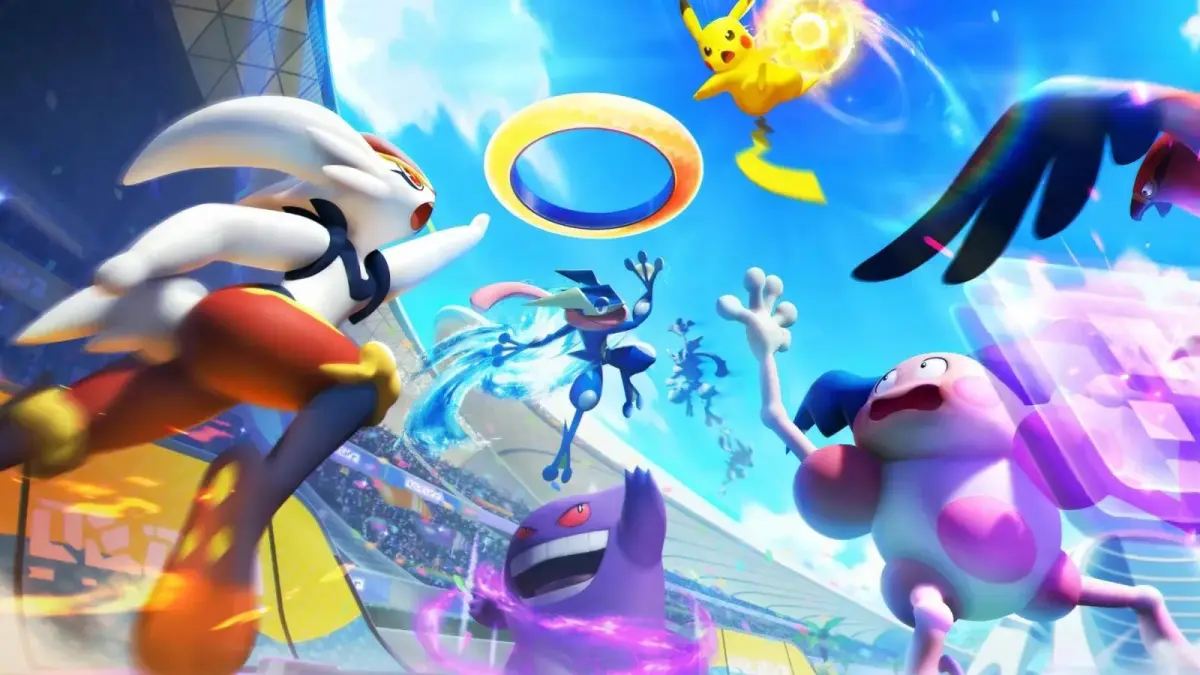
Welcome to Pokémon Unite, the free-to-play MOBA where you and four other players team up as Pokémon to score points in a set time limit. It’s a unique take on the genre, blending familiar Pokémon elements with strategic team-based combat. Master the battlefield, secure objectives, and lead your team to victory in this fast-paced strategy experience.
This guide dives deep into everything you need to know to dominate. We’ll cover essential mechanics, crucial mid-game strategies, and how to handle the thrilling Zapdos showdown. Get ready to equip yourself with the knowledge needed to outplay opponents and climb the ranks.
Umbreon Guide (NS) by TwilightPhoenix
Comprehensive guide to playing Umbreon in Pokemon Unite, covering moves, items, strategy, and more. Updated 03/17/2026.
This guide covers Umbreon in Pokemon Unite, offering insights into its capabilities and optimal usage. It is updated as of 03/17/2026.
- Refer to the Terminology section for definitions of common game terms.
- Explore the Moves section for detailed descriptions of Umbreon's abilities.
- Consult the Battle Items and Held Items and Emblems sections for optimal equipment choices.
- Review the Move Selection and General Strategy sections for effective gameplay approaches.
- Check the FAQ for answers to common questions about Umbreon.
Overview (2)
Learn Umbreon's strengths and weaknesses in Pokemon Unite. A versatile support tank that excels in team-oriented play.
Umbreon is a highly flexible pick in Pokemon Unite that matches well into nearly every team composition and counters most opposing teams. It is very durable and difficult to defeat without focused effort or dedicated tank-shredding Pokemon. Umbreon can passively ignore some forms of crowd control (debuffs that hinder movement or actions) a few times per match. As a Defender, it can be surprisingly mobile with the move Foul Play, which can also displace enemies a short distance. Umbreon can trap enemies in a small area and prevent their escape with Mean Look, making it quite good at zoning opponents. The move Snarl can debuff enemy damage output and stun them. With Wish, Umbreon can slot into a healer role or function as a healer/tank hybrid. Its Unite move uniquely steals enemy shields. Umbreon hits its power spikes earlier, following a level 4-6-8-10-12 progression curve, and fully evolves at level 4. It passively heals out of combat starting at level 8 and is generally easy to pick up and play.
However, Umbreon's Eevee stage, though brief, is weak. Umbreon has low damage output, even when building items to increase it, and struggles significantly with last-hitting farm and objectives, being slow to solo farm and awful at soloing objectives. It is very dependent on teammates as it lacks the ability to carry a match alone. All of its crowd control abilities have a wind-up period before taking effect. Its Unite move provides unusually low self-shielding if it cannot steal shields from enemies. The passive self-healing is slow and is shut off by any incoming or outgoing damage. Umbreon can struggle to engage on long-ranged teams and cannot stand toe-to-toe with late-game scaling Pokemon on its own. It is vulnerable to being poked down, especially without Wish, and can struggle to protect allies from multiple divers. Mastering Umbreon's kit requires significant nuance, and it is less effective in specific roles than specialized Pokemon (e.g., a weaker healer than Blissey, a weaker bodyguard than Slowbro, or a weaker initiator than Mamoswine).
- Consider Umbreon if you value flexibility, durability, and team-oriented play.
- Umbreon's strengths include its adaptability, resilience, crowd control, and ability to support the team in various ways.
- Be mindful of Umbreon's weaknesses, such as its low damage, difficulty securing objectives, and dependence on teammates.
- Umbreon evolves at level 4 and has key power spikes at levels 4, 6, 8, 10, and 12.
- Umbreon's passive healing starts at level 8 but is interrupted by combat.
Umbreon Guide (NS) by TwilightPhoenix (2)
Pokemon Unite Umbreon guide covering moves, battle items, held items, emblems, move selection, and general strategy. Updated 03/17/2026.
- 1Overview: This section introduces Umbreon as a playable Pokemon in Pokemon Unite.
- 2Terminology: Familiarize yourself with common Pokemon Unite terms used throughout the guide.
- 3Moves: Details Umbreon's available moves, including their effects and cooldowns.
- 4Battle Items: Explains the function and recommended use of Battle Items for Umbreon.
- 5Held Items and Emblems: Covers the best Held Items (equipment that provides passive bonuses) and Emblems (collectible items that grant stat boosts) to optimize Umbreon's performance.
- 6Move Selection: Provides guidance on choosing the most effective combination of moves for Umbreon based on the situation.
- 7General Strategy: Offers advice on how to effectively play Umbreon during matches, including positioning, target prioritization, and team fight engagement.
- 8FAQ: Addresses common questions players may have about using Umbreon.
- 9Outro: Concludes the guide with final thoughts and recommendations.
- Pay close attention to the recommended Held Items and Emblems to maximize Umbreon's effectiveness.
- Experiment with different Move Selections to find what best suits your playstyle and the current match.
- Understanding Umbreon's role in team fights is crucial for success.
Terminology
Learn essential Pokemon Unite MOBA terms like ADC, AoE, CC, and Feed. Understand key mechanics for new players.
ADC - Attack Damage Carry: Refers to ranged characters with low HP and defenses who primarily rely on basic attacks for damage. Cinderace and Mewtwo Y are typical examples. Some Pokemon can flex into this role with the right move choice, such as Aurora Veil Alolan Ninetales.
AoE - Area of Effect: Refers to anything that affects an area. This is not always a circular area and can be different shapes. Slow Smoke, Pikachu's Thunder, Wigglytuff's Dazzling Gleam, and Leafeon's Solar Blade are all examples.
Assassin: A character with high burst damage and high mobility but generally frail. These are usually Speedsters, like Zoroark, but some other characters can fit the role like Greninja running Surf.
Auto-Attack: In Pokemon Unite, these are referred to as Basic Attacks.
Backcap: The act of attempting to sneak a score in when the enemy can't react. Backcapping is a legitimate strategy, but it tends to be a reviled play in solo queue as most players attempting having poor timing or map awareness and often end up costing their team more than the score gets, assuming they successfully score at all. Since a bad backcap can lose a match, it's strongly advised to not attempt it if you have any doubt it'll succeed.
Blind: A soft CC (Crowd Control) effect that reduces the victim's sight range and also prevents them from benefiting from ally sight range.
Bound: A hard CC effect that renders the victim unable to act. Bound can be considered an "extra hard" CC as there's no way to free the victim early except by interrupting channeled Bound effects via hard CC (usually also via Bound) or KOing them. Many moves that inflict Bound will bypass Hindrance Resistance and Unstoppable, but this is not a trait of the status effect itself.
Carry: Generally refers to winning the game, or being in a position where said player's actions are the most likely to win the game. "Carries" are characters who deal consistent damage and thus can win fights, clear objectives, and win if protected and/or supported. "Carry potential" refers to how likely a given character can carry a game either with help or if their teammates are total dunces, depending on context.
Cleanse: An effect that clears most debuffs and crowd control effects from a target. Full Heal is by far the most ubiquitous source.
CC, Crowd Control: Effects that hinder the opponent's ability to act. This can be farther defined as "soft CC", in which the victim's ability to act is in someway reduced or only some actions are locked out, such as slows or the "Move Lock" status, or "hard CC" where the victim cannot act at all, such as stuns and freezes. A "CC chain" is when multiple CC abilities hit a victim one after the other to extend the amount of time they cannot act.
Dive, Diving: When a character, often one with a lot of mobility, jumps into an enemy team usually with the goal of getting past the enemy's front line to attack the more vulnerable characters farther back. Brave Bird Talonflame is the textbook diver.
Buff, Debuff: Buffs are temporary boosts to a character, such as increasing their attack damage, or debuffs, which give penalties to a character such as reducing their defense. CC effects can often be considered to be debuffs, but debuffs aren't inherently CC effects. Non-CC debuffs will bypass Hindrance Resistance and Unstoppable.
Farm: In Pokemon Unite, this tends to refer to the wild Pokemon, who are worth experience points. Farming usually refers to the act of KOing wild Pokemon with the intent of leveling up, collecting Aeos Energy, or charging your Unite Move.
Feed: "Feeding" typically refers to someone worth a lot of XP to the other team getting KOed by that team, often in situations the player should have avoided getting into to begin with, but it can also refer to a player who's just intentionally getting themselves KOed a lot. Meanwhile, a "Fed" character or player in Pokemon Unite is someone with a significantly higher level than the average in the game. For example, someone who is level 11 by 6:30 would most certainly qualify as being fed.
Freeze: A basic hard CC that keeps the victim from acting at all until it ends. Note that while its basic function is identical to a stun, freezes have different interactions with some moves and abilities than stuns do.
Harass: Attacking an opponent, usually from a safe position, without committing to a proper fight with the goal of wearing them down or forcing them to back off.
Hindrance Resistance: A positive status effect that makes the user convert most hard CC into slows instead. Some moves can bypass Hindrance Resistance to inflict hard CC anyway.
Initiate, Initiation, Engage: In the context of "initiate a fight". Generally refers to engaging an enemy with the intent of having a full on fight if the enemy doesn't completely disengage. Usually a Pokemon on the frontline should be doing this. Also note that the move that initiates a fight may not be the first attack of a given fight as ranged characters may try to take safe pot shots at opponents.
Jungle: Refers to the Center area of the map, primarily the central-side areas and less so the very center where the final boss spawns, but may also refer to the "Jungler", who is the player going into the Center position. "Jungling" is the act of playing Center. "Jungle farm" refers to the wild Pokemon in the Center area.
Kite: A defensive maneuver where a player attempts to stays at a set range, either at maximum attack range or outside of the enemy attack range, while attacking or waiting for cooldowns. Counter-kiting would...
Similar guides you might like

100% Human-Written. AI Fact-Checked. Community Verified. Learn how AntMag verifies content